Bangladesh’s electricity and energy sector is grappling with a severe crisis, with structural and financial strains threatening long-term stability. Despite having ample generation capacity, the sector suffers from high operational costs, heavy reliance on imported fuels, a foreign currency crunch, subsidy pressures, and weak governance. Analysts warn that immediate measures alone will not suffice; the next government must adopt realistic, sustainable, and long-term strategies to stabilise the sector.
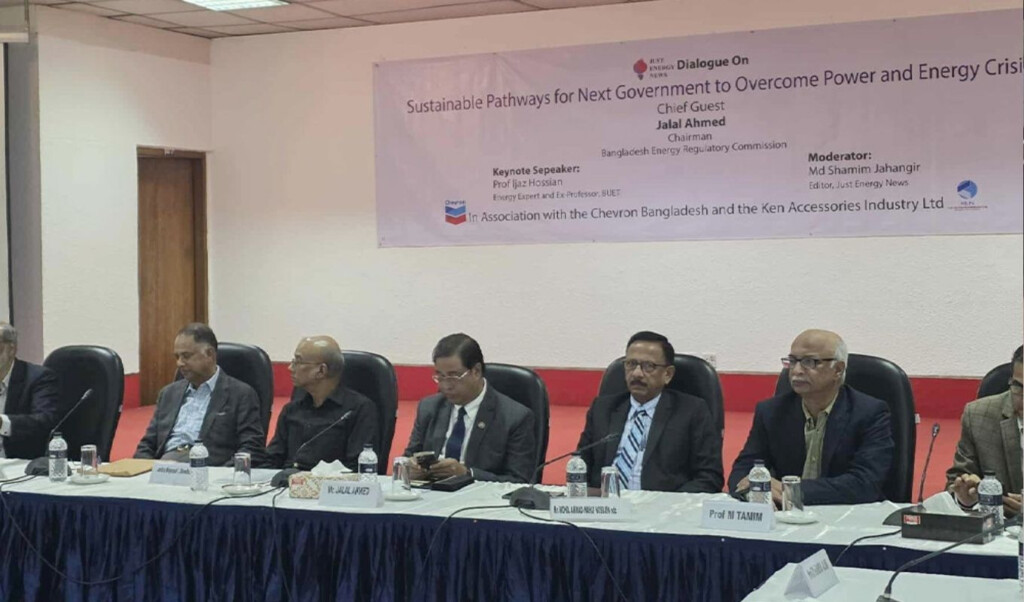
These concerns were voiced during a seminar titled “Sustainable Pathways for the Next Government to Tackle Energy and Power Crisis”, held on Tuesday at the Sirajganj-Dhaka Agricultural Development Project (SIRDAP) auditorium in the capital. The event was organised by Just Energy News and chaired by its editor, Shamim Jahangir.
Delivering the keynote address, Bangladesh Energy Regulatory Commission (BERC) Chairman Jalal Ahmed emphasised that the country’s energy crisis stems largely from long-standing neglect of primary energy sources. He highlighted limitations in LNG import capacity, citing the two existing Floating Storage and Regasification Units (FSRUs), which cannot be exceeded even in emergencies. Ahmed also noted the absence of a comprehensive reservoir management study since 2001 and 16 years of stagnation in gas exploration.
“While vast sums have been invested in electricity generation, allocations to the primary energy sector remain limited,” he said. “Without investing in primary energy, sustainable power supply is impossible. Coal development has stalled, and no integrated energy policy has been formulated since 1996. A significant portion of installed capacity is surplus, creating financial burdens that fall on the public.”
Former BUET professor Dr. Ijaz Hossain presented key research findings, noting that 97–98% of Bangladesh’s energy comes from fossil fuels. Currently, almost 60% of the country’s electricity and fuel requirements are met through imports, a figure that has risen in the past year, exacerbating economic and foreign exchange pressures.
Dr. Hossain highlighted alarming gaps in the gas sector: daily demand reaches 4,000 million cubic feet, while supply averages only 2,500–2,600 million cubic feet. Around 59–60% of this gas is used for electricity generation, and approximately 10% is lost to theft or inefficiency—an avoidable drain on foreign currency resources.
Key Energy Indicators for Bangladesh
| Indicator | Current Status | Notes |
|---|---|---|
| Fossil Fuel Dependence | 97–98% | Primarily natural gas, oil, coal |
| Imported Energy Share | ~60% | Rising over past year |
| Daily Gas Demand | ~4,000 MMCF | Exceeds supply by ~1,400–1,500 MMCF |
| Daily Gas Supply | 2,500–2,600 MMCF | ~10% lost due to theft/inefficiency |
| Renewable Energy Share | 2.3% | Significant potential for growth |
| Electricity Subsidy (FY 2025) | $5 billion | Largely paid in foreign currency |
Other experts stressed the need for diversified energy sources, including solar, wind, hydropower, biomass, and blue economy initiatives. Political figures, including BNP national committee member Iqbal Hasan Mahmud, highlighted the complexity of balancing electricity as a commercial product and a public service, warning that five-year cycles are insufficient to implement sustainable solutions.
SOAS London economics professor Mushtaq Hossain Khan noted the sector’s financial fragility, stressing that subsidy-related losses and high non-performing loans in the banking sector could trigger economic instability. Meanwhile, renewable energy usage remains minimal, at just 2.3%, leaving considerable room for expansion.
In conclusion, speakers underscored the urgent need for evidence-based policymaking, improved governance, and coordinated political and expert action. Without decisive interventions, the incoming government faces the daunting task of managing an energy sector under intense fiscal, operational, and environmental pressures.