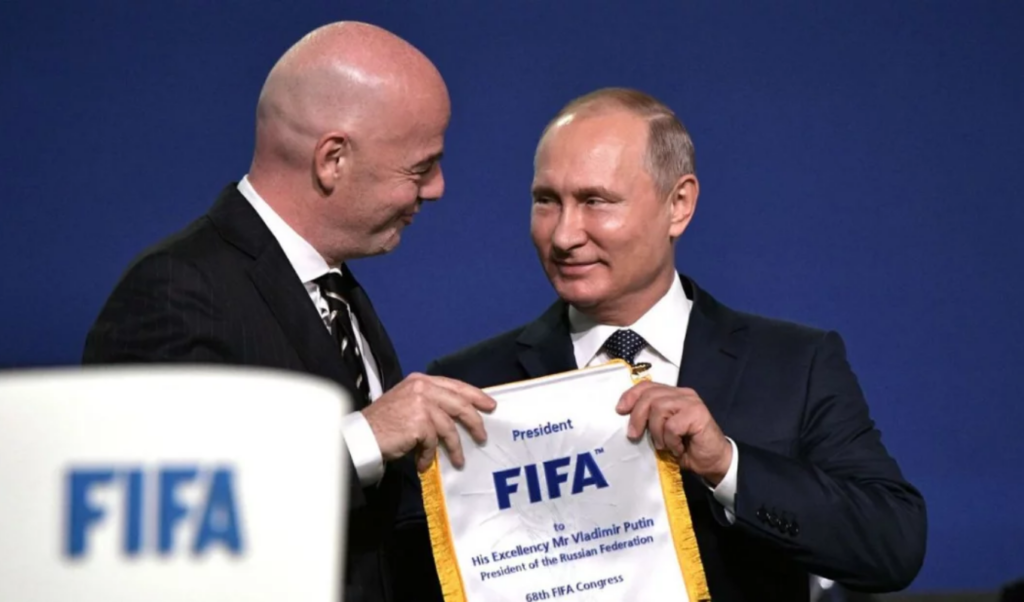
Since Russia’s invasion of Ukraine, international sports governing bodies have imposed sweeping sanctions on the country, banning its football clubs and national team from all competitions. In February 2022, both FIFA and UEFA formally barred Russia from participating in international tournaments, citing the ongoing conflict as the rationale. The fairness and effectiveness of these sanctions have been increasingly questioned, sparking debate within the football community.
Now, FIFA President Gianni Infantino has publicly suggested that the ban on Russian football should be reconsidered. Speaking to Sky Sports, Infantino stated, “These sanctions have not delivered any tangible benefits. On the contrary, they have fostered frustration and resentment. If Russian young players are allowed to compete in other parts of Europe, it could play a constructive role in building bridges and fostering understanding.”
Infantino emphasised that football should remain separate from political disputes. “Punishing an entire nation for the actions of its political leaders is not the way forward,” he said. “The sport can serve as a conduit for dialogue, helping to keep connections open even in times of political tension.”
However, Infantino’s comments have drawn sharp criticism from Ukrainian officials. Ukraine’s Minister of Sports, Matviy Budny, described the remarks as “reckless” and “childish,” adding, “They are divorcing football from reality, in which children are losing their lives every day. Suggesting the lifting of sanctions ignores the human cost of the conflict and is entirely unacceptable.”
The debate highlights the tension between sports as a unifying force and the moral and political responsibilities of international governing bodies. Analysts argue that while allowing young Russian players to compete abroad could promote cultural exchange and reconciliation, any relaxation of sanctions will inevitably provoke controversy and political backlash.
A summary of the sanctions currently affecting Russian football is outlined below:
| Year | Governing Body | Type of Sanction | Affected Teams/Clubs |
|---|---|---|---|
| 2022 | FIFA | Ban from international competitions | Russian national team |
| 2022 | UEFA | Ban from European club competitions | Zenit St. Petersburg, CSKA Moscow |
| 2022 | FIFA & UEFA | Restrictions on hosting matches | All Russian clubs and national teams |
Observers note that the debate over lifting sanctions is likely to continue, reflecting broader questions about the intersection of sport, politics, and ethics. Any decision by FIFA or UEFA could have far-reaching consequences, not only for Russian football but also for the principles underpinning international sport.
While Infantino’s stance prioritises engagement and dialogue through football, critics warn that without consideration of the ongoing humanitarian crisis, easing restrictions could be seen as insensitive and politically tone-deaf. The coming months are expected to see continued discussion among football authorities, governments, and human rights organisations about the best way to balance these competing priorities.