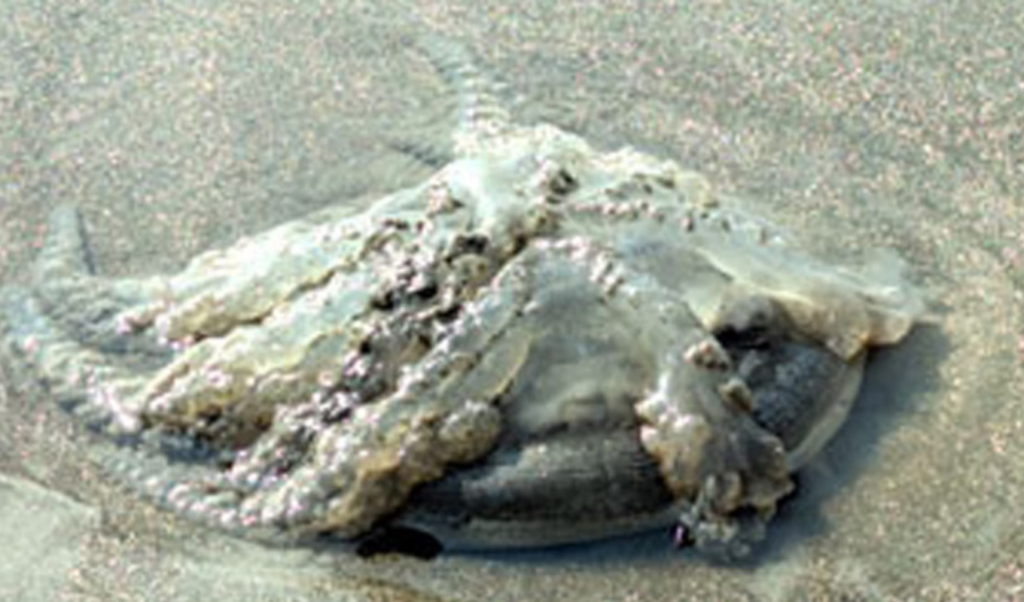
KUAKATA, Bangladesh — Alarm has been raised among local fishermen and marine experts following the mass appearance of dead jellyfish along various stretches of Kuakata sea beach in Patuakhali district. Early Tuesday morning, large numbers of the gelatinous creatures were observed washed ashore at areas including Tin Nodi Mohona, Char Bijoy, Gangamati Char, Lebur Bon, Kauar Char, and Fatrar Bon.
Local fishermen reported that similar occurrences were noted in early January, when jellyfish were seen in smaller numbers along the coast. However, experts and fishermen alike are now noting that both the size and quantity of the jellyfish this time are significantly greater, raising fresh concern about marine ecological health.
Possible Causes:
The exact cause of this large-scale mortality remains unclear, though environmental and fisheries specialists have outlined several contributing factors:
| Factor | Expert Insight |
|---|---|
| Fishing practices | Deep-sea trawlers and shrimp-collecting vessels may trap jellyfish in nets, resulting in high mortality. Once deceased, the jellyfish are carried ashore by tidal currents. |
| Water temperature | Rising sea temperatures can disrupt marine ecosystems, stressing jellyfish populations. |
| Salinity and oxygen levels | Variations in salinity and reduced dissolved oxygen may further contribute to mortality events. |
| Age and natural life cycle | Some fishermen attribute the deaths to older jellyfish being unable to swim against strong currents, compounded by rising salinity. |
Local fisherman Rahman Majhi told reporters, “We no longer venture far into the sea, fishing instead in nearby areas. Yet the sheer volume of jellyfish makes netting extremely difficult. If this continues, we may have to haul nets right to the shore.” Another fisherman, Helal, added, “Every time we lift our nets, we pull up hundreds of dead jellyfish. It stings our hands, damages our nets, and we catch hardly any fish.”
Environmental Concerns:
K.M. Bachchu, convener of the Coastal Environment Protection Movement (UPRA), warned, “Unplanned trawling, use of illegal nets, and ecological imbalance are increasing such incidents. Without immediate action, the region’s marine biodiversity is at serious risk.”
Ruman Imtiaz Tushar, president of the Kuakata Dolphin Protection Committee, highlighted the ecological implications: “Jellyfish are a critical component of the marine food chain. Their abnormal death poses a threat to dolphins and other marine species. This issue requires urgent research.”
Authorities are monitoring the situation closely. Apu Saha, Senior Fisheries Officer of Kalapara Upazila, stated, “Over-trawling, net friction, and environmental changes could be responsible. Surveys will be conducted if necessary to determine the precise causes and remedial measures.”
Marine biologist Dr. Md. Saiful Islam, Associate Professor at Patuakhali Science & Technology University, emphasised, “Both climate change and human activity play significant roles in these unusual jellyfish mortality events.”
Environmentalists warn that continued mass deaths of jellyfish could destabilise the marine ecosystem of Kuakata, affecting fisheries and the overall health of coastal biodiversity.