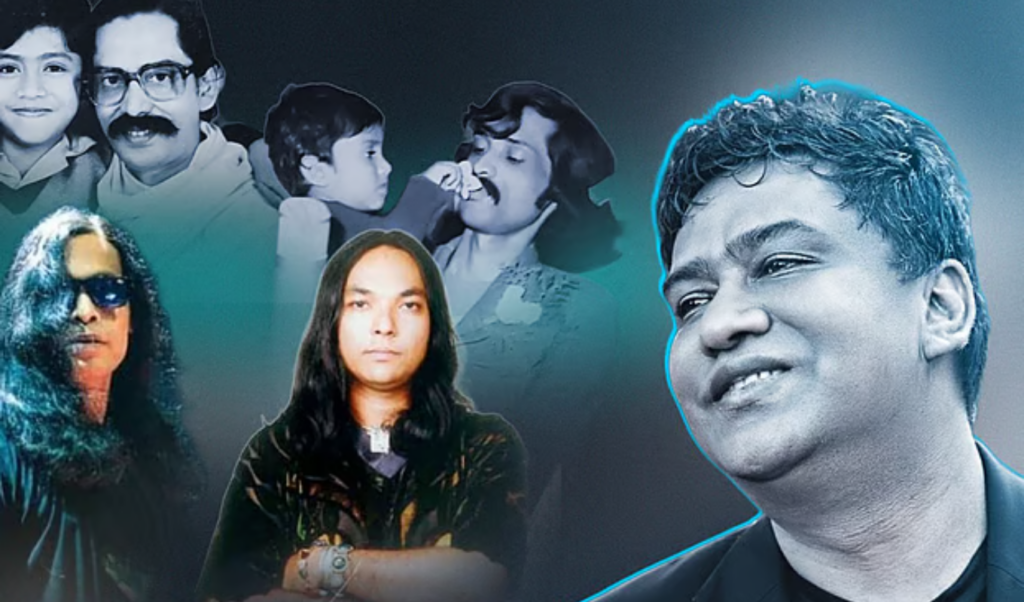
Today marks the birthday of Arman Khan, the renowned Bangladeshi lyricist, composer, and music director behind iconic hits such as “Nantu Ghotok”—whose famous line, “Pola to noy jeno aguner gola!”, still resonates in the minds of listeners. Despite keeping a low profile in recent years, away from the glittering stages and public fanfare, Khan’s music continues to hold a vivid place in popular memory.
In the 1990s and early 2000s, when Bangladesh’s music industry was dominated by audio albums, Arman Khan emerged as one of the country’s busiest music directors. He composed and arranged tracks like “Chander Bati’r Kosom Dia” for Prometheus Band, “Shit Noy Grishmo Noy Esheche Boshonto” for Ark Band’s Hasan, and “Lal Bondhu Neel Bondhu”, which became cultural staples long before the term “viral” existed. His compositions echoed through marketplaces, buses, tea stalls, and rural festivities alike.
On his birthday, a brief conversation via WhatsApp revealed that Khan had returned to Dhaka for a short three-day break from his demanding professional life—soon to return to his current role in a completely different field. Despite his absence from music’s frontline, his bond with the city, its people, and the memories of his musical journey remains unbroken.
Key Milestones in Arman Khan’s Career
| Period | Project Type | Notable Details/Volume |
|---|---|---|
| 2002–2005 | Audio albums | 23 albums completed |
| 1998–Present | TV dramas & soundtracks | 1,200+ productions |
| 2021 | Independent music releases | “Bondhu”, “Asa-Jawa”, “Guru Re” |
Khan’s career in television began with the soundtrack for “Jowar Bhata”, Bangladesh’s first daily serial written by Abdullah Al Mamun, followed by scores for hundreds of other dramas. His deep understanding of when to use silence and when to underscore scenes with music set him apart in the industry.
Yet, the relentless pace of production brought disillusionment. Khan observed that while performing artists received fair remuneration, lyricists and instrumentalists earned meagre amounts—often only 2,500–3,000 taka per song—while piracy and the transition from cassettes to CDs undermined the music economy. In response, he gradually withdrew from mainstream music.
In 2013, he embarked on a new chapter, joining Grand Sultan Hotel in Sylhet’s Sreemangal as head of sales and marketing. Over time, he became the hotel’s General Manager, earning recognition as Best Hotel Manager in 2019. Khan draws parallels between music and hospitality: both demand creativity, discipline, and attention to detail.
Even from a distance, he never fully left music. During the pandemic, he launched the YouTube channel “Best and Great”, sharing stories of music legends and the origins of popular songs from the 1970s and 1980s. In 2021, he released “Bondhu” and the tribute tracks “Asa-Jawa” and “Guru Re”, honouring late icons like Ayub Bachchu and Azam Khan.
Born on 3 February 1977 in Dhaka to the eminent composer Alam Khan and Habibunnesa Gulbanu Khan, Arman grew up immersed in music. His uncle, pop legend Azam Khan, further shaped his appreciation of independent, bold music. Combining classical, cinematic, and pop influences, he created a distinctive musical language, producing 26 albums including “Dokan”, “Tin Sotti”, and “Dost Dushmon”.
Today, Arman leads a quieter life with his wife Emi Khan and children Arham Khan and Antara Raisa Khan in Sreemangal. He spends his free time exploring melodies at the piano and visiting his parents’ graves in solitude. Though away from the public eye, his music still graces weddings, rural celebrations, and festive occasions, echoing his enduring legacy.
Time and mediums may change, but the magic of Arman Khan’s compositions continues to ignite joy across generations, even as the creator himself remains quietly nestled amidst the hills of Sreemangal.