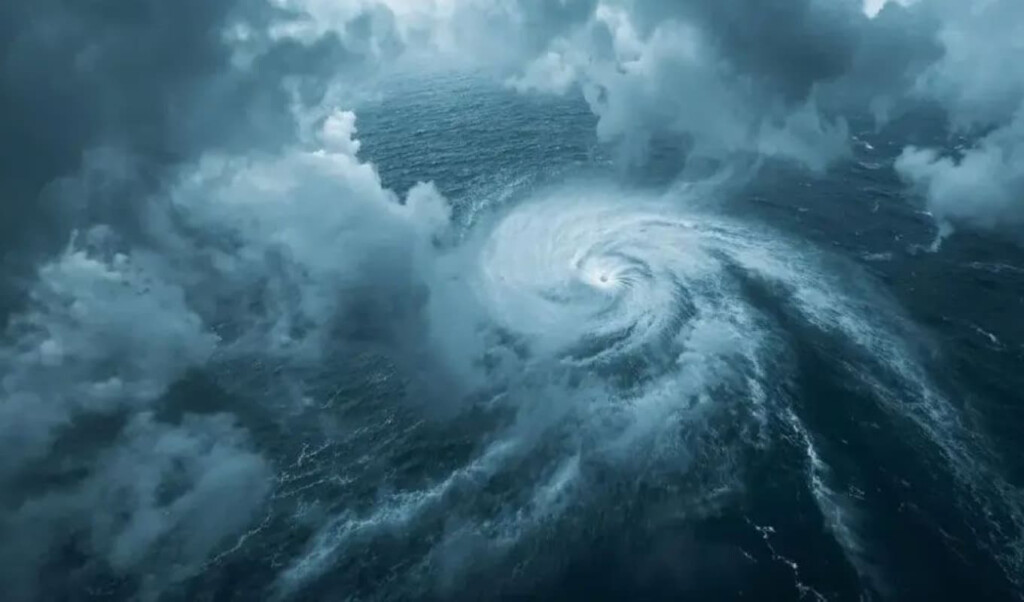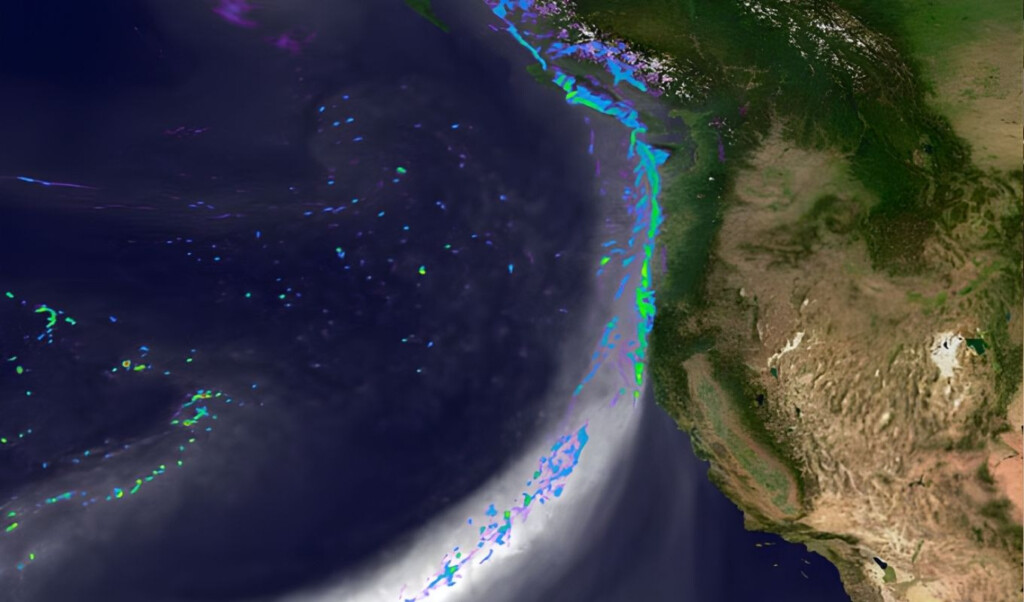
Global studies indicate that both the spread and moisture content of previously little-understood atmospheric rivers—long, narrow corridors of water vapour in the sky—are increasing. This shift is altering the patterns and locations of extreme rainfall, placing severe stress on existing infrastructure and flood management systems, particularly in coastal cities vulnerable to tsunamis and cyclones, scientists warn.
An atmospheric river is essentially a floating corridor of moisture that moves from oceans toward land. According to Lexi Henny, a researcher at NASA’s Goddard Space Flight Center, as global temperatures rise, storms are increasingly capable of carrying higher amounts of moisture. Studies show that compared with 1980, these moisture corridors now cover 6 to 9 per cent more area.
The phenomenon can be explained through the Clausius–Clapeyron relation in physics, which indicates that for every 1°C rise in air temperature, the atmosphere’s moisture-holding capacity increases by approximately 7 per cent. Consequently, warmer air can carry significantly more water vapour, which falls as heavy precipitation when it encounters mountains or cooler air currents.
However, moisture alone does not determine the severity of the rainfall. The speed and direction at which winds push this vapour toward land are equally critical. Global warming is reducing the temperature gradient between the equatorial and polar regions, altering wind patterns. This can allow moisture corridors to linger over oceans longer or strike land at unexpected angles, making accurate rainfall prediction increasingly challenging.
Data from scientists reveal that extreme episodes are intensifying faster than average conditions. Within the storm’s core, moisture transport rates have risen 3–4 per cent, while water vapour accumulation has increased 4–6 per cent. Henny explains that relying on average figures often obscures the true risk, as milder conditions at the storm’s edges can mask its full intensity.
Coastal cities, where millions reside within a few miles of the shoreline, are particularly vulnerable. When these storms strike, heavy rainfall combined with strong winds can severely damage electricity networks, ports, and transport systems. Atmospheric rivers are implicated in 40–75 per cent of extreme rainfall events affecting nearly 40 per cent of the world’s coastal regions.
Authorities worldwide are now closely monitoring these moisture corridors. Scientists stress that planning based solely on past data is insufficient. Coastal infrastructure must be designed to withstand sudden, extreme impacts of moisture-laden storms in an evolving climate.
| Parameter | Change Observed | Implication |
|---|---|---|
| Moisture corridor coverage since 1980 | +6–9% | Larger areas at risk of heavy rainfall |
| Core storm moisture transport | +3–4% | Increased intensity of storms |
| Water vapour accumulation in storms | +4–6% | Greater potential for flash floods |
| Coastal regions affected | ~40% | High exposure to extreme rainfall events |
| Contribution to extreme rainfall | 40–75% | Atmospheric rivers major factor |