Bangladesh is grappling with an escalating public health challenge as vision-related problems continue to surge across the country. Alarmingly, most of these conditions are preventable. Millions of people, particularly in rural and marginalised communities, are deprived of timely eye care due to a severe shortage of ophthalmologists and optometrists. This delay in diagnosis and treatment increases the risk of avoidable blindness from conditions ranging from common refractive errors to cataracts, glaucoma, and diabetic retinopathy.
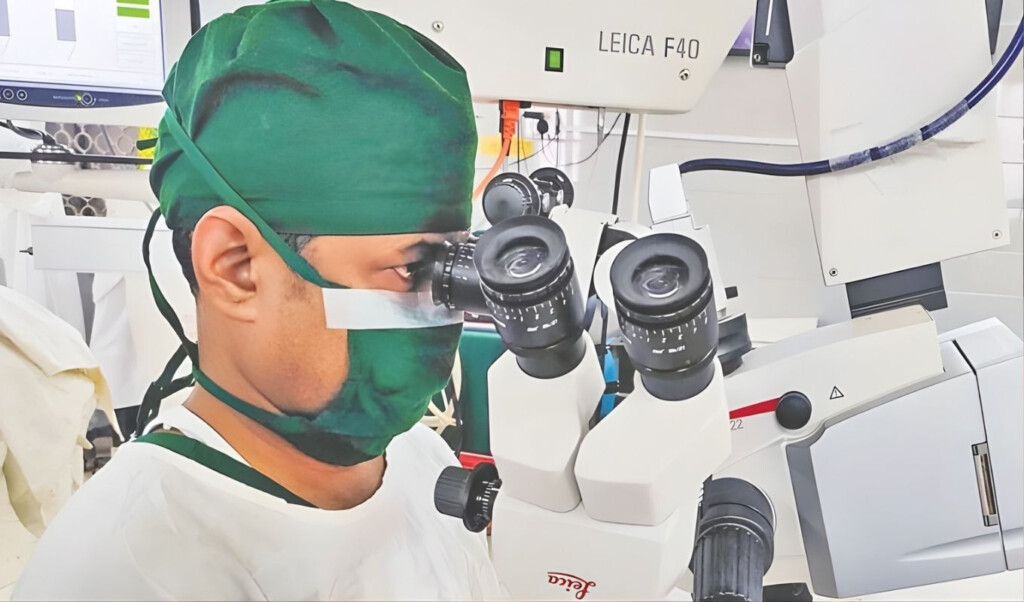
According to the latest bulletin from the Directorate General of Health Services (DGHS), the country currently has one ophthalmologist for every 200,000 eyes. Ophthalmologists diagnose, treat, and perform surgery for eye diseases, but the majority practise in Dhaka and other divisional cities, leaving rural populations underserved.
Optometrists, on the other hand, play a vital role in primary eye care. They conduct vision tests, prescribe glasses and contact lenses, screen children and school students, identify early signs of cataracts, glaucoma, and diabetic retinopathy, and refer patients to specialists when necessary. However, Bangladesh presently has only 200 registered optometrists, far below the global standard recommended by the World Health Organization (WHO), which advises four optometrists per ophthalmologist. Based on this guideline, Bangladesh requires at least 4,800 optometrists to meet national demand.
| Profession | Current Number | Recommended Ratio | Required Number |
|---|---|---|---|
| Ophthalmologists | 1 per 200,000 eyes | – | – |
| Optometrists | 200 | 4 per ophthalmologist | 4,800 |
Currently, optometrist training is offered only at two institutions: the Chittagong Institute of Community Ophthalmology (affiliated with Chittagong Medical University) and Ittihad College of Health Sciences & PSYC College of Health Sciences (affiliated with Rajshahi Medical University). Experts argue that this capacity is insufficient to meet the needs of the country’s peripheral populations.
Globally, WHO reports that 2.2 billion people suffer from vision problems, with nearly 1 billion cases being preventable or treatable. WHO emphasises incorporating eye health into universal healthcare initiatives. National surveys in 2021–22 indicated that 0.69% of Bangladeshis are blind, and 3% have low vision, with numerous other visual impairments continuing to pose a substantial public health burden.
Public health specialists warn that without urgent expansion of the optometrist workforce, the country’s eye health situation will deteriorate. Syed Mohammad Didarul Alam, Chairman of the Optometrist Society of Bangladesh, stressed that optometrists are the frontline human resource in eye care. He recommends deploying at least one optometrist per 100,000 people, noting that in developed countries like the United States, Canada, the UK, Australia, and Europe, optometrists independently run clinics, provide primary and complex care, and refer patients to ophthalmologists when necessary.
Senior optometrist Abir De highlighted the neglect of optometrists in policymaking, citing the lack of government cadres, insufficient registration systems, and inadequate recognition of their professional role, particularly in rural regions where ophthalmologists are scarce.
Experts and WHO recommend urgent measures: formal recognition of optometrists, increased recruitment at upazila and union levels, establishment of optometry corners in community clinics, expansion of school-based vision screening, and comprehensive training programmes. Failure to act may exacerbate preventable blindness, causing significant social and economic consequences.
Dr. Khair Ahmed Chowdhury, Additional Director General of Health Services and ophthalmologist, noted that new optometrist courses are a welcome initiative but stressed the need for regulation and coordination with ophthalmologists, as practiced internationally.