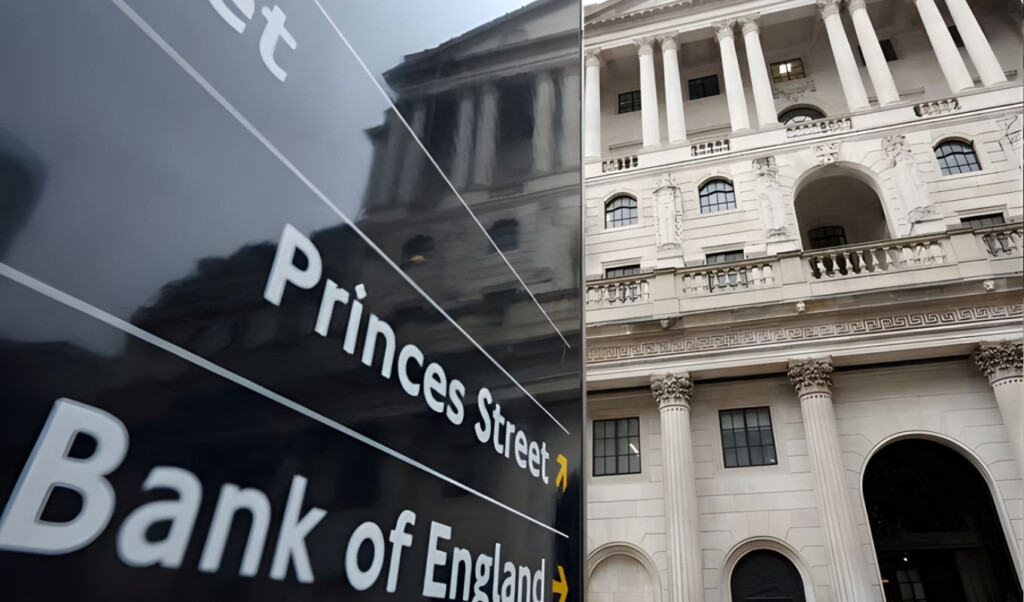
The Bank of England is widely expected to hold interest rates steady, even as Britain faces renewed economic and political uncertainty. Data released this week show that UK construction activity contracted again in January, though the pace of decline eased, signalling a potential end to the sector’s worst downturn in recent years.
Meanwhile, sterling has weakened against the US dollar, reflecting investor unease over political developments in the Labour Party. IG chief market analyst Chris Beauchamp noted that “the relative calm in UK borrowing costs following the Budget has come to an abrupt end as the Prime Minister’s leadership comes under threat.”
Beauchamp added that while a repeat of the disruptive Truss premiership is unlikely, the election of a more left-wing Labour leader with a focus on higher public spending could unsettle government borrowing markets, potentially driving up interest rates.
Professor Costas Milas of the University of Liverpool highlighted that public expectations of inflation are currently more accurate than the Bank of England’s forecasts, with the population predicting inflation above 3% for the first quarter of 2026. This consensus, he said, supports the wisdom of keeping the Bank Rate unchanged in today’s decision and at the upcoming March meeting.
UK Construction Activity: January 2026 (PMI Index)
| Segment | January PMI | December PMI | Trend |
|---|---|---|---|
| Overall Construction | 46.4 | 40.1 | Improving, still contracting |
| Housebuilding | 42.0 | 40.5 | Weakest, contraction easing |
| Civil Engineering | 47.2 | 44.0 | Contracting, slower pace |
| Commercial Construction | 48.5 | 45.8 | Near stabilisation |
S&P Global Market Intelligence economics director Tim Moore commented: “January data suggest that the UK construction sector has exited its tailspin. Firms are more optimistic that new projects will resume in 2026.” Despite subdued demand and fragile client confidence, commercial construction approached stabilisation, while housebuilding remained the weakest segment, although contraction slowed. Job losses also moderated, and expectations for future business activity reached an eight-month high.
On the global stage, a US-led critical minerals summit convened 50 countries to reduce reliance on China for more than 25 essential minerals. Agreements included joint EU-US commitments, US-Japan arrangements, and funding pledges from South Korea, signalling a strategic drive to secure supply chains for technologies such as artificial intelligence.
Back in the markets, sterling slipped to $1.3555, its lowest in nearly two weeks, amid political turbulence and anticipation of the Bank of England’s interest rate decision. Former BoE rate setter Michael Saunders warned that changes in leadership could alter policy priorities, including tax, spending, nationalisation plans, and trade orientation, with mixed implications for economic growth.