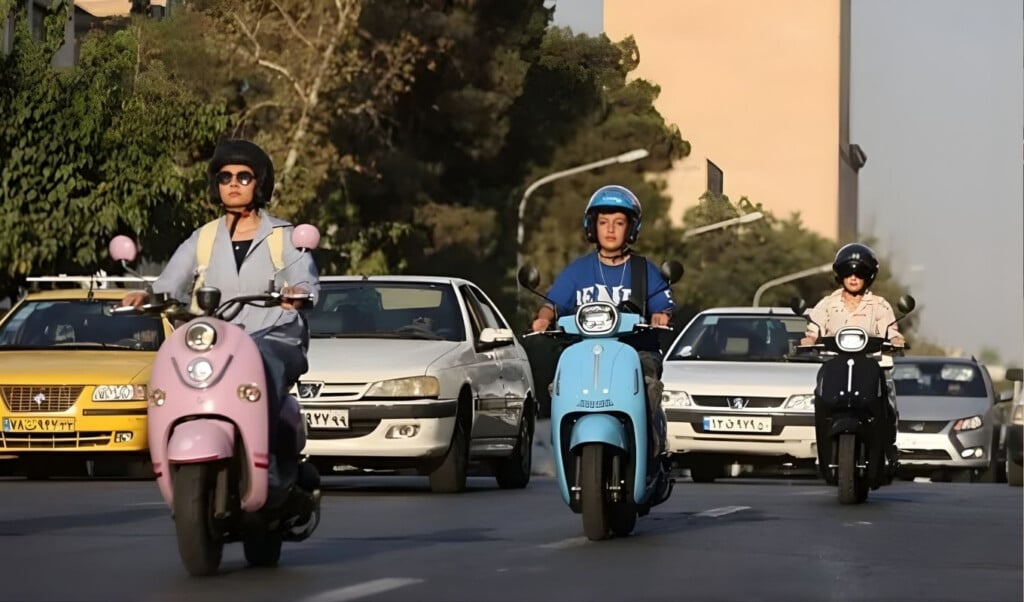
In a historic move, Iranian women can now formally obtain licences to operate motorcycles, the country’s media reported on Wednesday. This development resolves a long-standing ambiguity in Iran’s laws regarding two-wheeled vehicles.
Previously, legislation did not explicitly prohibit women from riding motorcycles or scooters. However, in practice, authorities routinely refused to issue licences to women. This legal grey area meant that, in the event of accidents, female riders were often held legally responsible, despite the lack of formal prohibition.
The landmark change came when Iran’s First Vice President, Mohammad Reza Aref, signed a resolution last Tuesday clarifying traffic regulations. According to the Iranian Labour News Agency (ILNA), the Cabinet had approved the resolution at the end of January.
Under the new directive, traffic police are now mandated to provide women with practical training, conduct examinations under direct police supervision, and issue official motorcycle licences. This formalisation comes in the wake of months of social unrest, which initially began as protests over economic hardship but quickly evolved into broader anti-government demonstrations. Iranian authorities have acknowledged over 3,000 deaths during the unrest, although they claim most fatalities involved security personnel and bystanders rather than protesters.
Local reaction to the change has been largely positive. Saina, a 33-year-old advertising professional who has been commuting on a scooter for the past six months, described the amendment as “long overdue.” “Women have already been riding motorcycles for months,” she told AFP, “so the law is simply catching up with reality.” She also remarked that, in the context of Iran’s ongoing economic difficulties, this legal adjustment is “not our society’s main concern.”
Since the 1979 Islamic Revolution, Iranian women have been subject to strict dress codes, which have complicated their use of motorcycles. Public regulations require women to cover their hair with a scarf and wear modest, loose-fitting clothing. Nonetheless, compliance has declined in recent years, and more women have taken to riding motorcycles in urban areas.
| Key Details of the New Regulation | Description |
|---|---|
| Authority | First Vice President Mohammad Reza Aref |
| Approval | Cabinet resolution, late January 2026 |
| Enforcement | Traffic police mandated to train, examine, and licence women |
| Context | Following months of nationwide protests and social unrest |
| Impact | Resolves legal ambiguity, allows women safe and formal access to two-wheeled transport |
Analysts note that while the amendment is symbolic of social progress, deeper structural issues—economic hardship and political repression—continue to dominate Iranian public life. Nevertheless, for many women, the ability to legally ride a motorcycle represents a tangible step toward greater personal freedom and mobility.