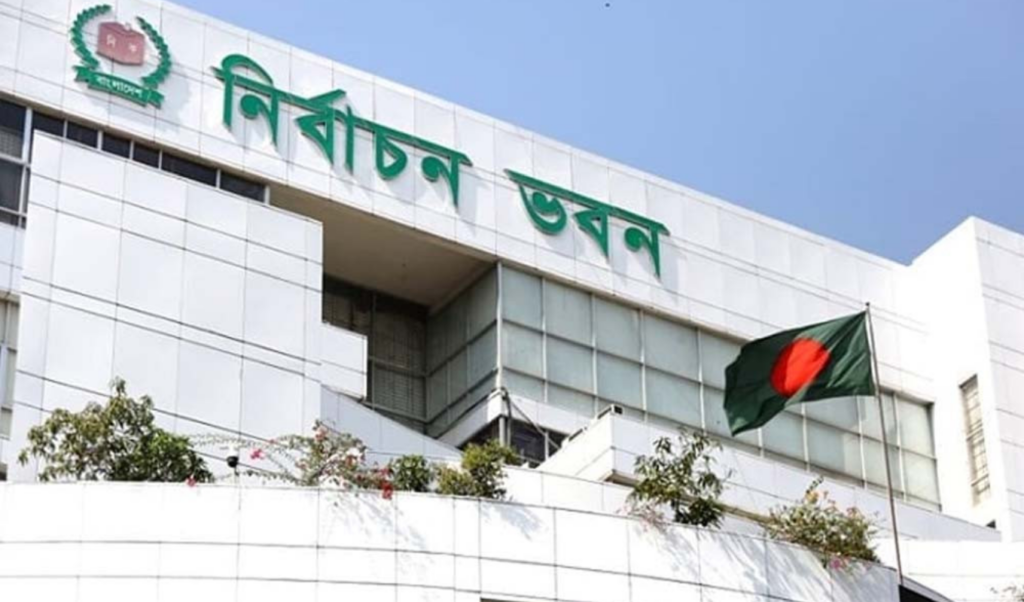
As Bangladesh moves towards its thirteenth parliamentary election, disputes over voter transfers have become a focal point of political contention. The Bangladesh Nationalist Party (BNP) has repeatedly alleged that “abnormally high” numbers of voters were transferred between constituencies, particularly in parts of Dhaka, and has claimed that such movements could distort electoral outcomes. The party has formally raised these concerns with the Election Commission (EC). The Commission, however, maintains that the scale of transfers falls within normal administrative patterns and reflects routine demographic mobility rather than political engineering.
According to the EC, applications for changing voter registration areas were opened in August last year in preparation for both the planned referendum and the parliamentary polls. The process remained open throughout the year to accommodate citizens who had relocated for employment, education, tenancy changes, or permanent resettlement. Election officials stress that Bangladesh’s rapid urbanisation, the concentration of economic opportunity in the capital, and frequent residential movement within Dhaka naturally produce higher volumes of voter transfers in metropolitan constituencies.
By November, substantial numbers of voters had updated their registration across the country. Dhaka region recorded 86,825 transfers, while Comilla region registered the highest regional figure at 105,543. Barishal (85,720), Khulna (81,725), Mymensingh (78,805), Rajshahi (72,815) and Rangpur (63,897) also saw significant movement. Sylhet recorded comparatively fewer transfers at 27,576, and Chattogram reported 30,085. Within Dhaka district alone, spread across 20 parliamentary seats, 49,992 voters changed their registered constituencies.
The EC has sought to dispel fears of manipulation by emphasising that each application is verified individually and cross-checked against the national voter database to prevent duplication or mass transfers without proof of residence. Officials argue that the process is governed by established electoral rules and that no constituency has experienced a level of movement that exceeds plausible residential change for a megacity of Dhaka’s scale.
Attention has nevertheless centred on constituencies associated with prominent political figures. In Dhaka-17, linked to BNP chair Tarique Rahman, 3,039 voters transferred their registration. Dhaka-15, associated with Jamaat-e-Islami chief Dr Shafiqur Rahman, recorded 3,520 transfers. Dhaka-11, where National Citizen Party (NCP) convenor Nahid Islam is active, saw 3,141 transfers, while Dhaka-9, linked to independent candidate Dr Tasnim Zara, recorded 2,634. Dhaka-8, contested by BNP’s Mirza Abbas and NCP’s Nasiruddin Patwary, saw 3,633 transfers. Overall, Dhaka-1 registered the highest number of transfers at 4,732, whereas Dhaka-7 recorded the lowest at 676.
Regional voter transfers (by November)
| Region | Voters transferred |
|---|---|
| Comilla | 105,543 |
| Dhaka | 86,825 |
| Barishal | 85,720 |
| Khulna | 81,725 |
| Mymensingh | 78,805 |
| Rajshahi | 72,815 |
| Rangpur | 63,897 |
| Faridpur | 39,095 |
| Chattogram | 30,085 |
| Sylhet | 27,576 |
Selected Dhaka constituencies
| Constituency | Voters transferred |
|---|---|
| Dhaka-1 | 4,732 |
| Dhaka-17 | 3,039 |
| Dhaka-15 | 3,520 |
| Dhaka-11 | 3,141 |
| Dhaka-9 | 2,634 |
| Dhaka-8 | 3,633 |
| Dhaka-7 | 676 |
Election analysts note that while voter mobility is a normal feature of urban democracies, heightened transparency is essential in a polarised political climate. They recommend continued publication of constituency-level data, independent monitoring of the transfer process, and prompt adjudication of complaints to bolster public confidence. The EC has reiterated that it will continue to release disaggregated figures and invites parties to submit evidence-based challenges through formal legal channels, underscoring that administrative voter updates should not be conflated with electoral interference.