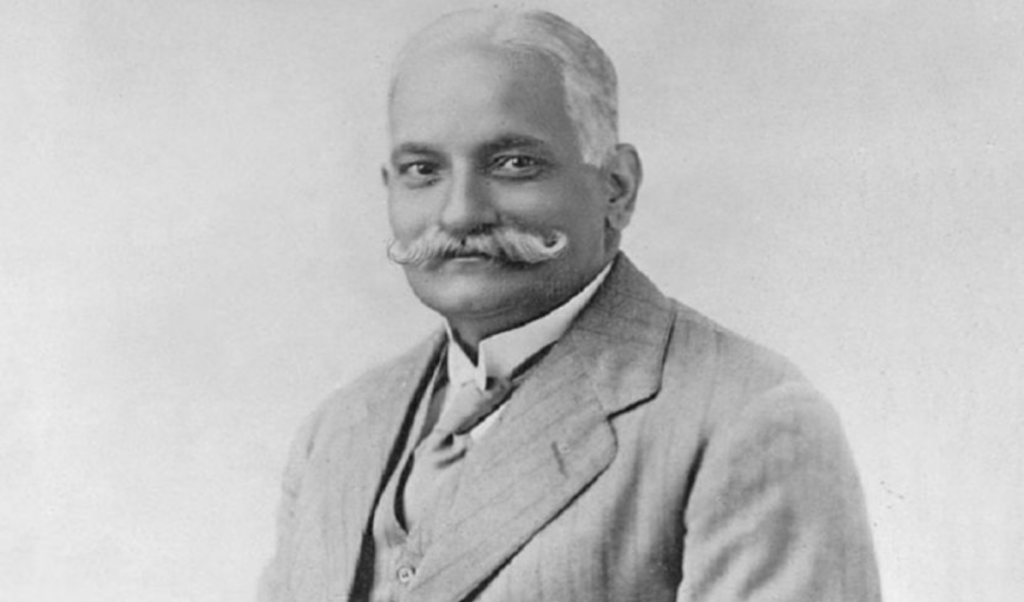
Motilal Nehru stands among the formative figures of India’s freedom struggle: a brilliant barrister, a far-sighted political organiser, and a reform-minded nationalist who helped shape the constitutional imagination of modern India. Although he is widely remembered as the father of Jawaharlal Nehru, India’s first Prime Minister, Motilal Nehru’s own public life commands distinction in its own right. Through legal excellence, organisational leadership within the Indian National Congress, and bold constitutional proposals, he laid important foundations for the country’s march towards self-government.
Born on 6 May 1861 in Agra, in what is now Uttar Pradesh, Motilal Nehru came from a Kashmiri Pandit family; his father, Gangadhar Nehru, served in the judicial administration. He belonged to the first generation of Indians shaped by Western education and professional training. After studying at Muir Central College in Allahabad (though without completing a degree), he travelled to England and qualified as a barrister at Cambridge. On his return to India, he built a formidable legal practice in Allahabad. Contemporary accounts describe him as among the most sought-after advocates of his day, admired for his clarity of argument and courtroom presence. His professional success enabled him to support nationalist causes and to finance political activity at moments when the movement struggled for resources.
Motilal Nehru’s transition from elite professional life to mass politics mirrored a broader awakening among India’s urban intelligentsia. Within the Indian National Congress, he rose rapidly to senior leadership and served two terms as its President (1919–1920 and 1928–1929). At a time of ideological ferment, he worked to strengthen the Congress’s organisational capacity and to broaden its reach beyond elite circles. Alongside Deshbandhu Chittaranjan Das, he co-founded the Swaraj Party in the early 1920s, advocating the strategy of entering legislative councils to press for self-government from within the colonial constitutional framework. While this approach provoked debate among nationalists, it reflected Motilal Nehru’s pragmatic belief in combining protest with institutional pressure.
His most enduring intellectual legacy came in 1928, when he chaired the All-Parties Conference committee that produced the celebrated Nehru Report. This landmark document proposed a dominion-style constitution for India, fundamental rights, responsible government, and safeguards for minorities. Although the British Government did not accept the proposals, the report profoundly influenced later constitutional thinking and framed key debates that would culminate in independence and the adoption of India’s Constitution in 1950.
Beyond politics, Motilal Nehru cultivated a refined cultural life. In Allahabad he built the elegant Anand Bhavan, which became a meeting place for nationalist leaders and later a living museum of the freedom movement. He donated his earlier home, Swaraj Bhavan, to the Congress, transforming private property into public heritage. His family life was marked by public service: his wife, Swaroop Rani, maintained the household as a centre of political activity; his son Jawaharlal would lead the nation after independence; his daughters Vijayalakshmi Pandit and Krishna Hutheesingh emerged as prominent figures in diplomacy and public life.
Motilal Nehru died on 6 February 1931 in Allahabad. His life exemplified a rare blend of professional excellence, constitutional imagination, and patriotic commitment—qualities that secured his place among the architects of India’s national awakening.
Key facts at a glance
| Aspect | Details |
|---|---|
| Full name | Motilal Nehru |
| Born | 6 May 1861, Agra (Uttar Pradesh) |
| Died | 6 February 1931, Allahabad |
| Profession | Barrister; political leader |
| Congress Presidency | 1919–1920; 1928–1929 |
| Major initiative | Chair of the committee behind the 1928 Nehru Report |
| Political strategy | Co-founder of the Swaraj Party |
| Heritage sites | Anand Bhavan; Swaraj Bhavan (donated to Congress) |
| Family legacy | Father of Jawaharlal Nehru; father of Vijayalakshmi Pandit and Krishna Hutheesingh |