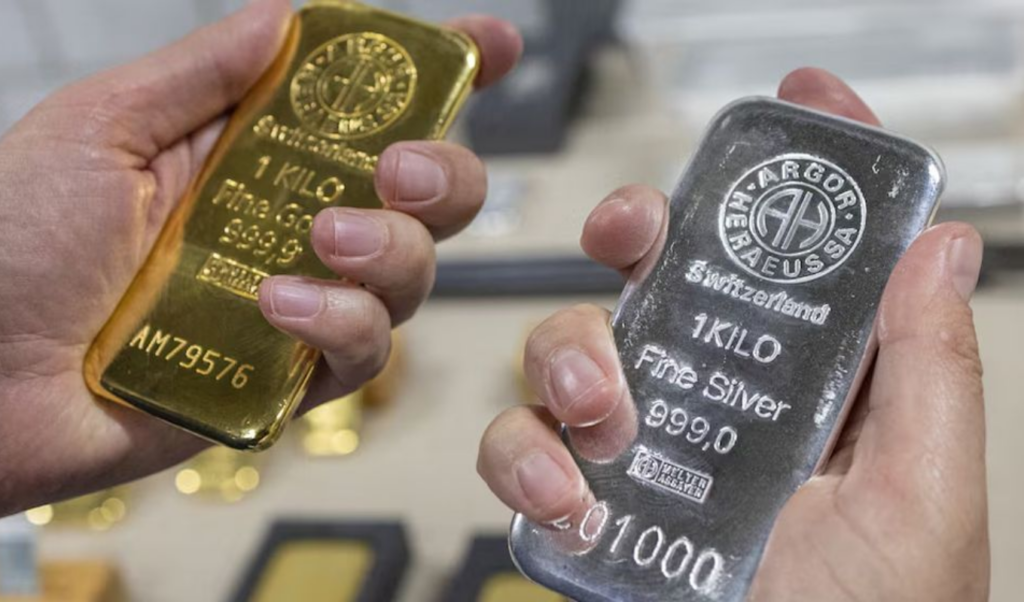
International commodity markets experienced significant declines on Thursday (5 February), with gold, silver, crude oil, and copper among the key assets witnessing substantial price drops. The easing of global geopolitical tensions—following a high-level phone call between the leaders of China and the United States and reports of a potential U.S.–Iran meeting—prompted investors to retreat from riskier assets, Reuters reported.
Silver bore the brunt of the decline, plummeting by nearly 15 per cent. Meanwhile, gold, crude oil, and copper each fell by around 2 per cent on average. Analysts attributed the sell-off in part to the strengthening of the U.S. dollar, as commodities are globally priced in dollars, making purchases more expensive for holders of other currencies.
Tony Sycamore, a market analyst at brokerage firm IG, noted, “This week has seen unusual volatility across precious metals and other commodities. The current declines are a continuation of this broader instability.”
The prospect of renewed talks between the U.S. and Iran has alleviated long-standing geopolitical risk premiums in the oil market. Similarly, following the Trump–Xi phone discussion, trade tensions between the United States and China have eased, encouraging investors to offload gold at higher prices.
In Asia, the U.S. dollar remained stable ahead of key interest rate announcements by the European Central Bank and the Bank of England. The dollar index is hovering near a two-week high. A stronger dollar increases costs for foreign investors, exerting further downward pressure on commodity prices. Earlier in the week, speculation over Kevin Warsh’s potential nomination as Federal Reserve chairman strengthened the dollar further, reducing demand for non-yielding assets such as gold and silver.
Meanwhile, copper markets remain under pressure. Concerns over demand and rising warehouse stocks on the London Metal Exchange prompted caution among investors, despite China’s prior announcement to strategically boost copper reserves. Christopher Ong, strategist at OCBC Bank, explained, “With low market liquidity, selling in one segment rapidly spreads to others, amplifying price declines.” This effect has rippled into precious metals, cryptocurrencies, and regional equity markets.
In contrast, soybean prices surged to a two-month high following Trump’s remark that China is considering imports from the U.S., reflecting positive market expectations. Iron ore prices, however, fell roughly 2 per cent due to oversupply.
Key Commodity Price Movements (5 February):
| Commodity | Price Change (%) | Market Commentary |
|---|---|---|
| Silver | -15 | Sharpest decline; investor sell-off |
| Gold | -2 | Selling pressure as trade tensions ease |
| Crude Oil | -2 | Risk premium reduced due to U.S.–Iran talks |
| Copper | -2 | Weak demand and rising warehouse stocks |
| Iron Ore | -2 | Oversupply impacts prices |
| Soybeans | +5 | Optimism on China’s potential imports |
Overall, global markets are demonstrating heightened volatility as a combination of geopolitical developments, monetary policy expectations, and currency fluctuations continues to influence investor behaviour and commodity valuations.