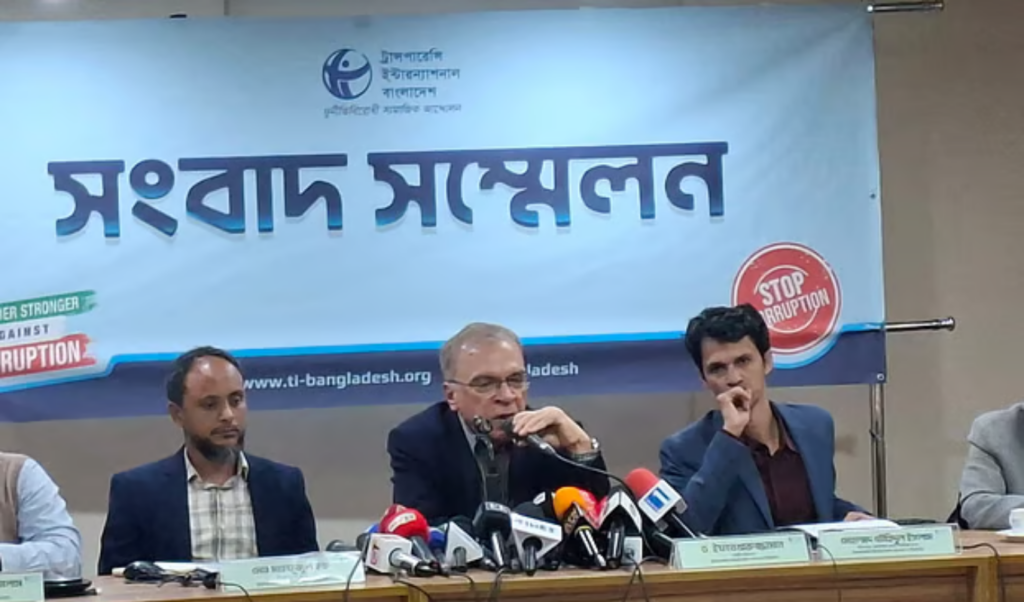
Transparency International Bangladesh (TIB) has assessed the 13th National Parliamentary Election as broadly participatory and inclusive, though it noted the absence of deliberate “election engineering” in the process. TIB Executive Director Iftikharuzzaman described the election as largely credible, fair, and neutral, with sufficient levels of voter participation.
Speaking at a press conference on Monday morning at TIB’s Dhaka office, Iftikharuzzaman addressed journalists’ queries regarding the electoral process. The event coincided with the release of TIB’s report titled “13th National Parliamentary Election Process and Affidavit-Based Observation”.
When asked whether the election remained inclusive despite the absence of the ruling Awami League as a formal participant, Iftikharuzzaman emphasised that many Awami League leaders and activists participated locally, either aligning with other parties or contesting as independents. “A significant portion of those who voted were Awami League supporters. Therefore, based on these factual observations, the election can be considered participatory and inclusive to an acceptable degree,” he explained.
Methodology and Observations
TIB’s report draws on a representative sample of 70 constituencies, selected randomly from the total 300 parliamentary seats. The monitoring focused on both procedural and behavioural aspects of the electoral process. While the overall election was largely credible, the report highlighted multiple violations of electoral norms.
| Observation | Number of Incidents |
|---|---|
| Clashes between political opponents | 45 |
| Intimidation of voters, party workers, or supporters | 34 |
| Attacks on homes or offices | 18 |
| Intra-party clashes | 16 |
| Restrictions on polling agents | Various centres |
| Voter harassment, impersonation, or vote-buying | Various centres |
According to the report, 99% of contesting candidates breached at least one of 58 prescribed codes of conduct. On polling day, incidents included attacks on independent female candidates, intimidation outside polling centres, removal of independent candidates’ agents, denial of entry for rival agents, harassment of voters using spurious rules, impersonation of voters, and distribution of cash at polling stations. Additionally, discrepancies between voter lists and actual voter identification prevented many from exercising their franchise.
Post-Election Violence
The report also documented post-election violence. Among the 70 monitored constituencies:
Clashes between political rivals occurred in 45 constituencies.
Intimidation of opposing party voters and supporters was recorded in 34 constituencies.
Attacks on houses and offices were reported 18 times.
Conflicts within the same party affected 16 constituencies.
TIB’s analysis notes that while initial campaigning showed signs of fair competition, traditional patterns of violent political behaviour persisted. Consequently, inter-party and intra-party conflicts, unhealthy competition for power, and electoral violence escalated progressively, continuing even after polling concluded.
Iftikharuzzaman concluded that, although the election was participatory and inclusive to an extent, greater safeguards are essential to ensure procedural transparency, voter security, protection of independent candidates, and accurate voter registration for future elections.
This comprehensive assessment highlights both the strengths and shortcomings of the electoral process, providing a roadmap for reform and enhanced democratic practices in Bangladesh.