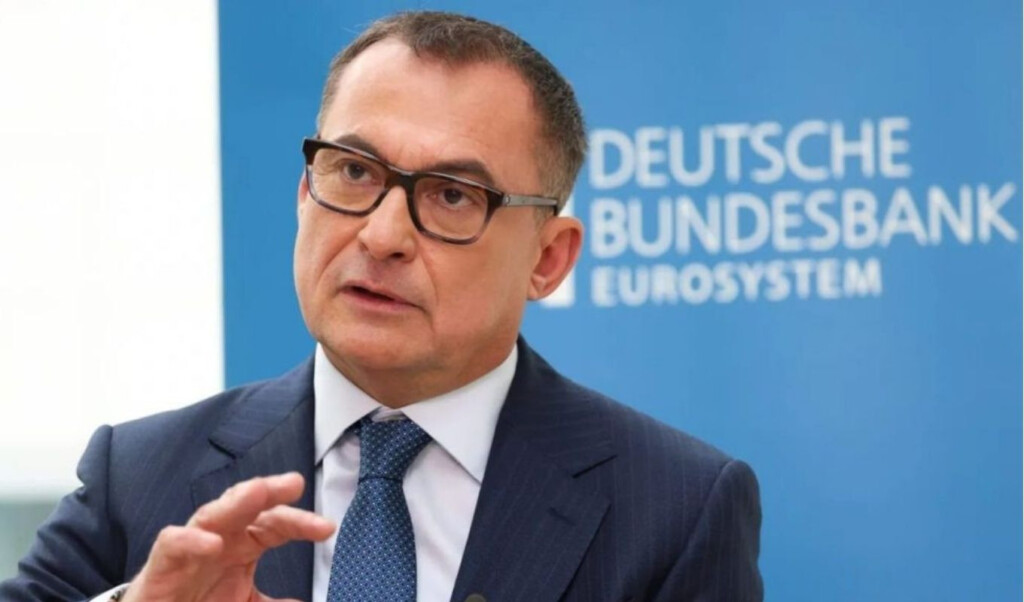
Joachim Nagel, President of the Bundesbank, has signalled a decisive shift in Europe’s stance on digital currencies, openly endorsing euro-denominated crypto stablecoins and even a retail central bank digital currency (CBDC). The announcement marks a departure from previous caution, reflecting a sense of urgency as Europe seeks to secure its monetary sovereignty against the growing dominance of the US dollar.
Speaking in Frankfurt, Nagel emphasised that Europe must develop its own digital payment infrastructure. “This is not optional,” he stated. “We need robust tools to ensure we are not left behind in the global digital payments landscape.” His remarks coincide with the European Union’s efforts to implement the Markets in Crypto-Assets (MiCA) framework, signalling that the continent is intent on shaping the future of digital finance rather than merely reacting to US-led developments.
The scale of the challenge is stark. Dollar-backed stablecoins currently hold over $310 billion in market value, while euro-denominated liquidity remains a fraction of that. Regulators warn that without a competitive European alternative, the region risks “digital dollarisation,” leaving its economy increasingly exposed to foreign digital assets.
| Currency | Stablecoin Market Value | Notes |
|---|---|---|
| US Dollar | $310 billion | Dominates global stablecoin usage |
| Euro | $12–15 billion | Limited liquidity, underdeveloped infrastructure |
| Other | $25–30 billion | Includes GBP, JPY and other currencies |
Nagel drew a clear distinction between retail and wholesale applications. For financial institutions, he advocates a wholesale CBDC that allows banks to settle programmable payments directly in central bank money—a capability that traditional systems currently lack. For the private sector, he is supportive of euro-denominated stablecoins, highlighting their potential to facilitate low-cost, efficient cross-border transactions for individuals and businesses alike.
This approach marks a subtle but significant shift from earlier warnings about the risks of foreign stablecoins. Rather than simply highlighting potential threats, European policymakers are now actively promoting competitive domestic solutions.
Nevertheless, challenges remain. While MiCA offers a clearer regulatory framework than currently exists in the US, overly stringent capital requirements could stifle innovation. At the same time, global scrutiny of foreign digital assets continues to intensify, ensuring that the battle over stablecoin dominance will be fought both on-chain and in legislative chambers.
With final regulations on both sides of the Atlantic progressing rapidly, a digital euro is no longer theoretical. The question now is one of timing: how quickly Europe can roll out its own robust, competitive digital currency before the balance of power in global payments tilts irrevocably.