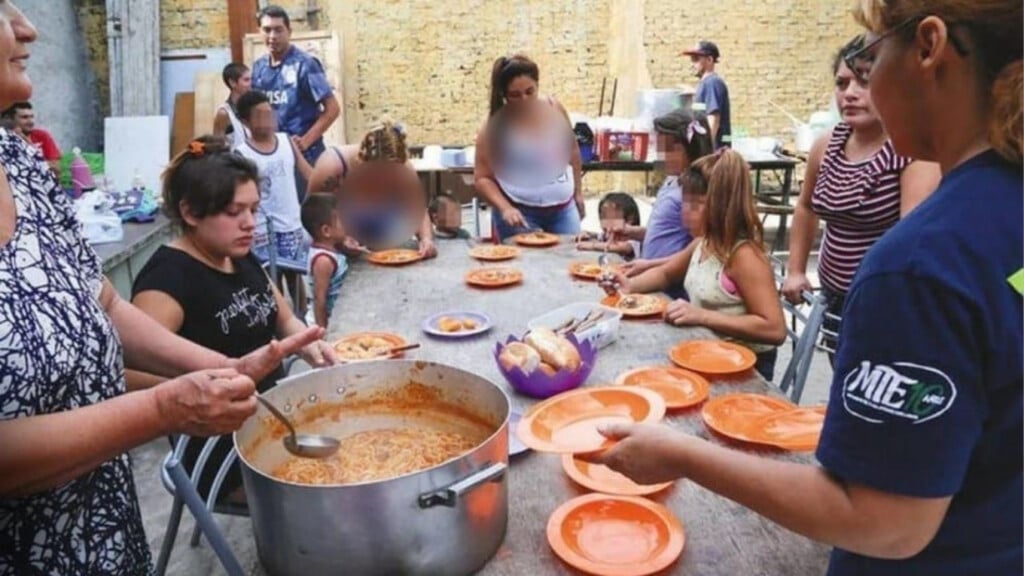
In Argentina, the homeland of footballing legend Lionel Messi, the glittering glory of the pitch stands in stark contrast to a grim socio-economic reality. A deepening financial crisis has pushed the nation’s citizens to the brink, forcing families to resort to desperate measures—including bank loans and the sale of household furniture—simply to put food on the table and purchase essential medication.
The Erosion of the Middle Class
A recent study by the Grande Institute in Buenos Aires paints a harrowing picture: nearly half of the population is now depleting their life savings or accumulating debt to cover basic subsistence. For 43-year-old vendor Diego Nakashio, the struggle is a monthly race against time. “By the 15th of the month, the salary is gone,” he laments. For the remaining fortnight, he, like millions of others, must rely on micro-loans or exhausting “side-hustles” to survive.
President Javier Milei, who assumed office in December 2023, has implemented aggressive “chainsaw” austerity measures to balance the national books. While the International Monetary Fund (IMF) forecasts a potential recovery for 2026 and 2027, the “on-the-ground” reality remains bleak. The divergence between macroeconomic indicators and human suffering is widening.
Economic Indicators: A Tale of Two Realities
| Sector | Status (Nov 2025 – Feb 2026) | Impact on Citizens |
|---|---|---|
| Retail Sales | Down 12.5% | Sharp reduction in calorie intake and essential goods. |
| Personal Debt Default | 11% (Highest since 2010) | Thousands blacklisted from formal banking. |
| Utility Prices | Outpacing Inflation | Severe erosion of real purchasing power. |
| Credit Usage | All-time High | Over 50% of supermarket visits paid via credit. |
A Dangerous Debt Spiral
The crisis is fueling a precarious debt cycle. With personal loan defaults at their highest level in over a decade, those denied formal credit are turning to informal, high-interest “loan sharks.” Meanwhile, the middle class is adapting through collective survival strategies. Schoolteachers like Veronica Malfitano report joining “buying clubs” with colleagues to purchase staples at wholesale prices, while paying only the minimum balance on their credit cards—a strategy that offers temporary relief but invites long-term financial ruin.
The Path Ahead
Economist Lucía Cavallero warns that providing more credit or instalment plans is merely a “sticking plaster” on a gaping wound. “Without structural wage increases that outpace the cost of living, Argentina is trapped in a feedback loop of insolvency,” she notes. While political factions debate bills to cap interest rates, the fundamental issue remains: in the land of World Cup winners, the prize of a stable life is becoming increasingly unattainable for the average worker.