Thursday, 20th August 2026

Khabor Wala Desk
Published: 19th February 2026, 8:31 AM
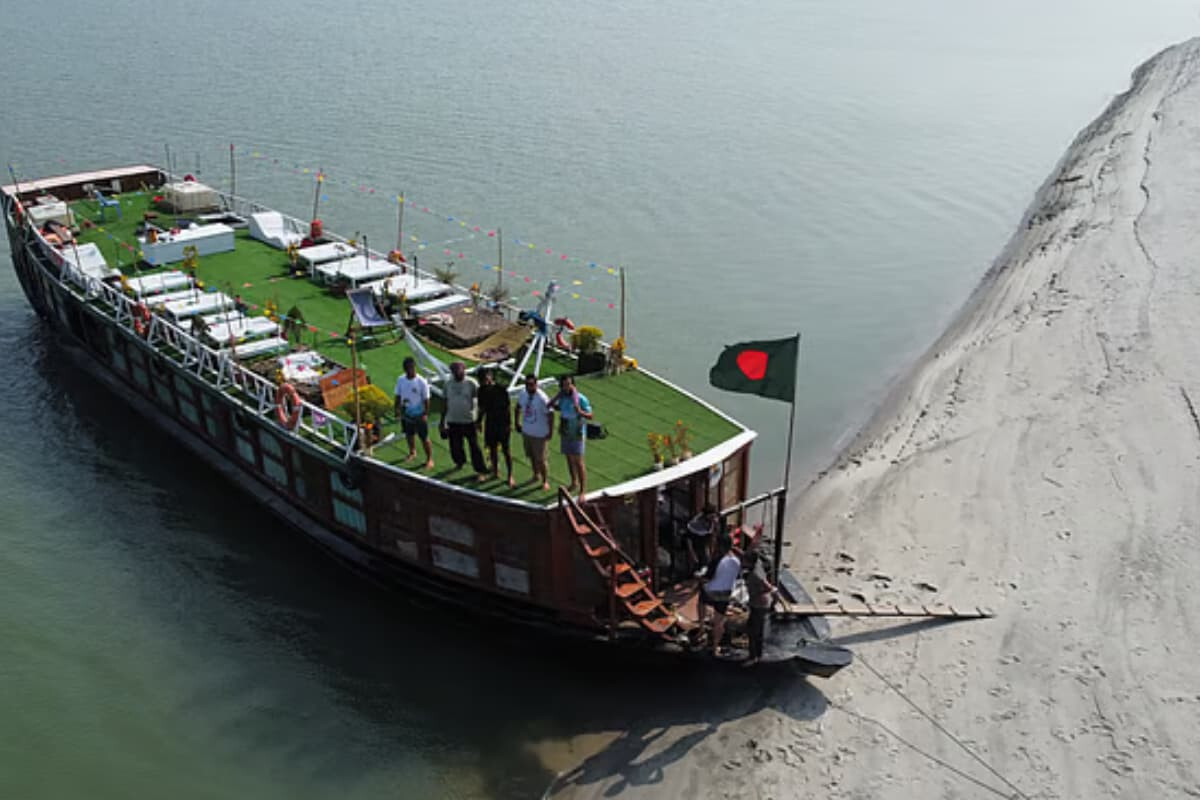
In a significant step towards reviving the riverine heritage of northern Bangladesh, the newly launched pleasure vessel ‘Mastul’ has begun its journey along the Brahmaputra River in Kurigram. Anchored at the historic Chilmarhi river port, the initiative aims to promote river, char, and rural-based tourism, opening new horizons for the region’s economic and cultural development. Locals and stakeholders alike view this as a pioneering effort to integrate the long-neglected northern waterways into the mainstream tourism landscape.
According to the organisers, the vessel’s initial operations will be centred at Chilmarhi river port. From there, tourists can embark on curated voyages to several key destinations, including the confluence of the Teesta and Brahmaputra rivers, the Dhurla–Brahmaputra connection zone, the mouths of the Dudhkumari and Gangadhar rivers, the entry point of the Brahmaputra into Bangladesh, and onwards to Roumari port and Saheb’s Alga. Passengers will also have the unique opportunity to witness charland life firsthand—exploring weaving villages, agricultural practices, and river-based cultural traditions.
Measuring 160 feet in length and 16 feet in width, the ‘Mastul’ can accommodate up to 28 guests simultaneously. Tourism packages include a one-day river cruise as well as a two-day, one-night experience. Private bookings for families or groups are also available. The vessel is equipped with basic accommodation, safety measures, and an open rooftop seating area that offers panoramic views of the river and surrounding charlands.
Key Features of Pleasure Vessel ‘Mastul’
| Feature | Specification |
|---|---|
| Length | 160 feet |
| Width | 16 feet |
| Passenger Capacity | 28 persons |
| Travel Packages | One-day, Two-day–One-night |
| Main Route | Chilmarhi-centred Brahmaputra, Teesta, Dhurla, adjacent charlands |
The maiden journey commenced from the Mawa ferry ghat, attended by entrepreneurs and tourism operators from across the country. The voyage proceeded to Chilmarhi for anchoring and included visits to Roumari Upazila, Char Shaulmarhi weaving village, and surrounding charlands.
Rezaul Karim Sumon, a river and char tourism entrepreneur, highlighted the historical and economic significance of Bangladesh’s riverine system. “The Brahmaputra–Jamuna basin once hosted ancient trade routes connecting Bengal to the wider world. Our goal is to present this legacy to the new generation while fostering tourism,” he said.
Chilmarhi Upazila Executive Officer Sabuj Kumar Basak expressed optimism, noting that the initiative is likely to generate local employment, stimulate small businesses, and revitalise river transport. Entrepreneur Sakib Mahmud added that, akin to Tanguar Haor, the Brahmaputra, Dhurla, Teesta rivers, and charlands hold enormous tourism potential. With strategic planning and safe navigation, river-centric tourism in the northern region could make a meaningful contribution to the national economy.




Comments