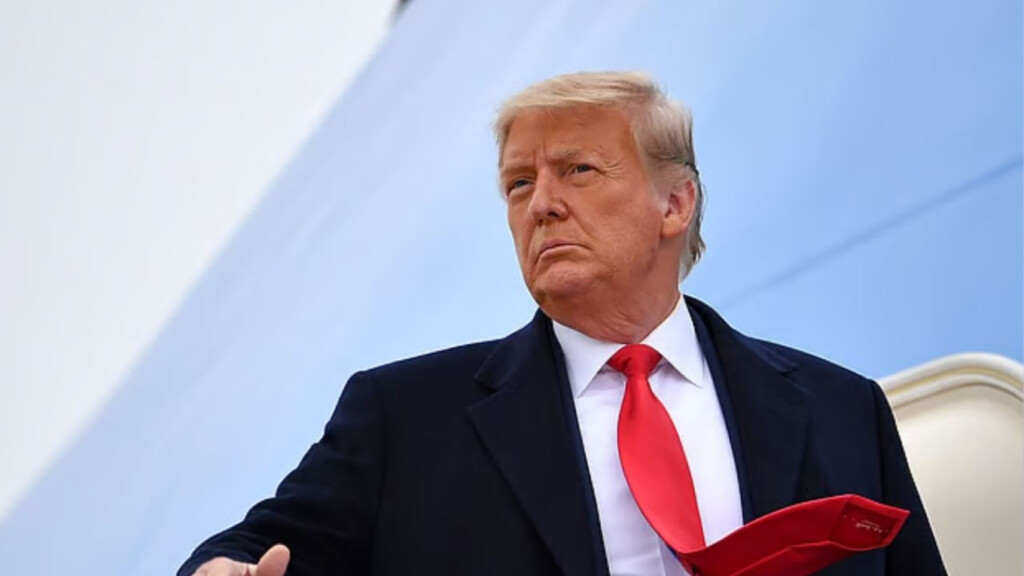
In a landmark judicial intervention, the United States Supreme Court ruled on Friday that the “reciprocal tariffs” imposed by President Donald Trump on multiple nations, including Bangladesh, are illegal. The court’s decision strikes a significant blow to the administration’s protectionist trade agenda, though the President has already retaliated by vowing to implement a new 10% blanket tariff using alternative legislative powers.
The Judicial Stalemate
The Supreme Court ruled 6–3 against the administration, asserting that President Trump overstepped his executive authority. The President had previously invoked the International Emergency Economic Powers Act (IEEPA) to levy these duties, a move the majority of justices deemed an unlawful application of the statute. Writing for the majority, the court clarified that the IEEPA does not grant the President the unilateral power to bypass Congress in establishing trade tariffs of this nature.
President Trump reacted with characteristic vitriol during a White House press briefing, describing the ruling as a “disgrace to the nation” and accusing the judiciary of protecting “foreign interests” over American ones.
Impact on Bangladesh and Global Trade
The reciprocal tariffs, which Trump once heralded as a second “Independence Day” for the American economy, had particularly severe implications for Bangladesh. Initially set at a staggering 37%, months of diplomatic negotiations had gradually reduced this figure. Following a recent trade agreement, the reciprocal portion had settled at 19%.
When combined with the standard 15% export duty, Bangladeshi goods were facing a total tax burden of 34% at the US border. The court’s ruling effectively dissolves the 19% surcharge, though the President’s new proposal threatens to replace it with a fresh 10% levy.
| Country/Region | Peak Reciprocal Tariff | Status Following Ruling |
|---|---|---|
| Bangladesh | 37% (Later 19%) | Illegal (Pending 10% New Levy) |
| China | Variable High | Illegal |
| India | High Surcharge | Illegal (Bilateral Deal May Stand) |
| European Union | Extensive Surcharges | Illegal |
A New Trade Offensive
Despite the legal setback, the Trump administration appears undeterred. The President announced his intention to invoke the Trade Act of 1974 and the Trade Expansion Act of 1962 to impose a fresh 10% universal tariff on all imports.
Gregory Daco, Chief Economist at EY-Parthenon, suggested that while average US tariff rates might temporarily dip from 16.8% to 9.5% following the ruling, this reprieve is likely to be short-lived as the White House seeks alternative legal avenues to enforce its “America First” trade strategy.