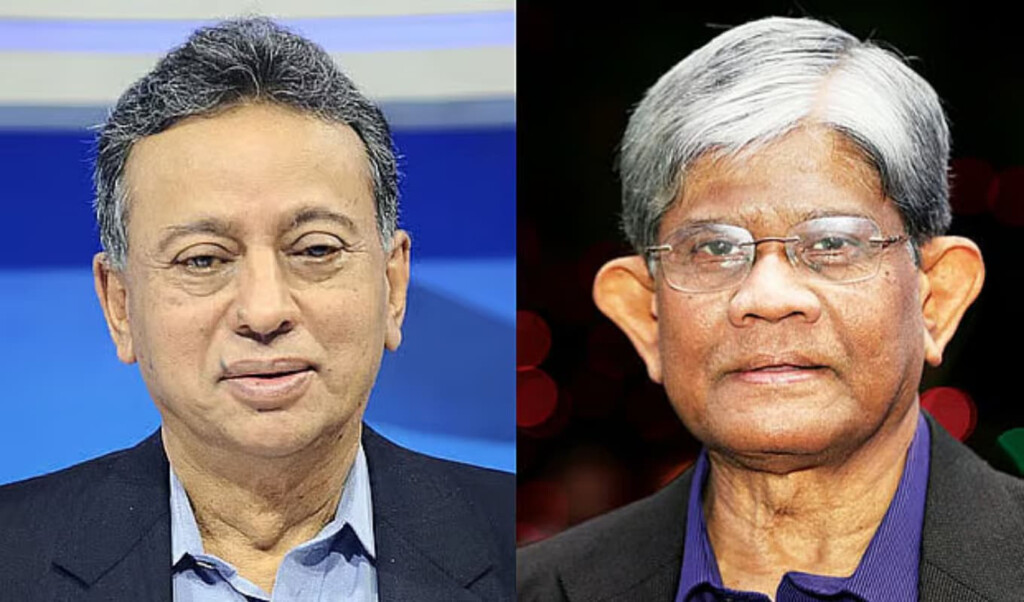
The outgoing economic advisor, Salehuddin Ahmed, has left behind a comprehensive successor note, offering detailed and structured recommendations for reforming the financial sector. Central to his proposal is the establishment of an independent regulatory body to oversee banking and financial institutions, separating this responsibility from the central bank’s core monetary functions. He argues that such a structural change would reduce conflicts of interest, enhance institutional transparency and accountability, and strengthen the overall financial system.
Currently, the central bank performs dual roles: it formulates monetary policy and simultaneously supervises commercial banks and other financial institutions. Experts have long cautioned that consolidating policy-making and regulatory powers within a single institution may compromise both effectiveness and impartiality. In this context, Ahmed recommends creating a specialised regulatory authority focused exclusively on oversight, allowing the central bank to concentrate on its primary functions such as controlling inflation, implementing monetary policy, and maintaining financial stability.
He further observes that the comparatively large number of banks in the country has placed additional pressure on the central bank. This has made it imperative to allocate more attention to core responsibilities without distraction from regulatory oversight.
Banking Regulatory Structures in Selected Countries
| Country | Regulatory Structure |
|---|---|
| United States | Separate regulatory authorities exist |
| United Kingdom | Independent regulator in operation |
| Japan | Distinct supervisory authority |
| India | Central bank also performs oversight |
| Philippines | Supervision under the central bank |
Ahmed’s successor note also proposes the formation of a Bank Resolution Authority, the establishment of a Deposit Protection Corporation, and the enactment of a separate legal framework for Islamic banking. Implementation of these measures would facilitate the restructuring of weak banks, safeguard depositors’ interests, and increase transparency in Sharia-compliant banking operations.
Priorities for Economic Stability
The note outlines several immediate priorities to preserve macroeconomic stability:
Increasing revenue collection
Maintaining a market-based exchange rate
Focusing on high-priority development projects
Exercising prudence in high-interest borrowing
Rationalising subsidies and preventing waste
He highlights that cumulative inflation over the past decade has reached approximately 111 per cent, potentially necessitating a new pay structure for public servants to maintain their standard of living. Simultaneously, he emphasises the continuation of coordinated revenue and monetary policies.
On revenue administration, Ahmed notes a widespread culture of tax evasion and exemptions, as well as insufficient digital infrastructure in income and value-added tax collection. He recommends leveraging technology to enhance fairness, accountability, and transparency in tax administration.
In conclusion, Ahmed asserts that without structural reforms, the economy cannot achieve sustainable recovery. His successor note is expected to serve as a guiding policy framework for the incoming government.