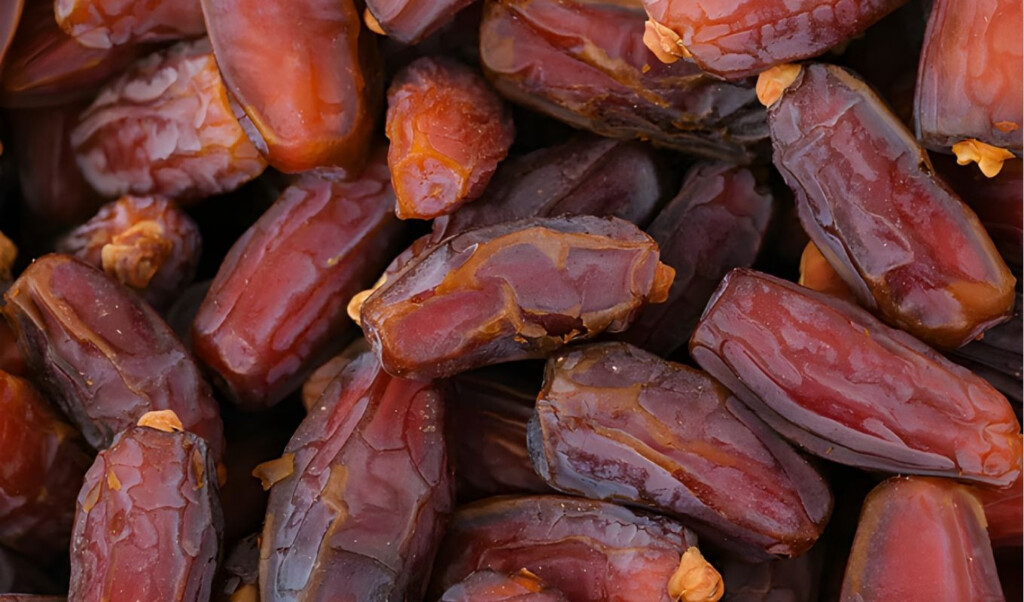
As the holy month of Ramadan approaches, dates — an essential item for breaking the fast — have once again come under sharp focus in Bangladesh’s retail markets. Although overall imports have increased by more than 11 per cent compared with last year, consumers are facing noticeably higher prices for several popular varieties.
Dates hold a distinctive place in Ramadan shopping baskets. Any fluctuation in price has a direct impact on household expenditure, particularly for low- and lower-middle-income families. In anticipation of rising seasonal demand, the government reduced import duties to ease supply pressures. Imports are also being cleared regularly through the ports. Yet, retail prices for at least five major varieties — Zahidi, Dabbas, Nakal, Mashrookh and Amber — have climbed significantly compared with the same period last year.
Zahidi: The Most Discussed Variety
Zahidi dates, often dubbed the “poor man’s date” because of their relatively affordable price, remain the most widely consumed variety in Bangladesh. The bulk of Zahidi dates are imported from Iraq via Dubai and arrive at Chattogram Port before being distributed to wholesale markets.
Last Thursday, Zahidi dates sold in cartons were priced at Tk 280 per kilogram in Chattogram’s wholesale market, with retail prices reaching Tk 350 per kilogram. At the start of last year’s Ramadan, the retail price stood at Tk 200 per kilogram. Sack-sold Zahidi dates were wholesaling at Tk 190 per kilogram and retailing between Tk 250 and Tk 280, compared with Tk 180–200 last year.
Retail Price Comparison
| Variety | Current Price (Tk/kg) | Price Last Year (Tk/kg) | Increase (Tk) |
|---|---|---|---|
| Zahidi | 350 (retail) | 200 | +150 |
| Nakal | 360 | 280 | +80 |
| Mashrookh | 450 | 400 | +50 |
| Amber | 800 | 600 | +200 |
| Dabbas | 500 | 400 | +100 |
Prices of Ajwa, Medjool and Maryam varieties, however, have remained relatively stable this season.
Why Are Prices Rising?
Market insiders cite multiple reasons. A vessel carrying approximately 4,000 tonnes of dates from Thailand recently sank at sea, with around 90 per cent of the cargo comprising Zahidi. This significantly disrupted supply. Additionally, a temporary work stoppage by port officials protesting the leasing of the New Mooring Container Terminal halted goods clearance for several days, further tightening availability.
According to data from the National Board of Revenue, imports between 1 November and 17 February totalled 49,807 tonnes, up from 44,716 tonnes during the same period last year — an increase of 5,091 tonnes, or 11.4 per cent.
To stabilise the market, the interim government reduced import duty on dates from 25 per cent to 15 per cent on 24 December. Advance income tax at the import stage was also lowered from 10 per cent to 5 per cent until 31 March. Similar measures in 2024 had helped maintain relative price stability.
The Tariff Commission estimates Ramadan demand at around 60,000 tonnes. Traders argue that current import momentum suggests supply will soon surpass demand. Between 15 and 17 February alone, 6,917 tonnes were cleared through Chattogram Port.
Nevertheless, economists caution that even brief supply disruptions during peak seasonal demand can trigger retail price spikes. As Professor Sajib Kumar Ghosh of Chattogram University observes, dates are no longer merely a Ramadan commodity but enjoy steady year-round demand. However, demand more than doubles during Ramadan, and even minor imbalances can push prices upward.
For consumers such as Ayubur Rahman, who recently purchased five kilograms of Zahidi dates for Tk 1,750, the price rise offers little choice. “We need dates every day during Ramadan,” he said. “Even if prices go up, we have to buy them.”