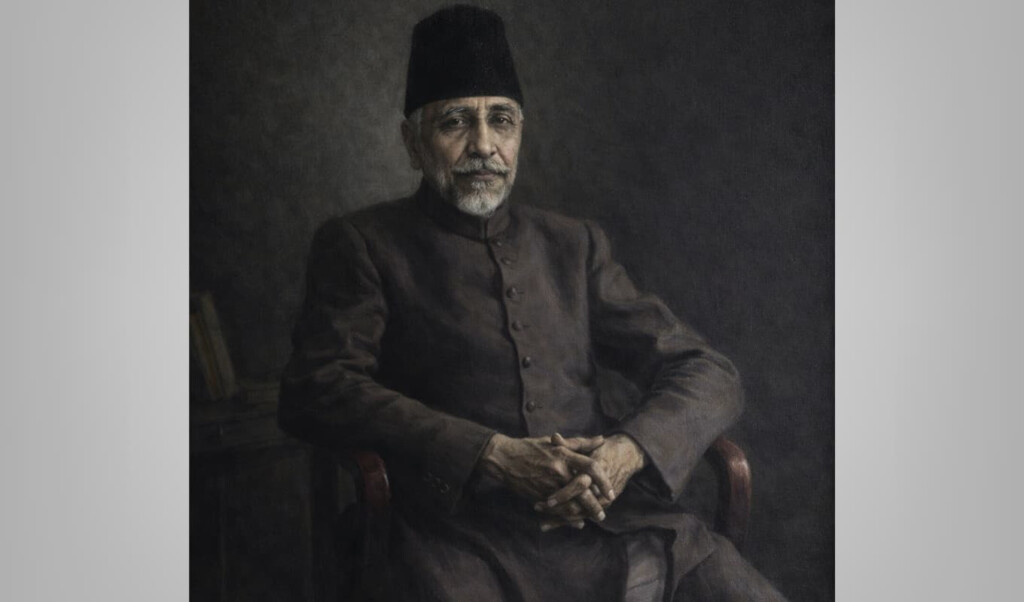
Maulana Abul Kalam Azad—born Abul Kalam Muhiyuddin Ahmed—remains one of the most remarkable intellectual and political figures of the Indian subcontinent. A distinguished Islamic scholar, incisive journalist, eloquent orator and far-sighted statesman, he played a decisive role in India’s struggle for independence and later became the first Minister of Education of independent India.
He was born on 11 November 1888 in Mecca. His family traced its ancestry to Herat in Afghanistan before eventually settling in India. From an early age, Azad displayed extraordinary intellectual gifts. He mastered Arabic, Persian and Urdu, and began writing and publishing while still in his teens. His erudition in theology was matched by a deep engagement with philosophy, history and political thought.
A Pen in the Service of Freedom
Azad used journalism as a powerful instrument of resistance against British colonial rule. Through the influential journals Al-Hilal and Al-Balagh, which he edited, he inspired a generation of Indian Muslims to embrace anti-colonial nationalism. He consistently argued that religion should serve as a moral force for justice and unity rather than division. His writings, bold and uncompromising, led to repeated censorship and restrictions by the colonial authorities.
Leadership in the Freedom Struggle
Azad became closely associated with Mahatma Gandhi during the Khilafat and Non-Cooperation movements. In 1923, he was elected the youngest-ever President of the Indian National Congress. He later served again as Congress President from 1940 to 1946, guiding the party through the turbulent years of the Quit India Movement and enduring long periods of imprisonment.
A firm opponent of the two-nation theory, Azad argued passionately that India represented a shared civilisation shaped by centuries of Hindu-Muslim coexistence. He warned that partition would bring enduring strife—an assessment that many historians consider prescient.
Architect of Modern Education
After independence in 1947, Azad became India’s first Education Minister, laying the foundations of a modern, secular and scientific educational system. He championed free and compulsory primary education and prioritised the development of higher technical learning. Under his stewardship, institutions such as the Indian Institutes of Technology and the University Grants Commission were established or strengthened, shaping generations of scholars and engineers.
In recognition of his immense contributions, he was posthumously awarded the Bharat Ratna, India’s highest civilian honour, in 1992. His birthday, 11 November, is commemorated annually in India as National Education Day.
Key Milestones in Azad’s Life
| Year | Event |
|---|---|
| 1888 | Born in Mecca |
| 1923 | Became youngest President of the Indian National Congress |
| 1940–1946 | Served as Congress President during Quit India Movement |
| 1947 | Appointed first Education Minister of independent India |
| 1958 | Passed away on 22 February |
| 1992 | Posthumously awarded Bharat Ratna |
Maulana Abul Kalam Azad died on 22 February 1958, yet his intellectual legacy endures. A steadfast advocate of secularism, equality and human dignity, he believed that education was the foremost condition of human liberation. In an era still troubled by communal tensions, his vision of unity through knowledge and moral courage remains profoundly relevant.