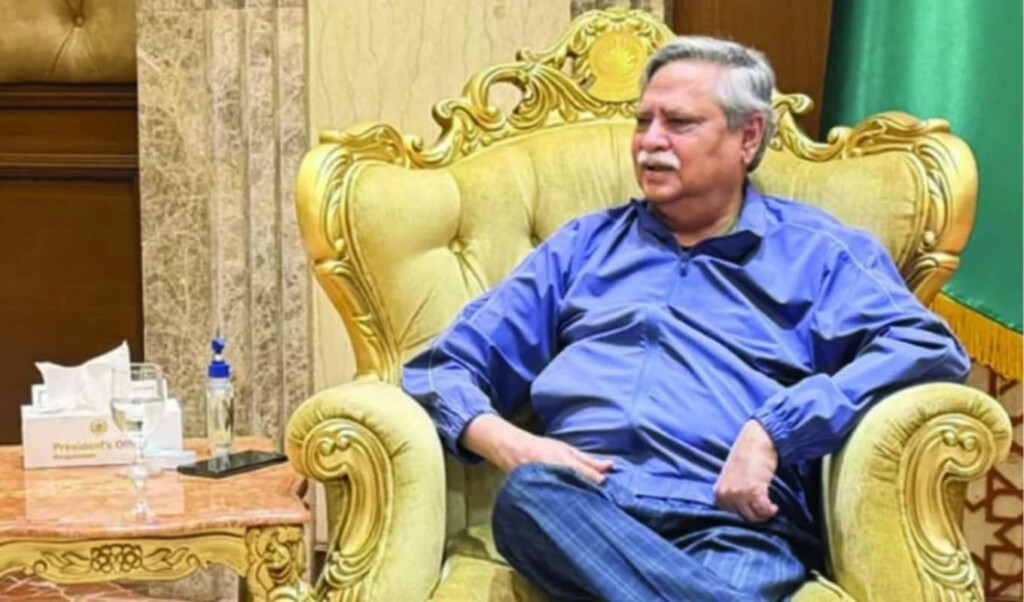
The President of Bangladesh, Mohammad Sahabuddin, has sparked a fresh political controversy by claiming that the interim government failed to inform him of a significant agreement signed with the United States. Speaking in a recent media interview, the President asserted that the government acted without fulfilling its constitutional obligation to notify him of the deal.
“Absolutely nothing was communicated to me. For a matter of state of this importance, I should have been informed. Whether minor or major, previous governments always ensured the President was briefed. This is a constitutional requirement. Yet the interim government ignored it entirely,” he said.
Core Allegations by the President
Mohammad Sahabuddin stated that during the tenure of the interim government, he was deliberately excluded from various critical decisions. He also claimed there was no coordination with the Chief Adviser, despite the President having initiated the appointment process. “The Chief Adviser, whose appointment I initiated, never coordinated with me and did not consult me even once,” he added.
The President’s accusations, detailed in a structured format, include the following:
| Subject | Allegation Description |
|---|---|
| Foreign Visits | Two scheduled foreign visits were blocked without explanation |
| Event Participation | Denied attendance at university convocations and other official ceremonies |
| High Commission Photos | Presidential photographs were removed overnight from all overseas high commissions |
| Press Wing | Press Wing support was withdrawn, and the President’s image and message were omitted from national day publications |
Furthermore, Mohammad Sahabuddin noted that routine protocols requiring presidential presence at state and academic events were deliberately suspended. This, he argued, undermines established conventions and diminishes the symbolic role of the office.
Political Reaction and Implications
The President’s statements have ignited widespread debate within Bangladesh’s political sphere. Analysts suggest that these revelations raise serious questions regarding the interim government’s conduct and adherence to constitutional responsibilities. Public confidence in the balance of power and communication between the executive and interim authorities may also be affected.
Observers emphasise that this controversy highlights the critical need to reinforce the mechanisms for consultation between the President and government officials. The dispute is expected to provoke further discussion on the interim government’s policies and the constitutional scope of the President’s role.
As the political debate intensifies, both the interim government and presidential office face increased scrutiny over procedural transparency, institutional respect, and governance standards in Bangladesh.