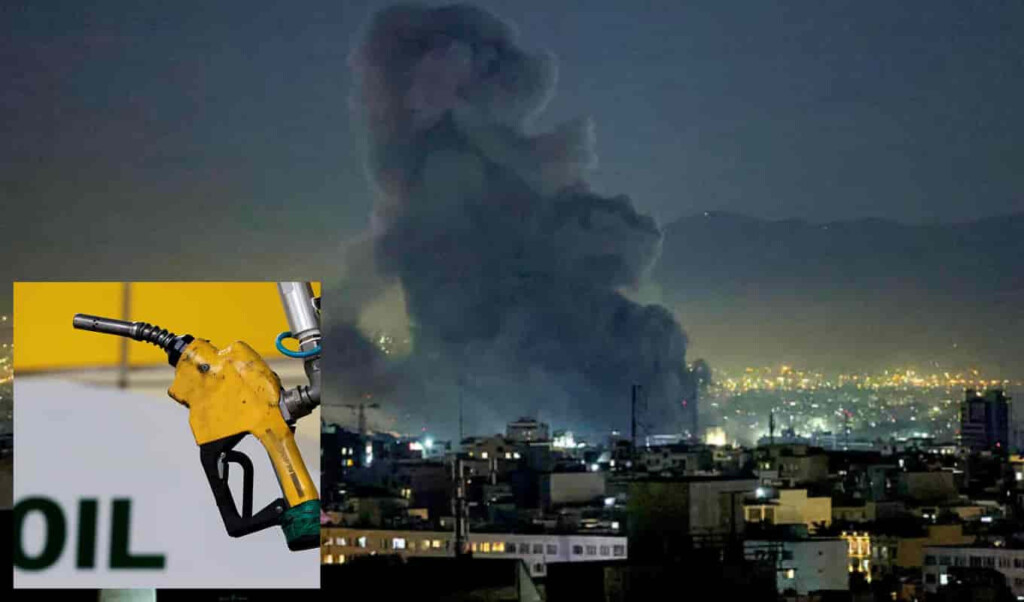
Global oil markets witnessed a sharp upward movement on Monday, triggered by escalating tensions in the Middle East. Analysts have warned that any further unrest near the Strait of Hormuz could push crude prices even higher, potentially breaching the $100-per-barrel threshold if the conflict persists.
The ripple effects of rising oil prices were also evident in western stock markets. Futures indices on Wall Street fell, signalling potential declines, while European markets reflected similar unease. Some Middle Eastern nations temporarily suspended trading, citing “special circumstances,” further intensifying market uncertainty.
Crude Oil Prices and Movements
Asian markets opened with oil prices surging more than 10%, followed by minor adjustments later in the day. At the time of reporting, Brent crude was trading at $76.40 per barrel, marking a 4.84% increase, while WTI crude reached $69.99 per barrel, up 4.43%.
| Oil Type | Current Price (USD/barrel) | Change (%) |
|---|---|---|
| Brent Crude | 76.40 | 4.84 |
| WTI Crude | 69.99 | 4.43 |
Strait of Hormuz Incidents
Concerns surged after missile attacks targeted three vessels near the Strait of Hormuz. In retaliation for U.S. and Israeli operations, Iran launched counter-strikes across several regional locations. The UK’s Marine Trade Operations reported that two ships sustained damage, while a third experienced an explosion nearby; all crew members remain safe.
Iran has issued stern warnings against any vessels attempting to navigate the strait, which handles roughly 20% of global oil shipments. According to Kepler data, at least 150 tankers have anchored outside the strait, causing near-stagnation in maritime traffic.
OPEC Measures
On Sunday, OPEC and its allied producers announced a daily production increase of 206,000 barrels to partially offset rising prices. Saul Kavonic, head of MST Research, emphasised that while market jitters exist, no direct attacks on oil infrastructure or transport have occurred yet.
Stock Market Implications
Western futures indices fell nearly 1% on Monday, with the S&P 500, Nasdaq Composite, and Dow Jones Industrial Average all showing similar declines. In contrast, shares of major oil companies, including ExxonMobil and Chevron, rose approximately 2% in pre-market trading. European markets mirrored the pattern, with EuroStoxx 50 futures down 1.4%.
Analysts warn that prolonged regional instability could tighten global oil supply further, exacerbating price volatility. Temporary market closures in certain Middle Eastern countries are also prompting investors to adopt cautious strategies.
In summary, heightened geopolitical tensions around the Strait of Hormuz remain the primary driver behind both surging oil prices and the prevailing uncertainty in global financial markets.