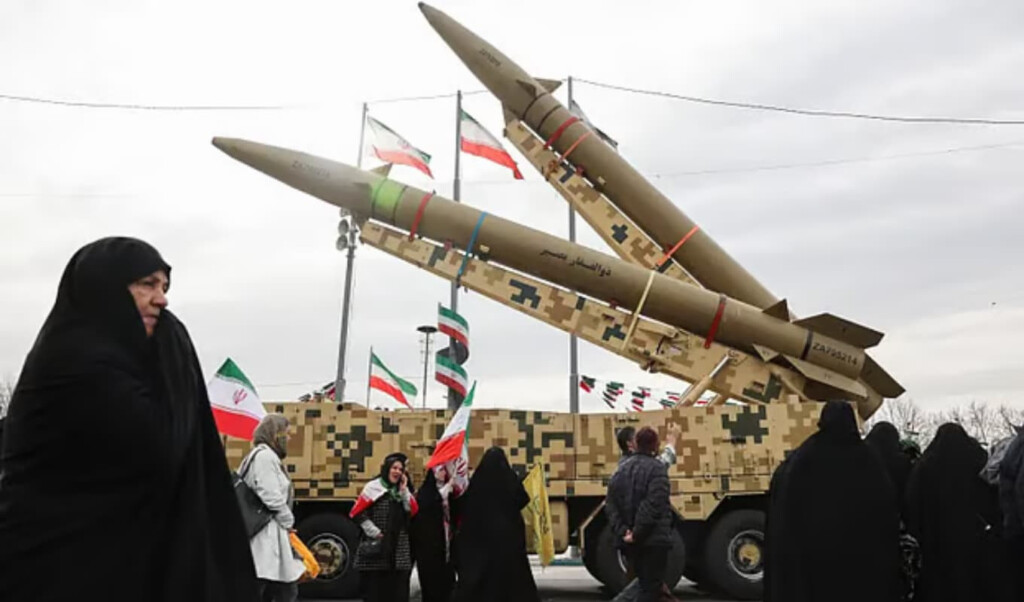
Following a joint strike by the United States and Israel, Iran has demonstrated a rapid and coordinated response. On Saturday, Tehran announced swift retaliatory measures after an assassination attempt on the country’s Supreme Leader, Ayatollah Ali Khamenei. Iranian authorities claimed that strikes targeted not only Israel and certain Gulf states but also American military installations in the region. Understanding Iran’s arsenal and its operational strategy is essential to comprehending the potential scope of these responses.
Iran’s Missile Capabilities
Central to Iran’s defence strategy is its extensive missile programme. Tehran possesses one of the largest and most varied missile arsenals in the Middle East, granting it the ability to strike distant targets even without a fully modern air force. The missile inventory allows Iran to conduct precise regional attacks and project power across the Gulf and beyond.
| Missile Type | Range (km) | Examples | Targets and Use |
|---|---|---|---|
| Short-range ballistic | 150–800 | Zolfaghar, Qiam-1, Shahab-1/2 | Rapid regional strikes, simultaneous impact, surprise attacks on adversaries |
| Medium-range ballistic | 1,500–2,000 | Shahab-3, Emad, Ghadr-1, Khorramshahr, Sejil | Retaliatory regional strikes; long-distance targets including Israel, Qatar, Saudi Arabia |
| Long-range ballistic | 2,000–2,500 | Kheibar Shekan, Hoj Qasem | US military bases and Israel |
| Cruise | Up to 2,500 (Sumer) | Sumer, Ya Ali, Quds, Hoveyzeh, Paveh, Ra’ad | Land and maritime targets; designed to evade air defence systems |
Cruise missiles, due to their low-altitude trajectory, are difficult to detect and intercept. When combined with drones or ballistic missiles, they can overwhelm enemy air defences, increasing operational effectiveness.
Drones and Hypersonic Technology
Iran’s drones, while slower than missiles, offer cost-effective options for mass deployment. They can target airports, ports, and energy infrastructure, keeping critical facilities on high alert for prolonged periods. Tehran has also showcased hypersonic technologies, such as the Fattah series, reportedly capable of striking targets at extreme speeds.
Underground Launch Sites and Strait of Hormuz
To ensure long-term resilience, Iran has developed fortified underground tunnels, concealed bases, and protected launch facilities. These networks make it difficult to neutralise Iran’s missile capabilities quickly. Additionally, Iran can leverage the Strait of Hormuz to disrupt global maritime trade, threatening commercial and military shipping with anti-ship missiles, naval drones, mines, and fast-attack vessels.
Tehran’s Message
Iran has warned that any attack on its territory by the US or Israel would not be considered a limited operation but the initiation of a full-scale conflict. The Islamic Revolutionary Guard Corps has pledged retaliation and signalled ongoing operations, while Iran-backed militias are reportedly participating in coordinated military actions.
In summary, Iran’s defensive doctrine is multi-layered. By integrating ballistic and cruise missiles, drones, underground facilities, and strategic control of the Strait of Hormuz, Tehran is capable of imposing both regional and global pressure. The country’s response strategy emphasises sustained, multidimensional action rather than isolated strikes.