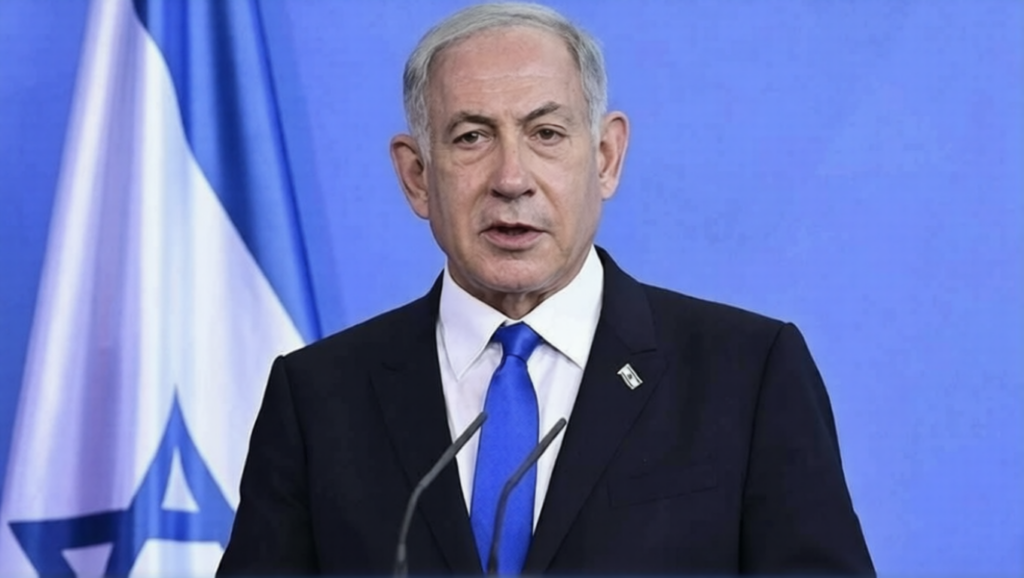
Tensions in the Middle East have escalated sharply following a series of deadly attacks targeting both Israeli and American military installations. On Monday, reports emerged that Iran’s Islamic Revolutionary Guard Corps (IRGC) had launched a missile strike directly at the office of Israeli Prime Minister Benjamin Netanyahu.
The state-run Iranian news agency, Fars News, cited the IRGC as confirming the attack. According to the report, the IRGC also targeted the headquarters of the Israeli Air Force chief in a coordinated offensive. The missiles employed were identified as Iran’s domestically produced Khaibar missiles, underscoring Tehran’s capability to strike strategic locations deep within Israeli territory.
These developments follow a deadly joint operation by the United States and Israel last Saturday (28 February) against Iran. That operation, reportedly intended to disrupt Iran’s nuclear programme, resulted in the assassination of Iran’s Supreme Leader, Ayatollah Ali Khamenei. The nation has since declared forty days of public mourning and seven days of official government leave in response to the leader’s death.
Despite Khamenei’s assassination, the United States has signalled that the campaign is far from over. President Donald Trump has indicated that joint operations with Israel will continue until the full objectives are achieved. Meanwhile, Iran has not remained passive. In retaliation, the IRGC has conducted missile strikes against key Israeli targets, contributing to a mounting toll.
The Red Crescent Society of Iran has reported at least 555 fatalities from the ongoing hostilities, and 131 counties across Iran have suffered infrastructure damage. In a televised address on 1 March, Iranian President Masoud Pajeshekian warned that the nation would pursue retribution, declaring that avenging Khamenei’s death is both a legitimate right and a sacred duty.
Key Details of the Strikes
| Date | Attacking Force | Target | Weapon Used | Casualties / Impact |
|---|---|---|---|---|
| 28 Feb | US-Israel Joint Operation | Iran (various) | N/A | Supreme Leader killed; widespread damage |
| 1 Mar | IRGC | Israeli Air Force HQ | Khaibar missile | N/A |
| 2 Mar | IRGC | PM Netanyahu’s Office | Khaibar missile | N/A |
| Ongoing | US-Israel | Iran | Various | 555 dead; 131 counties affected |
The ongoing tit-for-tat escalation indicates that both sides are preparing for a prolonged period of confrontation, raising concerns over a wider regional conflict. Analysts note that Iran’s response demonstrates its commitment to retaliate proportionately, signalling a potentially dangerous cycle of strikes and counterstrikes in the weeks ahead.