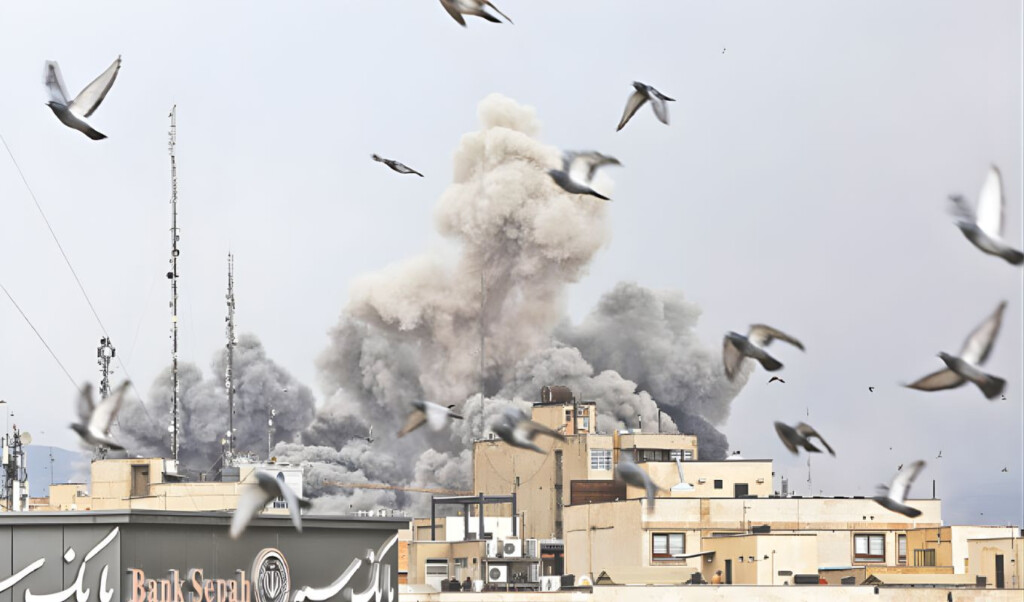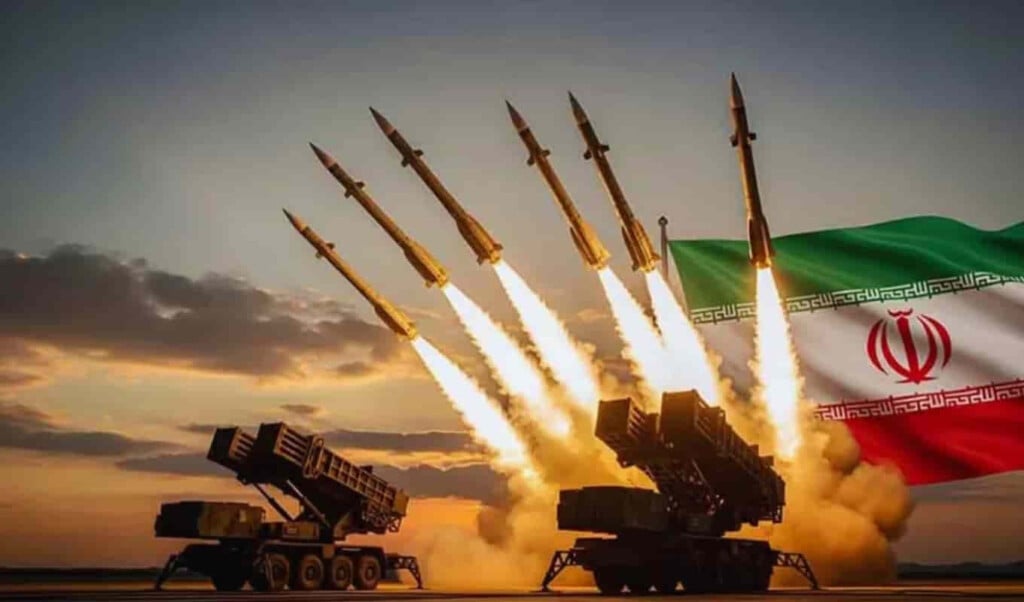
On the fifth consecutive day of escalating hostilities in the Middle East, Iran has launched more than forty missiles targeting United States and Israeli interests, according to a statement broadcast on state television in Iran. The barrage, described by Iranian authorities as part of an operation named “Honest Promise 4”, marks one of the most extensive coordinated missile offensives since the current confrontation began last Saturday.
The statement attributed the operation to the aerospace and missile division of the Islamic Revolutionary Guard Corps. Officials indicated that the missiles were fired over several hours in what they described as the seventeenth phase of the ongoing campaign. Tehran asserted that the intended targets were United States and Israeli military installations, although it did not specify which bases were struck or disclose details regarding casualties or material damage.
Iranian authorities framed the operation as a continuation of efforts to defend national sovereignty and security. Military representatives claimed that the missiles used in the attack were domestically developed, long-range systems capable of high-precision targeting. Defence analysts note that in recent years Iran has invested heavily in short- and medium-range ballistic missile programmes, as well as in unmanned aerial vehicle technology. These developments have significantly altered the regional security calculus, raising concerns among neighbouring states and Western powers alike.
Summary of Key Details
| বিষয় | Details |
|---|---|
| Day of conflict | Fifth day |
| Missiles launched | More than 40 |
| Operation name | Honest Promise 4 |
| Phase of operation | Seventeenth |
| Declared targets | United States and Israeli military installations |
| Damage assessment | Not officially disclosed |
Heightened alerts have reportedly been issued at United States and Israeli bases in Iraq, Syria, and along the Red Sea corridor. Regional sources suggest that air defence systems were activated during the early morning strikes. However, as of Wednesday evening, neither Washington nor Tel Aviv had released a comprehensive public response detailing the impact of the attacks or outlining potential countermeasures.
Security specialists warn that sustained exchanges of missile fire could destabilise the broader Middle East, with possible repercussions for global energy supplies and maritime trade routes. Increased tensions in the Red Sea and the Persian Gulf shipping lanes may disrupt commercial traffic, potentially affecting international markets.
In its statement, Tehran cautioned that any further strikes against its territory or interests would be met with a stronger response. With no immediate signs of de-escalation, observers fear that without intensified diplomatic engagement, the confrontation could widen, deepening instability across an already volatile region.