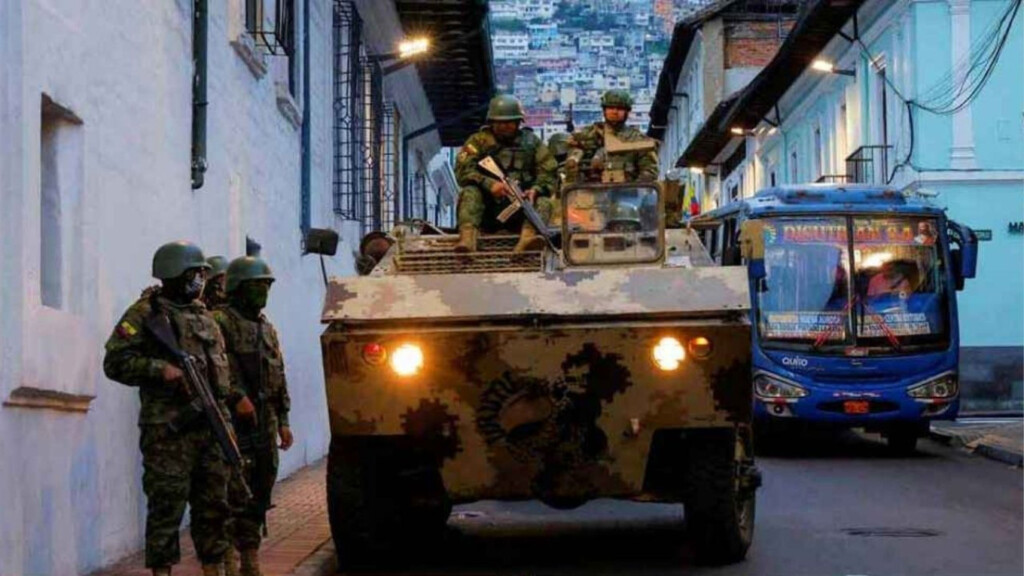
Amidst its ongoing geopolitical engagements and military tensions elsewhere, the United States has officially initiated a significant military intervention in the Latin American nation of Ecuador. On Wednesday, 4 March, the United States Southern Command (SOUTHCOM) confirmed the commencement of joint operations aimed at dismantling powerful narcotics trafficking networks and neutralising designated terrorist organisations operating within Ecuadorian borders. This strategic move is designed to shatter the infrastructure of drug cartels that have long dominated the Caribbean and Pacific maritime corridors.
A Coordinated Strike Against Narco-Terrorism
According to an official communique from SOUTHCOM, the mission is being executed in close tactical coordination with the Ecuadorian security forces. The statement emphasised a unified front, asserting, “Together, we are taking decisive action against the narco-terrorists who have inflicted a reign of terror, violence, and systemic corruption upon the citizens of this region for far too long.”
The military objective extends beyond simple arrests; it seeks to dismantle the logistical backbone of international syndicates that have exploited Ecuador’s geography. Situated precariously between Colombia and Peru—the world’s two largest cocaine producers—Ecuador has transitioned from a transit point to a global hub for illicit trade. Estimates suggest that approximately 70% of the region’s narcotics flow through Ecuadorian territory, sparking a brutal turf war between armed factions that has transformed the nation into one of the most volatile zones in South America.
Geopolitical Shift under President Noboa
The alignment between Washington and Quito has intensified since the inauguration of the right-wing President Daniel Noboa in 2023. While a national referendum last November saw Ecuadorian citizens vote to uphold the ban on permanent foreign military bases, the Noboa administration has navigated this by signing specific security pacts. These agreements allow for a robust, “temporary” US presence. Notably, the port city of Manta has once again become a focal point, with US Air Force personnel deploying advanced drones and surveillance aircraft to track cartel movements in real-time.
Regional Implications and Challenges
Analysts suggest this intervention is not merely about domestic policing but represents a reassertion of American hegemony in South America. While Washington frames the operation as a crusade against the “curse of narco-terrorism,” critics warn of potential retaliatory strikes from local armed groups and the long-term implications of foreign military presence on sovereign soil.
Key Statistics of the Crisis in Ecuador:
| Feature | Details/Statistics |
|---|---|
| Geographic Role | Primary transit hub between Colombia and Peru |
| Narcotics Flow | Approx. 70% of regional cocaine passes through Ecuador |
| US Military Unit | United States Southern Command (SOUTHCOM) |
| Key Strategic Location | Manta Port City (Aerial Surveillance Hub) |
| Political Catalyst | President Daniel Noboa (Security Pact 2023-24) |
| Primary Threat | Designated Narco-Terrorist Organisations |
The Ecuadorian populace remains caught in a delicate balance: the desperate hope for liberation from cartel violence versus deep-seated anxieties regarding foreign intervention. President Noboa, however, remains resolute, stating that international cooperation is the only viable path to reclaiming national sovereignty. As the joint operation unfolds, the world watches to see if this military surge can truly redraw the map of Latin American drug routes or if it will lead to further escalation in an already fractured region.