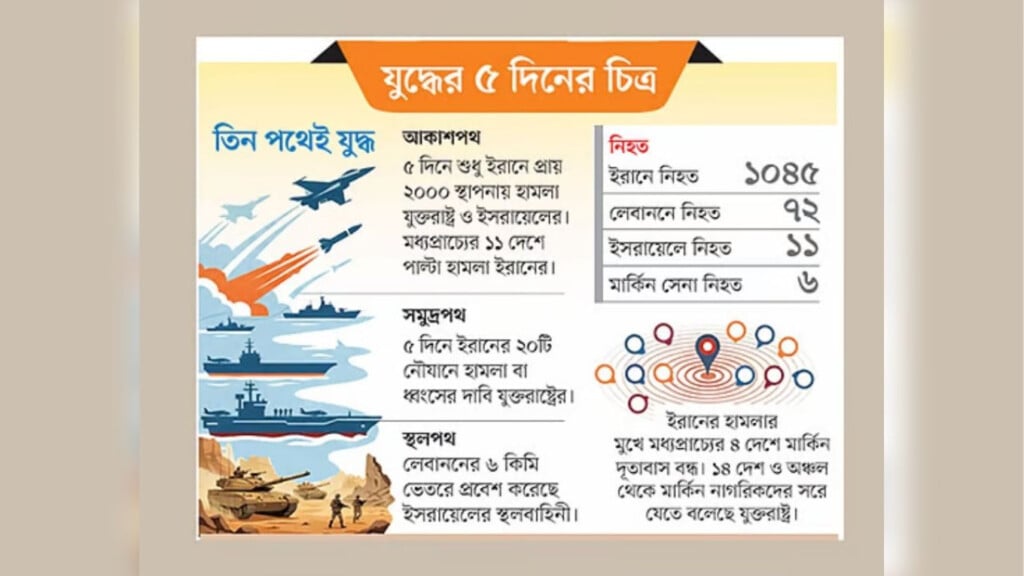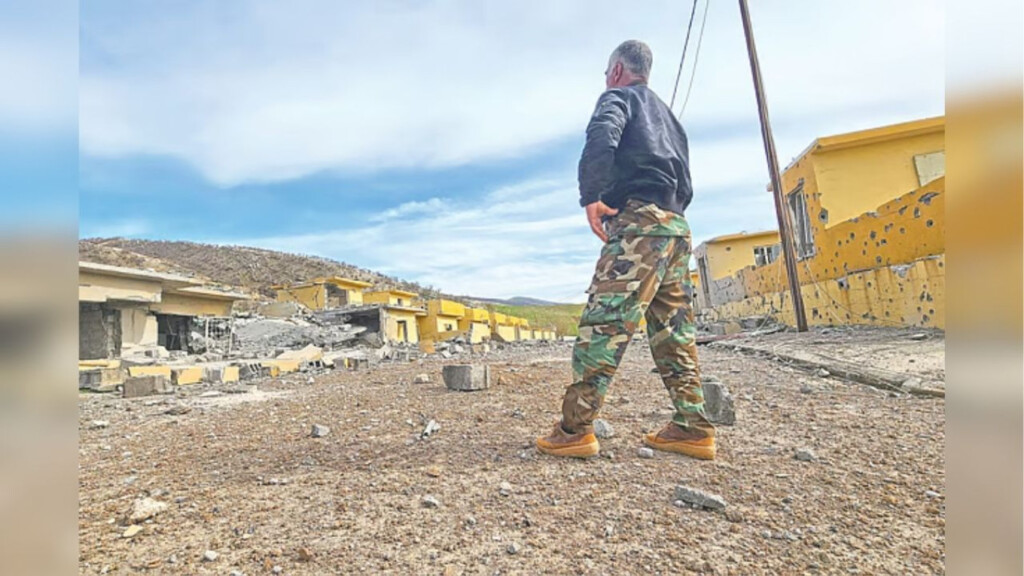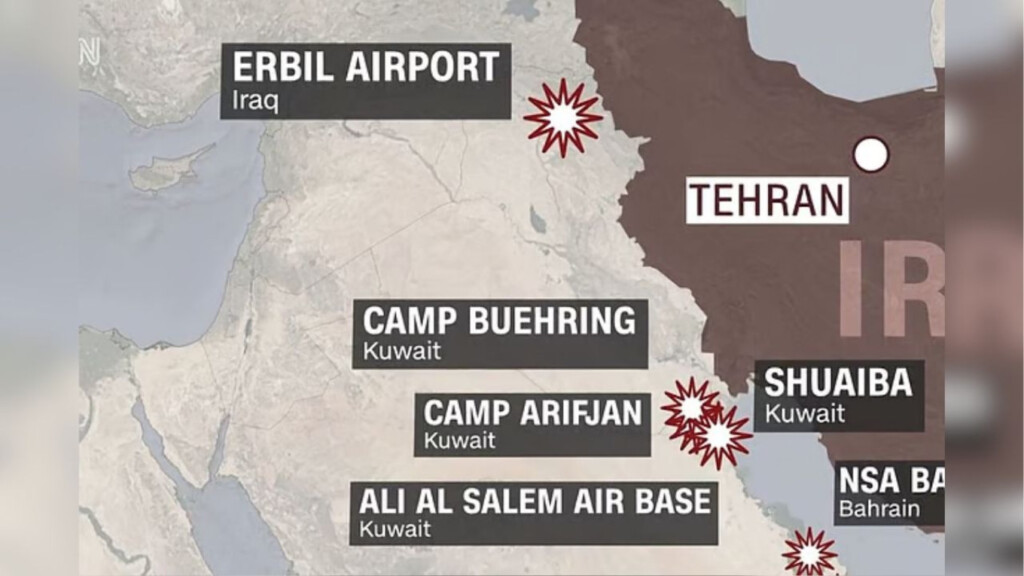
Freshly declassified satellite intelligence has begun to expose the significant structural damage inflicted upon United States military installations across the Gulf. Following a series of high-profile joint operations by American and Israeli forces that resulted in the deaths of senior Iranian leadership, Tehran has executed a sophisticated retaliatory campaign. Within a window of less than 48 hours, at least nine pivotal US strategic positions across the Middle East have been targeted by an unprecedented barrage of ballistic missiles and loitering munitions.
A Calculated Tactic of Isolation
Analysts observing the imagery note a recurring pattern: a deliberate focus on communication infrastructure. By successfully neutralising at least five major satellite communication terminals, Iran appears to be attempting to “blind” and isolate these outposts from global command networks. While the multi-billion-dollar Patriot Missile Defence systems successfully intercepted a vast majority of the incoming projectiles, the sheer volume of the “saturation attack” allowed several warheads to breach the perimeter.
Key Sites and Damage Assessment
The strikes have hit the heart of the American security architecture in the region. At Shuaiba Port in Kuwait, an Iranian strike hit a temporary US operations centre shortly after 09:00 on Sunday. The ensuing inferno, visible from space as thick plumes of black smoke, resulted in the confirmed deaths of six American service members. Notably, the site appeared to lack the robust automated point-defence systems typically seen at permanent bases.
Furthermore, Camp Buehring, also in Kuwait, was struck by what intelligence officials believe to be an Arash-2 drone. While a primary administrative building was decimated, a fleet of nearby transport helicopters narrowly escaped destruction. In Bahrain, the situation was equally dire at the headquarters of the US Navy’s 5th Fleet. A Shahed suicide drone successfully impacted a critical satellite uplink terminal, raising urgent questions regarding the vulnerability of one of the world’s most significant naval hubs.
Summary of Verified Damage to US Assets
| Location | Asset Targeted | Status / Outcome |
|---|---|---|
| Shuaiba Port (Kuwait) | US Operations Centre | Destroyed by fire; 6 fatalities reported |
| Camp Buehring (Kuwait) | Military Barracks | Severe structural damage via Arash-2 drone |
| 5th Fleet HQ (Bahrain) | Satellite Communication Hub | Critical terminal destroyed; comms disrupted |
| Regional Outposts | Multi-site Warehousing | Heavy damage to logistics and storage |
| Regional Network | Satcom Terminals | 5 units confirmed destroyed across the Gulf |
Strategic Implications
The proximity of these Gulf bases to Iran’s borders has fundamentally altered the tactical calculus. Unlike previous strikes on Israeli soil, which required long-range precision, these targets sit well within the optimal “strike zone” for Iran’s short-to-medium-range arsenal. This reduced flight time significantly hampers the reaction window for Western interceptors.
The breach of these “impenetrable” security bubbles in oil-rich Gulf states has sent shockwaves through the diplomatic community. It suggests that despite massive investment in defensive technology, the sheer weight of Iran’s drone and missile production can create “deep wounds” in the American security framework. As the dust settles, the Pentagon is left to weigh the cost of maintaining a forward presence against an adversary capable of bypassing elite air defences.