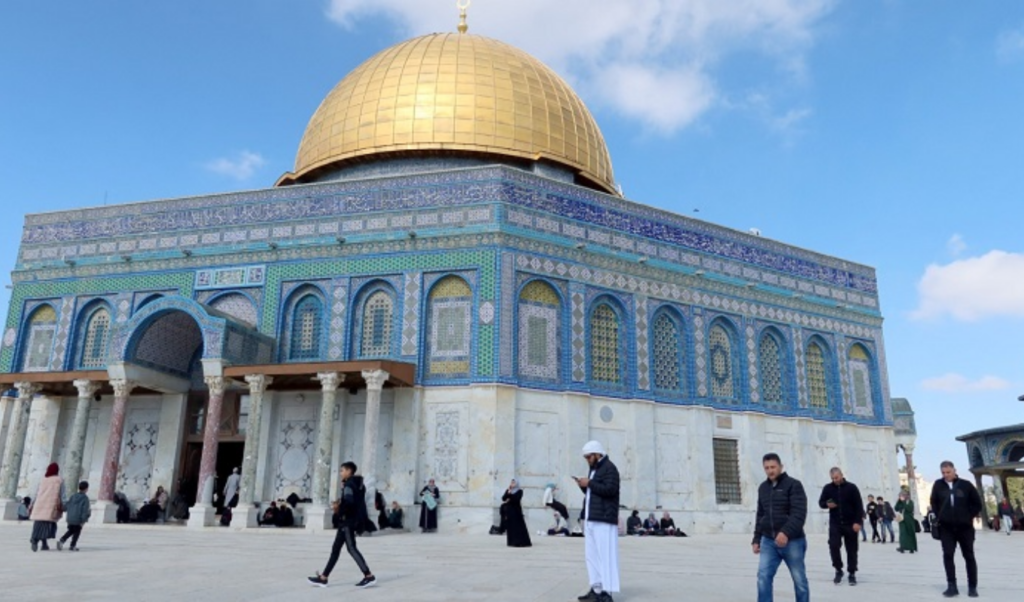
Israel has imposed a temporary ban on Friday prayers at the Al-Aqsa Mosque in Jerusalem, citing security concerns amid ongoing regional tensions. The decision, announced by the Israeli civilian administration on Thursday, has sparked concern among Palestinian residents and the wider Muslim community.
In an official statement, the Israeli administration declared that the weekly Friday congregational prayers at Al-Aqsa Mosque would not be held this week. The statement cited “current security considerations” and ongoing hostilities involving Iran and other regional actors as the rationale behind the unprecedented measure.
Al-Aqsa Mosque, located in East Jerusalem, is one of Islam’s holiest sites and holds profound religious significance for Muslims worldwide. Following the Six-Day War in 1967, Israel occupied East Jerusalem and has maintained administrative control over the city’s holy sites ever since. The latest restrictions reflect Israel’s continued authority over access to these sacred areas, particularly during periods of heightened security alert.
Brigadier General Hisham Ibrahim, head of the Israeli civilian administration, confirmed that all major religious sites in Jerusalem’s Old City would remain closed on Friday. This includes the Al-Aqsa Mosque, the Western Wall, and the Church of the Holy Sepulchre.
He emphasised that no worshippers, tourists, or visitors would be permitted entry to these sites during the closure. The move is part of a broader strategy by Israeli authorities to manage potential unrest and ensure security in the contested city, which frequently experiences tensions during religious gatherings.
Summary of Closures
| Site | Status on Friday | Reason |
|---|---|---|
| Al-Aqsa Mosque | Closed | Security concerns amid regional tensions |
| Western Wall | Closed | Security concerns amid regional tensions |
| Church of the Holy Sepulchre | Closed | Security concerns amid regional tensions |
The closure has drawn immediate attention from international media and human rights observers, who have expressed concern over restrictions on religious freedoms in the city. Al Jazeera reported that the ban is likely to affect not only local worshippers but also pilgrims and tourists who travel from around the world to visit Jerusalem’s historic holy sites.
The announcement comes amid rising tensions in the Middle East, including ongoing hostilities involving Iran and Israeli forces. Analysts suggest that the security-driven closure could further inflame political sensitivities in the region, particularly among Palestinians who view unrestricted access to religious sites as a fundamental right.
As one of Islam’s most revered locations, Al-Aqsa Mosque plays a central role in Palestinian religious and cultural life. Restrictions on worship at such a significant site are rare and often trigger widespread condemnation, protests, and diplomatic attention from Muslim-majority nations.
While the Israeli administration has framed the decision as a temporary precaution, the move underscores the fragile security situation in Jerusalem and the contested status of its religious landmarks. The coming days will be closely watched by local communities, international observers, and governments monitoring developments in the city.
Sources: Al Jazeera, Israeli Civilian Administration Statements.