In a controversial move, the committee of a mosque in Terroshia Poragram, under Islampur Union of Chapainawabganj Sadar Upazila, has officially prohibited all forms of music and musical instruments in the village, citing “social reform” as the rationale. The decision further instructs that local religious scholars, or alims, will abstain from performing marriage rituals at any wedding where music is played.
The committee issued the notice nearly two months ago, under the title “Decision for a Music-Free Society”. The document stated:
“On behalf of the residents of Poragram, it is hereby announced that, to preserve our village environment, uphold youth morality, and ensure family harmony, all forms of public music and instruments are strictly forbidden in the village. Any violations will incur legal action, as music and un-Islamic practices are harmful and prohibited according to Islamic principles.”
The notice was signed by 34 committee members and village representatives and displayed publicly on banners and festoons at key points around the village. Since its issuance, musical activities, including at social events, have reportedly ceased.
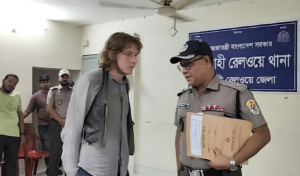
Following recent media attention, local authorities took swift action. Police officers visited the village, seizing banners, festoons, and the notice for investigation. The Upazila Nirbahi Officer (UNO), Maruf Afzal (Rajan), told Prothom Alo that the mosque committee members were summoned to his office. Eight to ten members, led by the mosque’s imam, admitted that the ban had been issued without full understanding and apologised for the error. They agreed to formally withdraw the prohibition in writing and submit the document to the UNO’s office.
Attempts to contact the mosque’s imam, Abdul Malik bin Khaledur Rahman, by phone were unsuccessful. Although he briefly responded, he did not provide further comment.
Field reports indicate that during a village meeting held two months ago, the mosque’s imam and senior alims endorsed the ban under the guise of “social reform,” stamping and signing documents to enforce a music- and instrument-free environment. The prohibition extended beyond weddings to local businesses and mobile vendors, prompting mixed reactions among residents. While some elders supported the initiative, younger villagers expressed dissatisfaction.
Several local women reported that wedding ceremonies can no longer include singing, musical instruments, or sound systems. Teenagers who previously held picnics with music are also affected, causing dissatisfaction among some residents. Some villagers claimed that the committee even circulated the notion that funerals would not be performed for those who fail to pray regularly, though many rejected this as a misrepresentation of Islamic practices.
A village leader, Rabiul Islam, commented: “Weddings and celebrations naturally include music. No committee can fully prevent it. Even if some alims refuse, many others will conduct the rituals. Most villagers are unlikely to comply with this ban entirely.”
Summary of the Incident
| Aspect | Details |
|---|---|
| Location | Terroshia Poragram, Islampur Union, Chapainawabganj Sadar |
| Decision | Complete ban on music and musical instruments |
| Notice Issued | Nearly 2 months ago |
| Signatories | 34 mosque committee members and village representatives |
| Enforcement | Public banners and festoons; social and commercial events affected |
| Authorities’ Response | Notice and banners seized; committee summoned by UNO |
| Community Reaction | Elders partially supportive, youth and women dissatisfied |
| Religious Measures | Alims to abstain from weddings with music; ban later withdrawn |
The incident has sparked debate across the village about cultural traditions, religious authority, and social regulation, highlighting the tension between conservative religious interpretations and community practices.