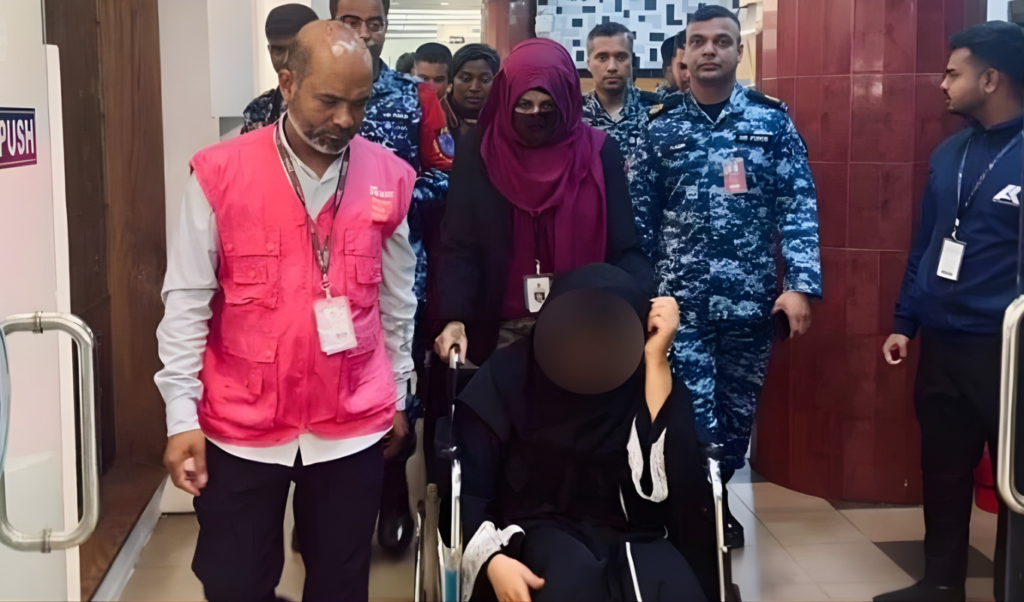
Over the past seven years, at least 70,000 Bangladeshi women have returned from overseas employment, many reporting experiences of physical, sexual, and psychological abuse. These cases reflect a persistent and troubling pattern of exploitation among female migrant workers seeking better livelihoods abroad.
A woman from Kurigram travelled to Saudi Arabia as a domestic worker, hoping to improve her family’s economic situation. There, she was sexually assaulted by her employer and became pregnant. Fearing for her life, she sought refuge at the Bangladesh Embassy in Riyadh and returned home two months later. Another woman from Rangpur, widowed and struggling financially, reported being tortured and even set on fire by the employer’s household members and visitors for protesting mistreatment. A third case from Jashore involved sexual abuse by her employer, his son, and his son’s friends.
These harrowing incidents have become alarmingly common. According to the Bureau of Manpower, Employment and Training (BMET), over 1 million Bangladeshi women are currently working overseas, yet reliable statistics on returnees are limited. The NGO BRAC’s Migration Programme reports that at least 70,000 women have returned in the past seven years, many citing abuse, while at least 800 female migrants were repatriated deceased. Additionally, data from the Ministry of Home Affairs indicates that more than 6,000 women fell victim to human trafficking between 2012 and 2025.
Migrant Women Statistics (2019–2025)
| Year | Number of Women Returned (BRAC/Airport Data) | Key Notes |
|---|---|---|
| 2019 | 3,144 | Returned under duress or captivity |
| 2020 | 49,022 | COVID-19 pandemic repatriations |
| 2021 | 1,811 | Various abuse cases |
| 2022 | 6,029 | Includes rescued workers |
| 2023 | 2,916 | Mostly domestic workers |
| 2024 | 3,375 | Reports of physical & sexual abuse |
| 2025 | 1,891 | Continuing patterns of exploitation |
BMET data shows that Bangladeshi women began working abroad in 1991, with significant growth from 2004. By 2013, over 50,000 women went abroad annually, rising to more than 100,000 per year after a bilateral agreement with Saudi Arabia in 2015, except during the two-year COVID-19 interruption.
The abuse these women face is multi-faceted: underpayment, overwork, inadequate food, restricted communication, and physical and sexual violence. BRAC has reported assisting at least 121 women suffering severe psychological trauma, while thousands more endure similar hardships. One recent case involves Rizia Begum from Moulvibazar, who disappeared in Saudi Arabia for five years before being rescued in February 2026 in a fragile mental state.
Many women flee abusive households to embassy safe houses, where letters from Saudi officials confirm the daily exodus of three to four women seeking refuge. Recommendations include proper training, including self-defence, and stronger legal protections. A 2019 parliamentary committee report found 35% of returning women had suffered sexual or physical abuse and 44% were unpaid or underpaid.
Shariful Hasan, BRAC’s Associate Director for Migration Programmes, emphasises three major patterns of abuse: wage and work-related exploitation, physical violence when women cannot meet employer expectations, and sexual abuse. He warns that the majority of returning women receive insufficient state support.
As Bangladesh observes International Women’s Day this year under the theme “Rights, Justice, Initiative for All Women”, the plight of returning migrant workers underscores the urgent need for stronger protection, monitoring, and support systems for women seeking employment abroad.