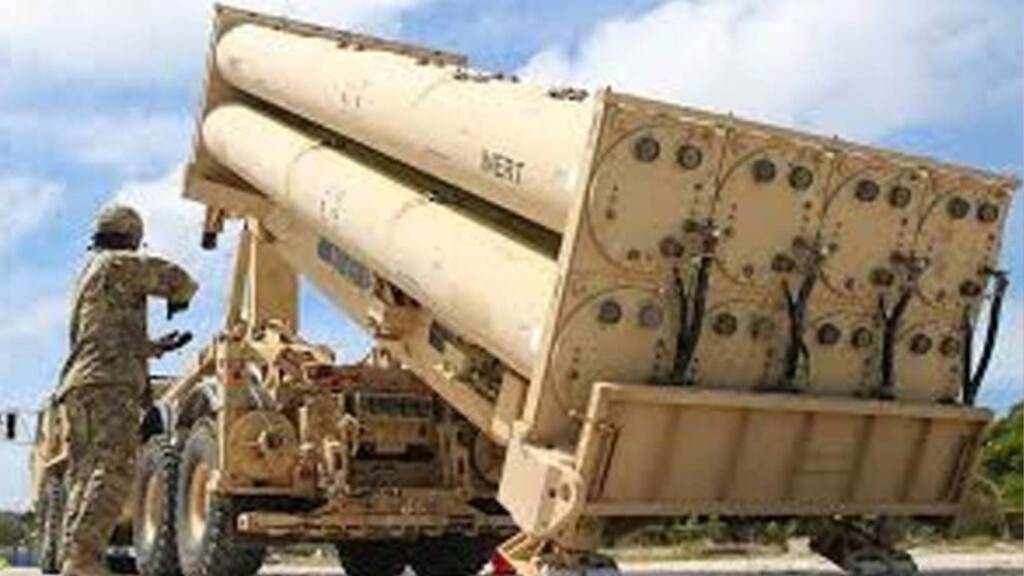
The Middle East has witnessed a dramatic escalation in military hostilities as the Islamic Revolutionary Guard Corps (IRGC) announced a series of high-precision strikes against American strategic assets. According to official statements released by the Iranian state news agency, IRNA, Tehran’s forces have successfully neutralised four sophisticated radar units associated with the United States’ Terminal High Altitude Area Defence (THAAD) systems within a single 24-hour window.
Surgical Precision and Strategic Impact
The IRGC’s aerospace division reportedly utilised advanced precision-guided missiles to execute these strikes. The operation specifically targeted the “eyes” of the American missile shield—the radar arrays that allow the THAAD batteries to detect, track, and intercept incoming ballistic threats.
The THAAD system is widely regarded as one of the world’s most formidable defensive technologies, designed to intercept short, medium, and intermediate-range ballistic missiles during their terminal phase of flight. By disabling the radar infrastructure, the IRGC claims to have effectively rendered the associated interceptor batteries blind and operationaly inert, creating significant “gaps” in the regional aerial umbrella maintained by U.S. Central Command (CENTCOM).
Technical Overview of the Targeted Infrastructure
| Component | Technical Function | Strategic Significance |
|---|---|---|
| THAAD Radar (AN/TPY-2) | High-resolution X-band surveillance | Long-range detection of ballistic threats. |
| Precision Missiles | Satellite-guided surgical strike | Used by IRGC to bypass electronic warfare. |
| Interception Battery | Terminal phase neutralization | Kinetic kill-vehicle deployment. |
| Targeted Units | 4 Mobile Radar Arrays | Disruption of regional defensive coordination. |
The Regional Security Vacuum
The reported destruction of these four units represents a substantial logistical and tactical challenge for the United States. Each THAAD radar unit is an incredibly expensive and technologically dense asset, often costing hundreds of millions of dollars and requiring specialised personnel to operate.
The loss of such hardware suggests a sophisticated level of Iranian electronic and kinetic capability, as these systems are typically protected by layers of auxiliary point-defence weapons. Military analysts suggest that if these claims are verified, the IRGC has successfully demonstrated a “saturation” tactic—overwhelming the defensive grid to strike its most vulnerable and vital components.
Escalation and Retaliation
While Washington has yet to provide a full damage assessment or officially confirm the total loss of four units, the implications for regional stability are profound. The targeting of American hardware directly, rather than through regional proxies, signals a shift in Tehran’s engagement strategy. As the dust settles on this 24-hour offensive, the international community awaits the inevitable response from the Pentagon, fearing that the “shadow war” has now entered a phase of direct and devastating confrontation.