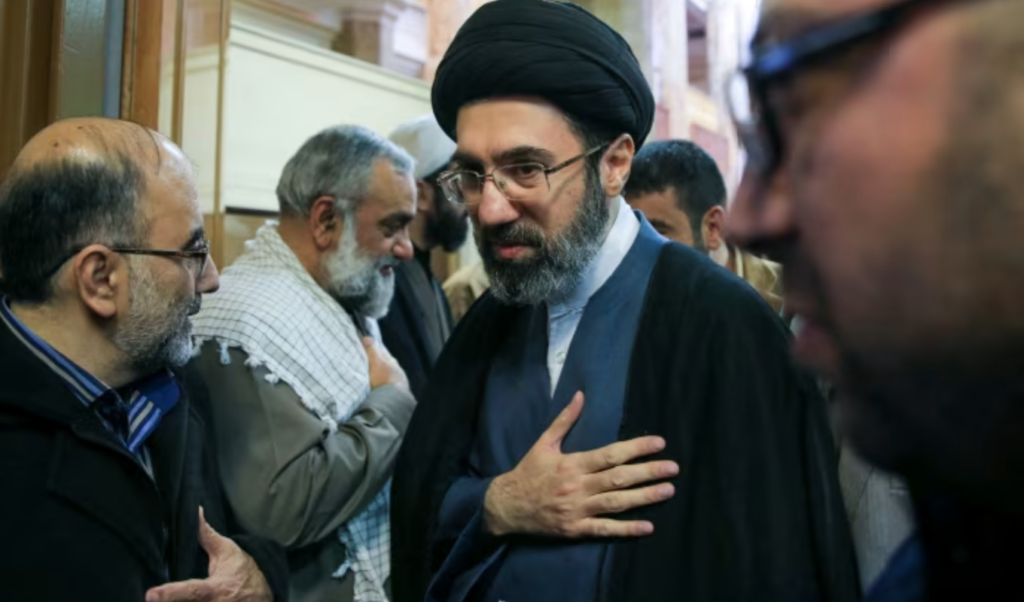
Iran’s newly appointed Supreme Leader, Mojtaba Khamenei, delivered his first televised address to the nation on Thursday, 12 March, outlining a firm stance against the United States and signalling the continuation of attacks on American military installations in the Middle East. The speech, which had been pre-recorded, was broadcast on Iranian state television only days after he assumed the country’s highest political and religious authority on Sunday.
First Address as Supreme Leader
In his speech, Khamenei emphasised that Iran maintains friendly relations with neighbouring states but made it clear that American military bases in the region remain the primary targets of Iranian operations.
“Iran believes in friendship with its neighbours,” he said. “Our targets are solely the American military bases in the region, and such attacks will continue.”
He also demanded the immediate closure of all US military bases in the Middle East, warning that failure to comply would lead to further military strikes. The remarks come amid escalating tensions between Iran and the United States, following recent drone and missile operations claimed by Tehran.
| Key Issue | Statement from Mojtaba Khamenei |
|---|---|
| US Military Presence | Called for closure of all US bases in the Middle East |
| Military Operations | Warned that attacks on US bases will continue |
| Regional Policy | Said Iran seeks friendly relations with neighbouring states |
| Strategic Measures | Confirmed the continued closure of the Strait of Hormuz |
| Domestic Measures | Promised medical care and compensation for war victims |
Strait of Hormuz and Regional Strategy
Addressing the ongoing geopolitical crisis, Khamenei called for national unity while reaffirming Iran’s strategic measures against its adversaries. One such measure is the continued closure of the Strait of Hormuz, a critical global shipping route through which a large share of the world’s oil supply passes.
According to the Iranian leader, maintaining pressure on adversaries requires sustained strategic control over the waterway. “To increase pressure on our enemies, the Strait of Hormuz will remain closed,” he declared.
Khamenei also vowed to avenge the deaths of Iranian fighters, referring to those killed during recent confrontations and military operations in the region.
Support from Regional Allies
The new Supreme Leader praised Iran’s armed forces for their actions during the current crisis. “I would like to thank our brave warriors. They are performing exceptionally in these difficult times,” he said.
He also mentioned that allied groups across the region—including resistance fighters in Yemen and armed factions in Iraq—have expressed willingness to assist Iran. According to Khamenei, these groups will continue to play their roles in what he described as the regional resistance effort.
Domestic Support Measures
Alongside his strong foreign policy rhetoric, Khamenei announced several domestic welfare initiatives aimed at addressing the human cost of the conflict.
The government, he said, will provide free medical treatment for those injured in the conflict, while individuals and families who have suffered property or financial losses will receive state compensation.
These measures, according to the new leader, are intended to stabilise the country during the ongoing crisis and demonstrate the government’s commitment to supporting citizens affected by the conflict.
Regional Implications
Khamenei’s remarks are likely to heighten concerns across the Middle East, where tensions involving Iran, the United States, and regional allies have intensified in recent weeks. While Tehran maintains that its strikes are directed solely at American military assets, analysts warn that the conflict could widen if retaliatory actions escalate.
The speech marks a defining moment in the early days of Khamenei’s leadership, signalling that Iran’s strategic posture toward the United States and regional military presence will remain uncompromising in the months ahead.