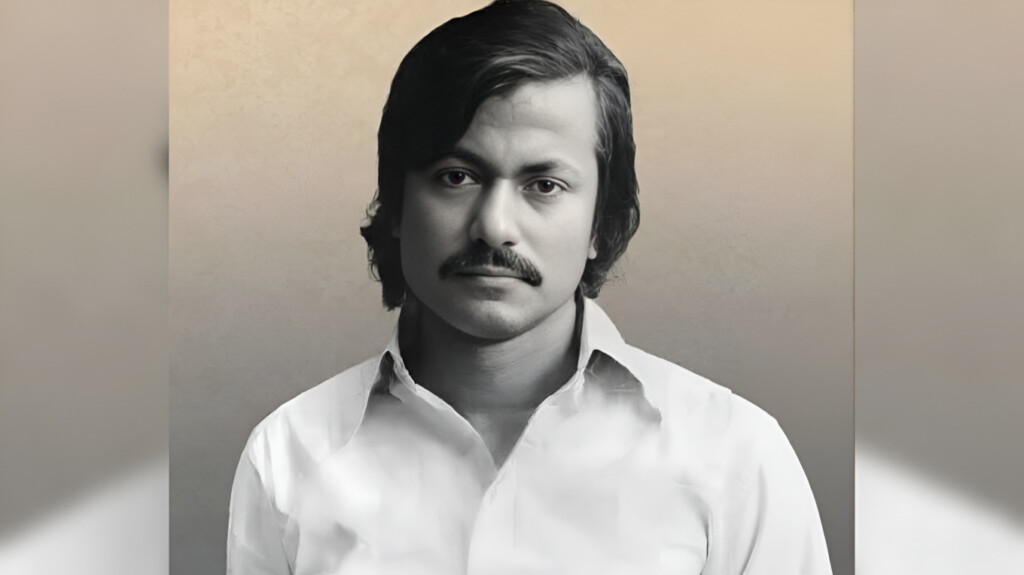
Professor Dr Abu Hena Mostofa Kamal remains one of the most distinguished figures in modern Bengali intellectual and cultural life. Renowned simultaneously as an educator, poet, lyricist, researcher, essayist and gifted orator, he left a profound imprint on the literary, musical and academic traditions of Bangladesh. His creative output enriched the world of Bengali music, while his scholarly writings opened new perspectives in literary criticism and historical research.
Born on 13 March 1936 in the Gobinda neighbourhood of Pabna town, Kamal displayed exceptional intellectual promise from an early age. Growing up in a culturally vibrant environment, he developed an enduring passion for literature, music and scholarly inquiry. His early academic career reflected this brilliance. He passed the Matriculation examination from Pabna Zilla School in 1952, followed by Intermediate studies at Dhaka College in 1954. He later enrolled in the Department of Bengali at the University of Dhaka, where he obtained a BA with Honours in 1958 and completed his MA in 1959.
Early Literary and Cultural Engagement
The 1950s marked a period of vibrant literary awakening in Dhaka, and Kamal emerged as one of the active young voices shaping this new cultural landscape. Even as a student, he became known as a committed cultural activist. In 1954, with the assistance of Mohammad Mahfuzullah, he edited a significant poetry anthology titled “Poetry of East Bengal”, which introduced many emerging poets to readers.
His early writings revealed remarkable poetic sensitivity and lyrical sophistication. As both poet and lyricist, Kamal quickly gained recognition among contemporary writers and musicians.
Contribution to Bengali Music
Together with friends Abu Bakar Khan, Anwaruddin Khan and Mohammad Asfaddoula, he helped cultivate a creative environment that played a key role in shaping modern Bengali song traditions. Many of his lyrics became deeply cherished by audiences.
Among his most celebrated works is the song “Sei Champa Nodir Tire” (“On the Banks of the Champa River”), performed by Abu Bakar Khan. The song is widely regarded as a timeless classic in Bengali music, noted for its lyrical beauty and emotional resonance. Kamal himself was also a regular performer on Dhaka Radio, further strengthening his connection with the cultural sphere.
His poetry and songs often carried themes of intimate emotional expression, refined romantic sensibility and, at times, subtle patriotic consciousness. The harmony between language, rhythm and emotion gave his work a distinctive aesthetic quality.
Academic Career and Research
Teaching formed the central pillar of Kamal’s professional life. His career began at the college level before he briefly served as Assistant Director in the Department of Public Relations in 1962. However, academia soon became his permanent calling.
He joined the University of Dhaka in 1963 as a lecturer in Bengali, and later moved to Rajshahi University in 1965 as a senior lecturer.
In 1966, Kamal received a Commonwealth Scholarship to pursue advanced studies at the University of London. His doctoral dissertation, titled “The Bengali Press and Literary Writing (1818–1831)”, explored the formative relationship between early Bengali journalism and literary development. This research remains an important contribution to the historical study of Bengali literature and the evolution of the press.
Academic and Administrative Milestones
| Year | Milestone |
|---|---|
| 1936 | Born in Pabna, Bengal (now Bangladesh) |
| 1958 | BA (Honours) in Bengali, University of Dhaka |
| 1959 | MA in Bengali, University of Dhaka |
| 1963 | Lecturer, Department of Bengali, University of Dhaka |
| 1965 | Senior Lecturer, Rajshahi University |
| 1966 | Commonwealth Scholarship to the University of London |
| 1973 | Associate Professor, University of Chittagong |
| 1978 | Professor, University of Dhaka |
| 1984 | Director General, Bangladesh Shilpakala Academy |
| 1986 | Director General, Bangla Academy |
| 1989 | Passed away on 23 September |
In September 1973, Kamal joined the University of Chittagong as an Associate Professor, and later returned to the University of Dhaka in 1978 as a Professor, where he inspired generations of students through his scholarship and eloquent teaching.
Literary Criticism and Essays
Beyond poetry and song, Kamal’s prose writings occupy a significant place in Bengali literary scholarship. His essays and critical studies are characterised by analytical depth, literary sensitivity and stylistic elegance. Through his works, he offered thoughtful evaluations of Bengali literary traditions and major authors.
Two of his most notable essay collections are “Shilpir Rupantar” (The Artist’s Transformation) and “Kotha O Kobita” (Word and Poetry), both widely regarded as valuable contributions to literary criticism in Bangladesh.
Leadership in Cultural Institutions
Kamal also served in influential administrative roles that shaped Bangladesh’s cultural landscape. In 1984, he became Director General of the Bangladesh Shilpakala Academy, and in 1986 he was appointed Director General of Bangla Academy, the country’s premier literary institution. During his tenure, he revitalised programmes that promoted literature, arts and cultural scholarship.
Enduring Legacy
Professor Abu Hena Mostofa Kamal passed away on 23 September 1989, leaving behind an extraordinary intellectual and cultural legacy. His poetry, songs, essays and scholarly works continue to inspire readers, researchers and artists across generations.
On his birth anniversary, he is remembered with deep respect and gratitude. His multifaceted contributions to literature, music and education remain an enduring source of inspiration for the cultural life of Bangladesh.
Author
ABM Jakirul Haque Titon
Editor & Publisher
Khaborwala