In a significant move aimed at easing travel and agricultural activities during the upcoming Eid‑ul‑Fitr celebrations, the government has decided to lift all rationing restrictions on fuel sales across the country. From Sunday, all filling stations are authorised to sell diesel, petrol, and octane in line with consumer demand until further notice.
The announcement was made in an official statement issued by the Energy and Mineral Resources Division under the Ministry of Power, Energy and Mineral Resources. The statement cited recent disruptions in international fuel supply caused by the ongoing Iran–Israel conflict as the reason for the temporary rationing measures. However, several imported fuel shipments have now arrived at the Port of Chattogram, enabling a return to normal distribution.
Officials emphasised that the decision aims to ensure smooth homebound travel during the festive season and to support uninterrupted irrigation for the Boro rice cultivation. From 15 March onwards, all distribution points will operate without rationing, supplying fuel according to actual demand.
Energy authorities highlighted that both private travel and agricultural needs significantly increase fuel demand at this time of year. They noted that the lifting of rationing is a temporary measure and that new instructions may be issued if the supply situation changes.
Previous Rationing Limits
The government initially imposed fuel sale limits on 6 March in response to international market uncertainty. The restrictions were as follows:
| Vehicle Type | Daily Fuel Limit (litres) |
|---|---|
| Motorcycle | 2 |
| SUV / Microbus | 20–25 |
| Pickup / Local Bus | 70–80 |
| Long-distance Bus / Truck / Covered Van | 200–220 |
As conditions gradually stabilised, limits for motorcycles were raised from 2 litres to 5 litres, and overall rationing was reduced from 25% to 15%. With Eid approaching, all such restrictions have now been fully lifted.
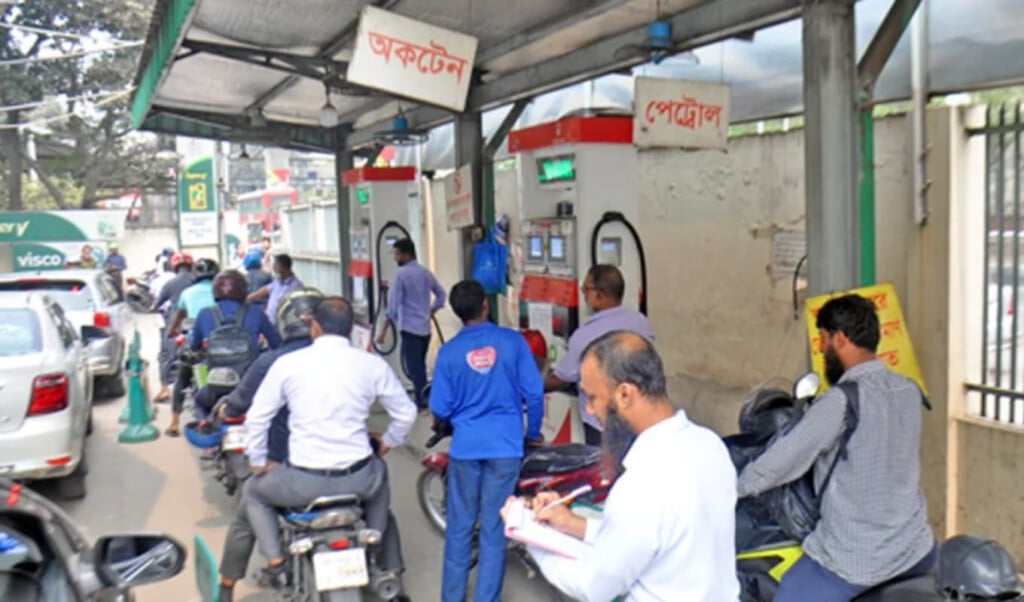
Industry sources reported that the rationing system had caused long queues at fuel stations in several regions, while temporary halts in supply in certain districts had created anxiety among transport operators and general consumers. Leaders of petrol pump associations welcomed the removal of limits, stating that it would relieve operational challenges and stabilise the fuel market ahead of the festival.
Authorities, however, cautioned that international fuel markets remain volatile, and distribution will continue to be closely monitored. They stressed that new policy measures may be implemented if supply conditions deteriorate.