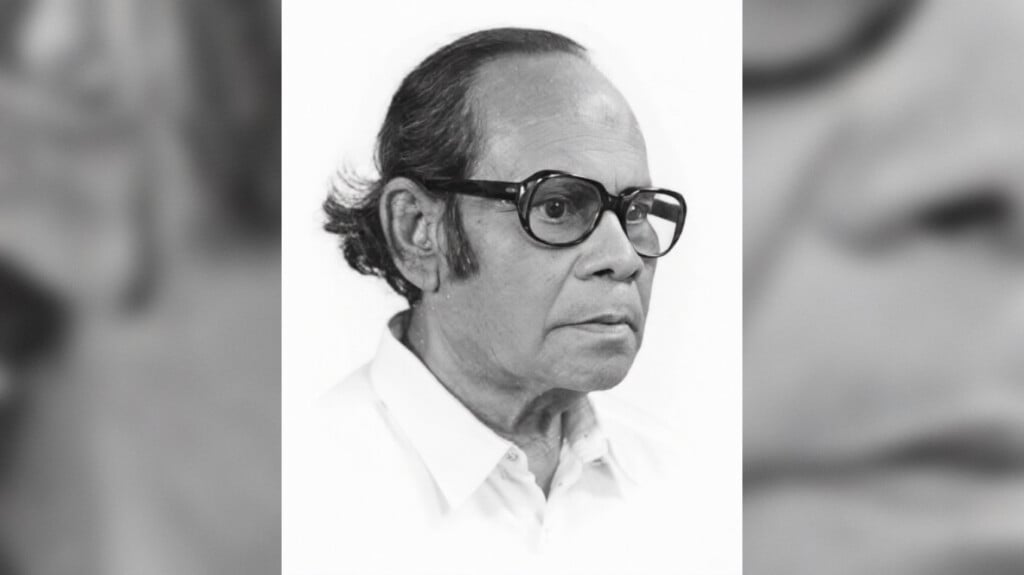
A luminous star of the Bengali musical realm, distinguished Nazrul Sangeet artiste, and former Principal of the Bangladesh Bulbul Lalitakala Academy (BAFA), Bedar Uddin Ahmed remains indelibly etched in the memories of music lovers. His voice, dedication, and cultural leadership occupy a place of honour in the history of Bengali music.
Bedar Uddin Ahmed was born on 15 March 1927 in Sherpur Sadar, Bogura District. His father was Mahir Uddin Ahmed, and his mother was Nekjahan Begum. Orphaned in childhood, the seeds of his cultural growth were nurtured by his mother. Listening to Islamic songs rendered by her, he developed a profound passion for music from a young age.
In 1942, he joined the then Department of Information and Publicity. Simultaneously, his musical talent flourished rapidly. When his recordings were released by the renowned Gramophone Company of Kolkata, Columbia, and HMV, he gained considerable recognition in the music sphere. During this period, he also regularly performed on Kolkata Radio, further enhancing his popularity.
Following the Partition of India in 1947, he moved to Dhaka and joined the then East Pakistan Radio as a professional musician. In Dhaka, his artistic career expanded significantly. Through performances of patriotic songs and Nazrul Sangeet, he won a special place in the hearts of his audience.
Bedar Uddin Ahmed was well known as a collaborator and complementary vocalist to the legendary Bhawaiya singer Abbas Uddin. During the 1950s, he emerged as a symbol of cultural renaissance in the newly formed East Pakistan. Across the cities, ports, and villages of Bengal, he captivated audiences by performing patriotic songs and Nazrul Sangeet at various musical and cultural gatherings.
His contributions extended beyond singing; as a cultural organiser, he played a significant role. As Principal of the Bulbul Lalitakala Academy (BAFA), he was instrumental in promoting music education and the cultivation of cultural practices.
In recognition of his extraordinary contributions to music, he received the Bangla Academy Award in 1974 and, in 1980, the Ekushey Padak, one of the country’s highest civilian honours.
Bedar Uddin Ahmed’s role in the national cultural awakening is indisputable. His voice, his dedication, and his cultural vision continue to inspire Bengali music to this day.
On 13 January 1998, this eminent musician breathed his last. Yet his melodies, his contributions, and his memory continue to shine brightly in the firmament of Bengali culture.
With deepest respect, we remember him.