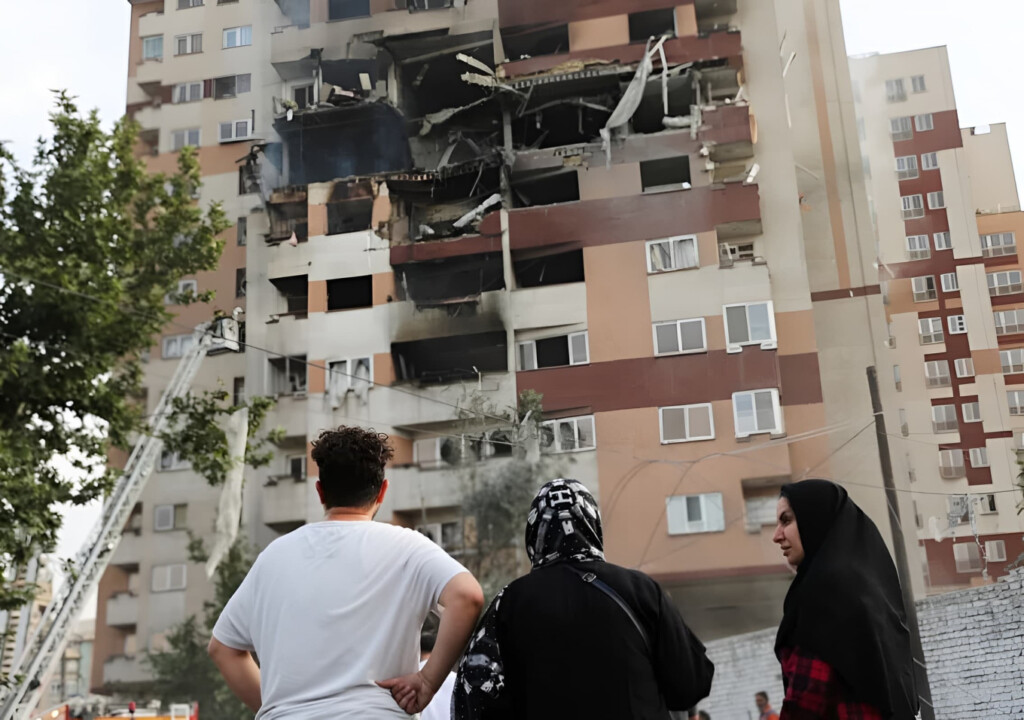
The military confrontation between Israel and Iran continues to escalate, with both sides exchanging strikes as the conflict entered its sixteenth day on Saturday. Despite mounting international concern and diplomatic efforts to de-escalate the crisis, neither side has shown any willingness to retreat from its current position.
According to regional and international media reports, Israeli forces launched a large-scale attack on several targets in western Iran. The strikes reportedly began around midday, when a series of missiles and aerial assaults struck multiple locations across the region. Residents described hearing repeated explosions that shook nearby towns and cities, heightening fears that the conflict could expand further.
The Israel Defense Forces (IDF) confirmed that it had carried out another round of what it described as “extensive strikes” against strategic targets in western Iran. Israeli military officials claimed the operations were aimed at infrastructure linked to Iran’s military capabilities and regional operations. Israeli authorities have indicated that the military campaign could continue for at least three more weeks if necessary.
Meanwhile, the Iranian government has strongly condemned the attacks, accusing Israel and the United States of escalating tensions in the Middle East. Tehran has also rejected calls for a ceasefire, stating that it will not agree to any truce with the United States or Israel under the current circumstances.
US President Donald Trump has similarly taken a hard line on the issue. In remarks reported by American media outlets, he stated that he is not prepared to accept a ceasefire with Iran at this stage. Speaking to NBC, Trump reportedly suggested—partly in jest—that the United States might consider launching another strike on Kharg Island, a strategically significant Iranian oil export hub in the Persian Gulf. His comments have drawn criticism from some political figures, including a US senator who argued that the administration appears to have lost control over the escalating Israel–Iran conflict.
Iranian officials have also made serious allegations against Washington, claiming that the United States could be attempting to stage an incident similar to the 11 September 2001 attacks and place the blame on Iran. No evidence has been presented publicly to support the claim, and it has been widely disputed by Western analysts.
Despite the growing hostilities, some officials have expressed cautious optimism that the conflict might not last indefinitely. US Energy Secretary Chris Wright suggested that the war could potentially come to an end within the next few weeks if diplomatic channels remain open.
Several regional actors have attempted to mediate between the opposing sides. Egypt and Oman have reportedly initiated diplomatic outreach to both Washington and Tehran in an effort to halt the fighting. However, their proposals have so far failed to gain traction, as both sides remain firmly committed to their respective military strategies.
The situation has raised concerns among international observers about the risk of a broader regional conflict, particularly given the strategic importance of the Middle East’s energy infrastructure and shipping routes.
Key Developments in the Israel–Iran Conflict
| Aspect | Details |
|---|---|
| Duration of Conflict | 16 days and ongoing |
| Latest Major Strike | Western Iran |
| Attacking Force | Israel Defense Forces (IDF) |
| Israeli Projection | Fighting may continue for at least three more weeks |
| Mediation Efforts | Egypt and Oman attempting diplomatic intervention |
| US Position | No immediate ceasefire with Iran |
| Iranian Response | Rejects ceasefire; accuses US of escalation |
As the conflict enters its third week, the prospect of further military escalation remains high. Analysts warn that without significant diplomatic progress, the confrontation between Israel and Iran could have far-reaching consequences not only for the Middle East but also for global security and energy markets.