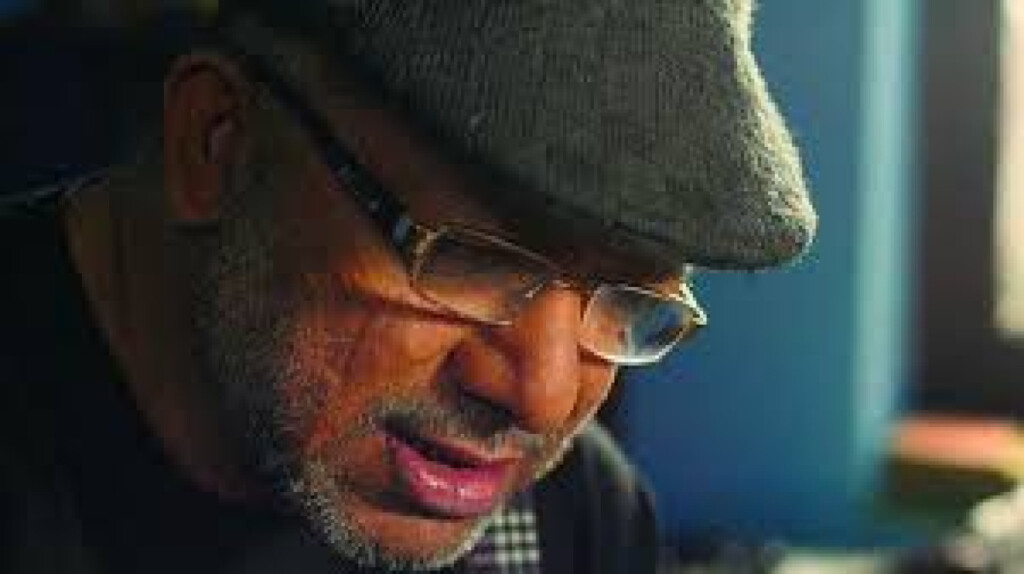
Occasionally, in the world of Bengali music, there emerge individuals whose arrival does more than just create new songs—it gives birth to an entirely new language, fresh ideas, and an expanded cultural horizon. Kabir Suman is one such rare artist. In the early 1990s, when Bengali music had become trapped in long-established patterns and lyrical themes revolved endlessly around love and separation, he arrived like a storm, shattering that inertia. Disregarding the familiar harmonium tunes and the conventional drawing-room gatherings, he injected a new lifeblood into the very fabric of Bengali music. On his birthday, we celebrate not merely a singer but a pioneer of an era—an artist who single-handedly transformed the landscape of Bengali music.
The 1992 release of his album Tomake Chai marked a watershed moment in the history of Bengali music. Prior to this, modern Bengali songs were largely divided into two streams: one rooted in Rabindra Sangeet and Nazrul Geeti, and the other dependent on film music. Kabir Suman demonstrated that music need not be confined to love and heartbreak; it could capture the bustling streets of a city, crowded buses, pavement dwellers, political rallies, or the solitude of an individual.
He brought the language of songs closer to urban reality. His music incorporated elements previously uncommon in Bengali songs: telephones, tramlines, coffee houses, provincial towns, and political unrest. Accompanied by guitar and keyboard, he developed a personal, almost conversational style of singing that was entirely new to Bengali audiences.
Many have described Bengali music history in terms of two eras: pre-Suman and post-Suman.
Kabir Suman is not only a singer; he is a multifaceted cultural figure. Alongside his musical career, he worked in international journalism. His tenure at Voice of America and Deutsche Welle allowed him to gain deep insights into world politics, society, and culture—experiences that shine through in both his songs and his writing.
His prose carries the same sharpness and intellectual depth. Whether in essays, memoirs, or political analysis, his writing is at once personal and a reflection of profound social awareness. He is equally versatile in music, commanding guitar, piano, and flute with ease.
Perhaps most importantly, he popularised the culture of solo performance in Bengali music, where an artist alone on stage with a guitar or keyboard could weave songs, stories, and commentary into a unique artistic universe—a path many young musicians continue today.
Another defining aspect of Kabir Suman’s artistry is his clear political and humanitarian stance. He has always spoken out against religious, caste, or social divisions. His music advocates humanity, and his life reflects that belief. Many believe he partially filled the need for a bold, secular voice in Bengali culture after Nazrul Islam. His songs articulate both protest and compassion.
He has shown remarkable adaptability, embracing modern technology, digital recording, and the practice of Khayal music in later years. His creative restlessness and curiosity about the new have kept his work fresh and vital.
Artists who change eras inevitably spark controversy, and Kabir Suman is no exception. His political positions, personal choices, and forthright language have often drawn criticism. Yet one enduring truth remains: whenever a lover struggles to call their beloved, a citizen yearns to express love for their city, or a protester stands against injustice—Suman’s songs quietly return.
His music has become a secret lexicon of Bengali sentiment. Songs like Haal Chhero Na Bondhu, Jatismar, and Tomake Chai are no longer merely songs; they are vessels of emotion, memory, and history. Kabir Suman has shown us that music is not just melody—it can be poetry, protest, self-reflection, and a record of its time.
On his birthday, we offer not only our best wishes but also our gratitude—for teaching us to reimagine the world of Bengali music.
May you live long and remain well.
Continue to teach us the courage of living life on our own terms.
Happy Birthday, Kabir Suman.
Salutations for bringing a new language of melody to the ears of Bengalis.