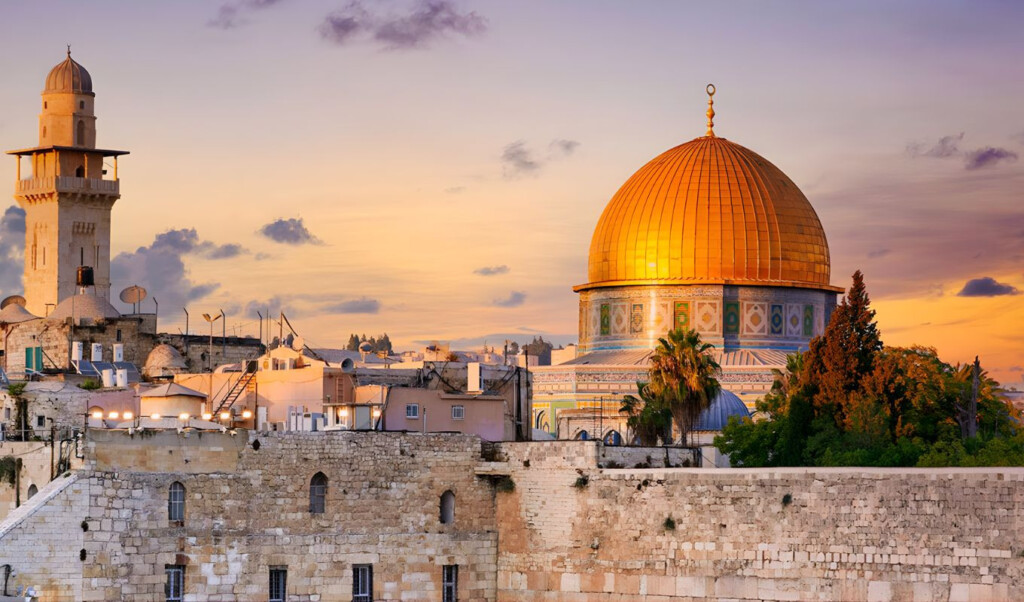
Israeli authorities are reportedly planning to keep the Al-Aqsa Mosque closed during the upcoming Eid al-Fitr celebrations and the days following. Multiple sources involved in the administration of the mosque in occupied East Jerusalem confirmed the development to Middle East Eye (MEE).
According to these sources, the Israeli government recently informed the Islamic Waqf Committee, which oversees Al-Aqsa, about the decision. The closure has been justified on the grounds of “security concerns,” a rationale linked to the ongoing conflict between Israel, the United States, and Iran.
Palestinians have described this measure as unprecedented during the holy month of Ramadan, alleging that Israel is attempting to establish full control over the mosque under the pretext of security.
Since the beginning of Ramadan, access to Al-Aqsa has been severely restricted. This marks the first time since Israel occupied East Jerusalem in 1967 that Palestinians were prevented from performing the Friday prayers during Ramadan, sparking widespread anger across the Muslim world.
Currently, only 25 Waqf personnel are allowed on the mosque compound per shift, and Israeli police have reportedly rejected requests to permit even a single additional worker. Officials fear that allowing extra personnel could provide extremist Jewish settlers with opportunities to enter the mosque.
Waqf authorities have also raised concerns over covert surveillance within the main prayer hall and the Dome of the Rock, suggesting that continuous monitoring of the mosque is underway. Meanwhile, the Old City of Jerusalem has been effectively sealed off, with entry limited to local residents, rendering the once-bustling streets almost deserted, although normal life continues just outside the barricades.
Last Sunday, on the night of Laylat al-Qadr, hundreds of police officers blocked all entrances to Al-Aqsa, forcing thousands of worshippers to pray on the streets.
Dr Mustafa Abu Sway, a professor at the mosque, remarked on the stark contrast between conditions inside and outside the Old City, noting that if security were genuinely a concern, the mosque’s expansive underground areas could have been utilised for shelter.
Awni Bazbuz, the Waqf Committee’s international affairs director, warned that these temporary restrictions could become permanent. He emphasised that international law prohibits an occupying power from making permanent alterations in occupied territories. Israel’s repeated violations of Al-Aqsa’s historic status quo could foreshadow a deeper and more serious crisis in the future.
Summary of Al-Aqsa Access Restrictions
| Aspect | Current Status | Notes |
|---|---|---|
| Mosque Access | Closed to general public | Justified as “security measures” |
| Waqf Personnel | 25 per shift | Requests for additional staff denied |
| Surveillance | Covert monitoring suspected | Main prayer hall and Dome of the Rock |
| Old City Entry | Restricted to locals | Outside areas largely unaffected |
| Notable Incident | Laylat al-Qadr blockade | Thousands prayed in streets |