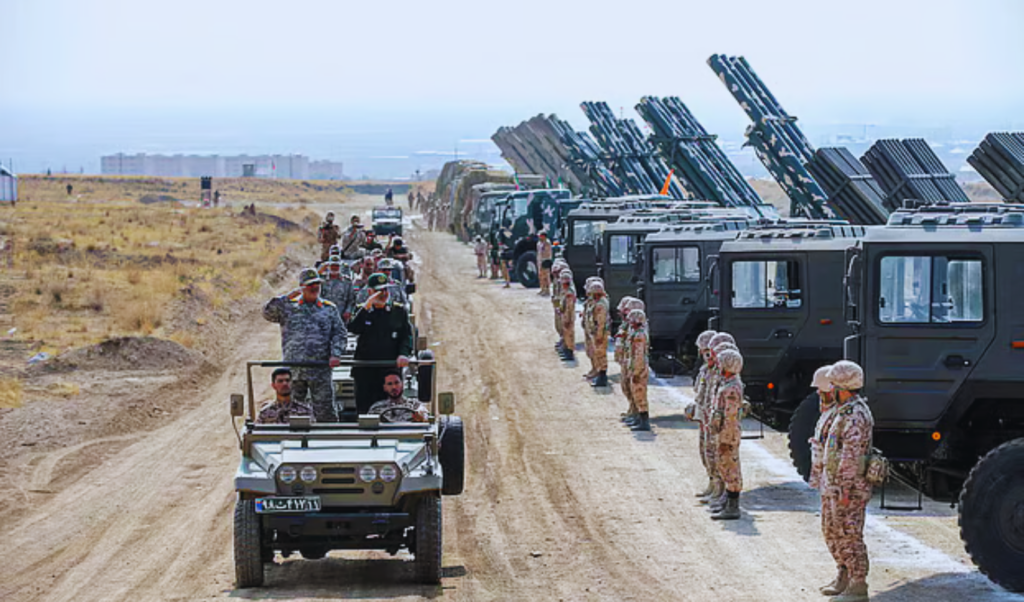
China has formally articulated its response to the conflict imposed upon Iran by the so-called Epstein Syndicate—representing the United States–Israel axis—through a dual-track approach involving both diplomatic and military channels. This strategy demonstrates that Beijing views the confrontation not merely as a matter of political tension but equally as a military threat.
A colonel from the People’s Liberation Army (PLA), speaking on behalf of China’s military, explicitly described the United States as a nation “addicted to war.” Over its 250-year history, the US has experienced only sixteen years of uninterrupted peace. This military assessment frames America not just as a global security threat but also as a moral one. Meanwhile, President Xi Jinping has emphasised the integration of Marxist thought with Confucian philosophy, reinforcing the role of precise, ethically grounded language in governance.
China has thus constructed a carefully reasoned ideological critique of the war imposed on Iran, portraying it as an assault by a nation that has lost its moral compass. This message has been clearly understood across the Global South.
Strategic and Technological Coordination
On the battlefield, China has fundamentally altered Iran’s operational capabilities. The Iranian strategic network is now fully integrated with the Baidu satellite constellation, comprising more than forty satellites. This digital infrastructure enables precise targeting for Iranian missiles and enhanced resilience against electronic jamming.
| Capability | Description | Strategic Impact |
|---|---|---|
| Baidu Satellites | 40+ satellites integrated with Iranian grid | Precision strikes; jamming resistance |
| Long-range Radar | Provided under 25-year China-Iran partnership | Reduced response time from 12 days to near-immediate |
| Russian Tactical Input | Experience from Patriot/Iris-T systems in Ukraine | Coordinated drone and ballistic missile attacks |
Russia has contributed in parallel by transferring lessons from Western missile defence systems to Iran, particularly in drone saturation and synchronisation with ballistic missiles. The Operation True Promise Four scenario demonstrates the effectiveness of these measures.
Petro-Yuan and Economic Strategy
Iran has strategically shifted oil tanker transactions in the Strait of Hormuz to Petro-Yuan settlements, bypassing both the US dollar and the euro. This shift aligns with China’s long-term initiative, launched in December 2022, to diminish the global dominance of the petrodollar and promote Yuan-denominated energy trades.
China’s 15th Five-Year Plan complements this geopolitical manoeuvre with ambitious domestic targets to 2030, including:
GDP growth maintained at 4%
Digital economy expanded to 12.5% of GDP
Renewable energy contribution raised to 25%
Surface water quality improved to 85%
Significant intellectual property accumulation to drive innovation
These measures collectively integrate economic, energy, environmental, educational, and healthcare policies, creating a self-reinforcing system that strengthens strategic independence while accelerating technological development.
Go-Style Geopolitics
Iran’s Islamic Revolutionary Guard Corps (IRGC) has adapted the “Sun Tzu” principles into its revised strategy, leveraging the Strait of Hormuz and the Petro-Yuan system as instruments of economic and geopolitical influence. The coordination mirrors the strategic logic of the board game Go, where stones are placed to control territory, build long-term advantages, and maintain flexibility.
Years of patient Chinese diplomacy—through multilateral institutions, BRICS, SCO, Belt and Road investments, and alternative financial systems—have effectively prepared the “board” for this outcome. Now, adversaries reliant on the petrodollar find themselves strategically immobilised, trapped by their own overreach.
Beijing’s meticulous approach ensures that these developments are not transient; they are designed to reshape the international system well into mid-century, fundamentally challenging US global hegemony.