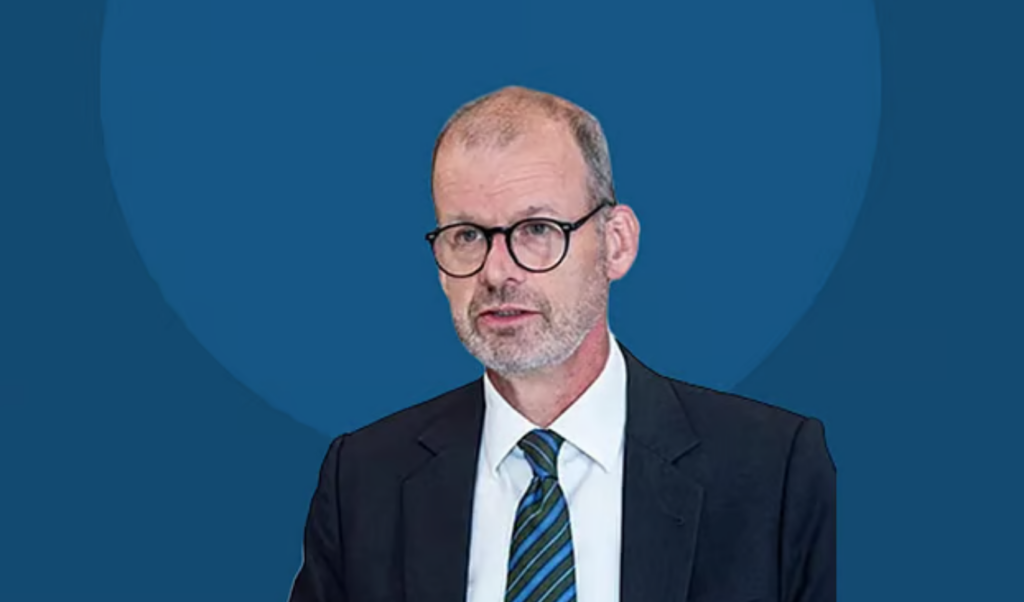
Johannes Jütt, Vice President for South Asia at the World Bank, has warned that nearly half of Bangladesh’s working-age youth have remained unemployed over the past decade. He emphasised that young people have faced the most significant barriers in accessing formal employment opportunities.
In a statement issued on Tuesday, Jütt revealed that over the last ten years, approximately 14 million young people have entered the labour market in Bangladesh, but only 8.7 million jobs have been created, leaving a substantial portion of the youth without employment.
Jütt concluded a three-day official visit to Dhaka today, during which he held discussions with the Finance and Planning Minister, the Commerce Minister, the Prime Minister’s Economic and Planning Adviser, and the Governor of Bangladesh Bank. These meetings focused on the government’s development priorities and the areas where the World Bank could extend support.
In his statement to the media, Jütt highlighted that the government is prioritising large-scale job creation, skill development, and investment facilitation. The World Bank Group has pledged its support to accelerate these initiatives, particularly to enhance employment opportunities for both young men and women.
He also noted that amid growing global economic uncertainty, it is crucial to address structural barriers that hinder economic growth and job creation. He urged the swift implementation of long-delayed macroeconomic and financial sector reforms to enable sustainable growth.
The statement further highlighted that the World Bank is assisting member countries in building economies where growth translates into local employment. To accelerate large-scale job creation, the Bank invests in both physical and human infrastructure, fosters business-friendly environments, and attracts private sector investment.
Since Bangladesh’s independence, the World Bank has been one of the country’s principal development partners. To date, it has committed more than USD 46 billion in financing, including grants, interest-free loans, and low-interest loans, supporting the nation’s long-term development goals.
The following table summarises youth labour market entry and employment trends over the past decade in Bangladesh:
| Year (2016–2025) | Youth Entering Labour Market (Million) | Jobs Created (Million) | Employment Rate (%) |
|---|---|---|---|
| 2016–2017 | 1.4 | 0.9 | 64 |
| 2017–2018 | 1.5 | 1.0 | 67 |
| 2018–2019 | 1.3 | 0.8 | 62 |
| 2019–2020 | 1.2 | 0.7 | 58 |
| 2020–2021 | 1.2 | 0.8 | 67 |
| 2021–2022 | 1.4 | 0.9 | 64 |
| 2022–2023 | 1.3 | 0.8 | 62 |
| 2023–2024 | 1.4 | 0.9 | 64 |
| 2024–2025 | 1.3 | 0.9 | 69 |
| Total | 14 | 8.7 | 62 |
The data underscores the pressing need for policies that not only create jobs but also ensure sustainable and inclusive employment growth, particularly for the country’s youth population.