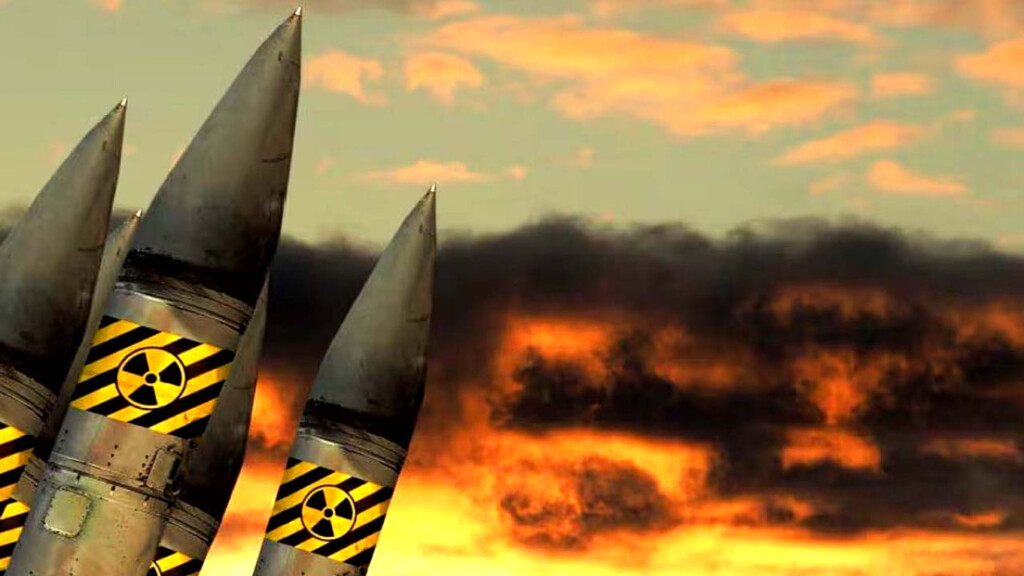
Amid escalating tensions between Iran, the United States, and Israel, the World Health Organization (WHO) has issued a stark warning to the public about the risk of a potential nuclear catastrophe. Hanan Balkhi, Director for the Eastern Mediterranean Region at WHO, stated in a recent interview that the organisation is preparing for the worst-case scenario, which could take the form of a nuclear accident or an intentional attack. Balkhi emphasised, “No matter the precautions taken, the damage caused cannot be fully prevented, and its effects could last for decades.”
Referring to historical precedents, Balkhi cited the atomic bombings of Hiroshima and Nagasaki in 1945, and the Chernobyl nuclear disaster in 1986, noting that these events clearly illustrate the catastrophic potential of nuclear incidents. He added that nuclear radiation not only causes immediate fatalities but also inflicts long-term harm on human respiratory systems and the environment, leading to diseases such as cancer that can affect subsequent generations.
Three major Iranian nuclear facilities—Natanz, Isfahan, and Fordow—were reportedly targeted in sudden US airstrikes last June. Former US President Donald Trump claimed that these facilities were completely destroyed. However, Iran has yet to release verified information regarding any civilian casualties or structural damage.
Concerns about nuclear capabilities in the Middle East are intensifying. Israel remains the only declared nuclear power in the region, while the United Arab Emirates operates nuclear power plants. According to reports from international agencies and the United Nations, Iran has not yet achieved the capacity to produce nuclear weapons. Nevertheless, experts warn that the ongoing conflict could push the country closer to that threshold.
WHO has instructed local health authorities that monitoring and public awareness are critical in preparing for potential radiation exposure. The spread of radioactive material is not confined by national borders; environmental impacts could extend throughout the Middle East and beyond.
The table below summarises the potential impacts of a nuclear catastrophe:
| Type of Impact | Brief Description | Expected Duration |
|---|---|---|
| Immediate Fatalities | Deaths and injuries occurring during the explosion | Instant |
| Health Effects | Radiation-induced cancers and organ damage | Decades |
| Environmental Effects | Contamination of soil, water, and air | One decade or more |
| Generational Effects | Genetic damage and long-term diseases affecting offspring | Multiple generations |
Experts stress that urgent diplomatic solutions are essential to prevent escalation. WHO’s warning has rekindled global concern, highlighting that attacks on nuclear facilities would trigger not only humanitarian crises but also long-lasting environmental and health disasters.
In conclusion, continuous monitoring, rapid information sharing, and international coordination are indispensable. Even if a nuclear disaster seems remote, delaying preparedness measures could result in irreversible consequences for future generations.