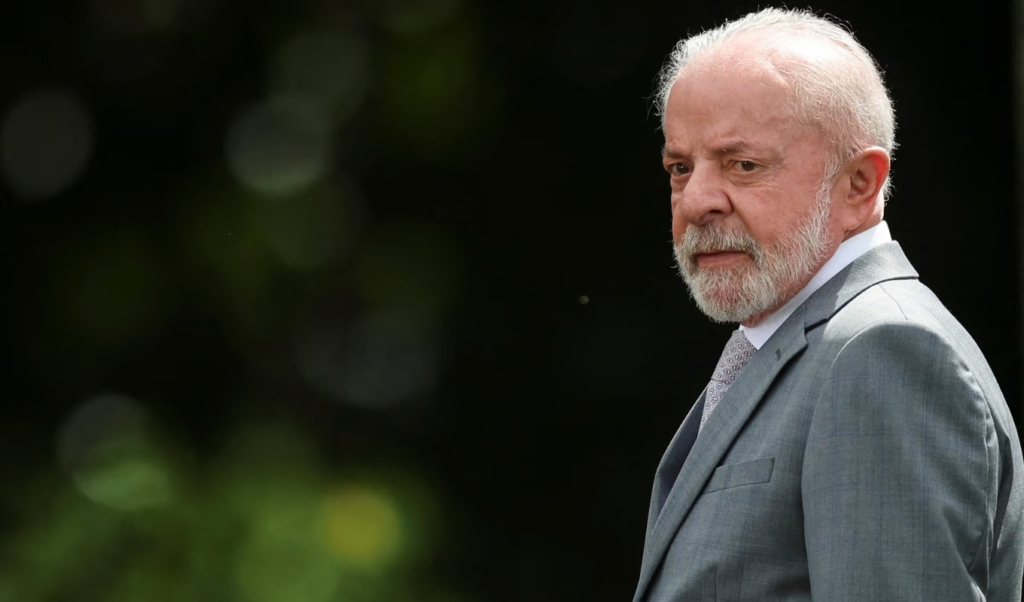
Brazilian President Luiz Inácio Lula da Silva has sharply criticised the so-called “neo-colonial” approach of developed nations toward the Global South, warning that foreign powers are seeking to dominate strategic resources and undermine national sovereignty.
Delivering a keynote address at the 10th summit of the Community of Latin American and Caribbean States (CELAC) on Saturday, 21 March, in Bogotá, Colombia, Lula’s remarks resonated with leaders from across the region and observers worldwide. While he did not directly name former US President Donald Trump, his speech alluded to recent actions by the Trump administration, including the capture of Venezuelan President Nicolás Maduro on 3 January and energy sanctions imposed on Cuba. Lula posed a pointed question to the audience:
“Who can believe they own another country? What is being done to Cuba and Venezuela—is it democratic?”
Critique of Resource Exploitation
The veteran leftist leader emphasised the historical exploitation of Latin America’s natural wealth, including gold, silver, diamonds, and other minerals. He warned that the focus of foreign powers is now shifting to rare earth minerals and strategic natural resources still under the control of developing nations. Lula remarked:
“After taking what they could from us, they now want to own our rare minerals and rare earths. They seek to make us colonies again.”
Analysts note that his comments carry particular weight given the United States’ interest in Brazil’s mineral reserves and previous trade tensions, such as last year’s 50 percent tariffs on Brazilian exports imposed under the Trump administration.
International Conflict and Sovereignty
Lula drew parallels between past interventions in Iraq and contemporary military operations in Iran, implicitly criticising US and Israeli strikes. He questioned the justification for Iran attacks over nuclear capabilities, echoing the international concern over selective foreign intervention:
“Where were Saddam Hussein’s chemical weapons? Who found them?”
Lula reiterated that any violation of a nation’s territorial integrity or external interference will not be tolerated, underlining his commitment to the sovereignty of Global South nations.
Alongside Colombian President Gustavo Petro, Lula condemned what they described as the “extreme failure” of the United Nations in preventing ongoing conflicts worldwide. They cited crises in Gaza, Ukraine, and Iran as evidence that the UN has failed to fulfil its core mandate. Both leaders also called for reform of the UN Security Council, pointing out that the veto power held by five permanent members undermines the organisation’s ability to maintain global peace and security.
Summit Participation
The CELAC summit brought together leaders from Brazil, Uruguay, Burundi, Colombia, and Prime Ministers from Guyana and Saint Vincent and the Grenadines, among others. Lula’s fiery remarks are interpreted as a direct challenge to the Monroe Doctrine-style US influence in Latin America and as a bold defence of the sovereignty of Southern Hemisphere nations.
Summit Highlights
| Theme | Key Points | Remarks |
|---|---|---|
| Neo-Colonialism | Criticism of foreign exploitation of resources | Rare earths and strategic minerals targeted |
| US and Israel | Military interventions in Venezuela, Cuba, Iran | Questioning democratic legitimacy |
| UN Reform | Security Council veto powers | Advocates equitable representation for Global South |
| Regional Sovereignty | Strengthening Latin American independence | Defending sovereignty against external pressures |
| Summit Participation | Brazil, Colombia, Uruguay, Burundi, Guyana, St. Vincent & Grenadines | Highlights continental political divisions and alliances |
Lula, who is seeking a fourth term in Brazil’s October elections, has positioned himself as a defender of the Global South, calling for regional unity and resistance to external domination. However, the absence of several heads of state at the summit highlighted persistent political divisions within Latin America.
Observers see Lula’s address as a symbolic assertion of regional autonomy, signalling Latin America’s intention to resist renewed hegemonic ambitions while safeguarding its economic and strategic interests.