For decades, Israel’s nuclear arsenal has remained one of the world’s most closely guarded secrets. While the state has never formally acknowledged its nuclear capabilities, security analysts widely believe it possesses a significant stockpile capable of both deterrence and offensive use.
According to the Stockholm International Peace Research Institute (SIPRI), Israel may have approximately 80 nuclear warheads, deployable via advanced fighter jets and ballistic missiles. This posture, often termed “nuclear opacity”, deliberately avoids confirmation or denial, leaving the international community uncertain about the precise scale of Israel’s arsenal.
Rising Tensions with Iran
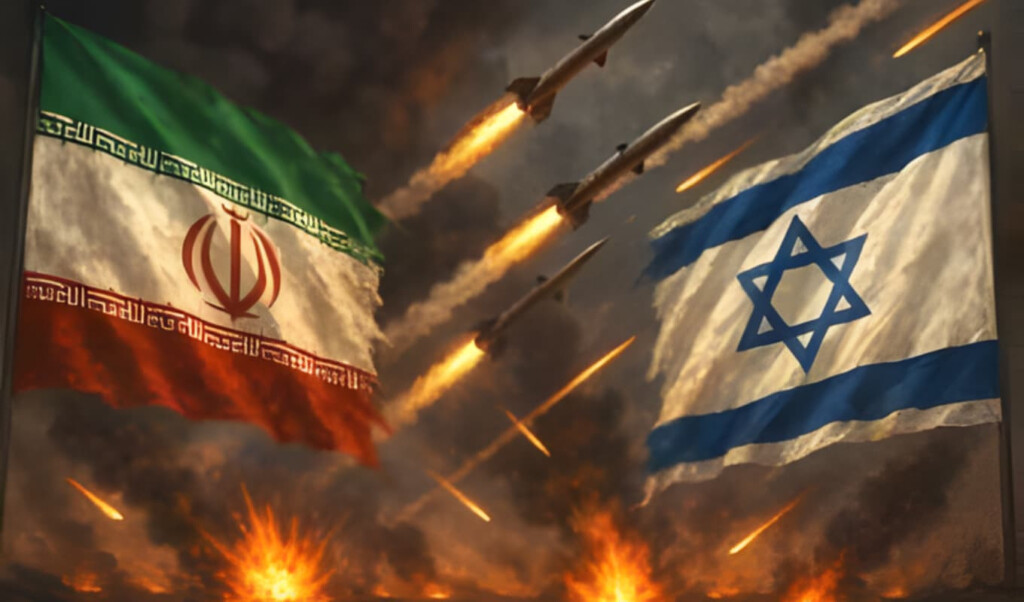
The question of when Israel might deploy these weapons has long been hypothetical. However, escalating hostilities with Iran, particularly following reports of attacks near Israel’s nuclear facility in Dimona, have renewed focus on the potential use of nuclear arms. The geopolitical climate, with conflicts spanning Gaza, Lebanon, Syria, and Iran, adds complexity and raises fears of rapid escalation.
At the heart of Israel’s security doctrine lies a fear of existential threat. Historical conflicts—from the 1967 and 1973 wars to ongoing confrontations with Iran and regional non-state actors—have consistently framed Israel’s strategic thinking. Analysts argue that this perception of existential risk shapes considerations around the use of nuclear weapons.
The “Samson Option”
Strategic discourse often references the so-called “Samson Option”: a theoretical doctrine whereby Israel would use nuclear weapons if faced with total defeat or an existential threat. Though never officially confirmed, the rationale is clear: if the state’s survival is at stake, even non-nuclear adversaries could potentially be targeted to deter or retaliate.
Unlike most nuclear doctrines worldwide, which treat these weapons primarily as deterrents with extraordinarily high thresholds for use, Israel’s context may lower those thresholds under extreme circumstances. Analysts emphasise that the psychology of national survival plays a critical role in decision-making regarding extreme military measures.
International Oversight and Strategic Risks
Israel’s nuclear programme operates outside international control mechanisms. The country has not signed the Treaty on the Non-Proliferation of Nuclear Weapons (NPT), and its facilities remain unmonitored by global observers. This autonomy creates a unique challenge within the broader international security framework.
Recent conflicts in Gaza, including operations causing mass casualties and widespread infrastructure damage since October 2023, underscore the destructive capacity of conventional weapons. Experts note that if conventional arms can inflict such devastation, the prospect of nuclear use in an existential crisis cannot be dismissed.
Potential Implications
| Factor | Details | Implication |
|---|---|---|
| Estimated Warheads | ~80 | Deployable via aircraft & ballistic missiles |
| Nuclear Policy | Opacity / “Samson Option” | Retain uncertainty, deter threats |
| Key Threats | Iran, regional coalitions | Existential risk framing Israeli strategy |
| International Oversight | None / NPT non-signatory | Independent capability outside global control |
| Conventional Military Actions | Gaza operations since Oct 2023 | Demonstrates high destruction potential |
| Strategic Consideration | Use in existential threat scenarios | Threshold for nuclear use may be lower |
Analysts stress that Israel’s multi-front engagements mean that what was once theoretical is now a strategic reality, where leadership may perceive existential risk not only from a single state but from regional alliances or coalition forces. The “Samson Option” thus remains a key, if unspoken, element of Israel’s military calculus.
As tensions continue to simmer in the Middle East, the international community faces the dual challenge of monitoring conventional warfare and anticipating the potential consequences of nuclear escalation, particularly under circumstances perceived by Israel as threatening its very survival.