The ongoing turmoil in the Middle East is sending shockwaves through global energy markets, with Bangladesh feeling the strain acutely. Research from international firm Zero Carbon Analytics (ZCA) estimates that the country’s annual energy import bill could rise to $4.8 billion—approximately $480 million higher than earlier projections and nearly 40% above 2025 levels.
Such a sharp increase threatens to exert significant pressure on Bangladesh’s foreign exchange reserves. Analysts project that the nation’s ability to cover imports could drop from 5.7 months to 4.9 months, highlighting a growing vulnerability in the country’s trade balance. Official data indicates that Bangladesh currently spends around $12 billion annually on energy imports, underscoring the critical importance of cost containment.
Projected Economic Consequences
ZCA warns that if elevated prices for oil, gas, and coal persist for a full year, Bangladesh could incur financial losses equivalent to 1.1% of its 2024 GDP. Rising import costs may also prompt currency depreciation, higher inflation, and pressure on the central bank to revise interest rates. Analysts note that recurring energy crises, such as the price surge during the Russia–Ukraine conflict, demonstrate the risks of Bangladesh’s continued reliance on fossil fuels and slow transition to renewable energy.
| Indicator | 2023 | 2024–25 | Notes |
|---|---|---|---|
| Energy demand met through imports | 46% | 65% | Electricity generation heavily import-dependent |
| Foreign reserves coverage (months) | 5.7 | 4.9 | Reduced ability to cover imports |
| Annual energy import expenditure | $12 B | $12–$12.5 B | Up to 40% increase vs 2025 forecast |
| Renewable energy contribution | 2% | 2% | Minimal improvement since 2020 |
Much of Bangladesh’s imported energy passes through the Strait of Hormuz, a corridor now disrupted by regional conflict. A shipment of 100,000 tonnes from Saudi Aramco remains stranded in the Gulf. Under long-term agreements with Saudi Aramco and Abu Dhabi National Oil Company, Bangladesh imports roughly 1.4 million tonnes of crude oil annually via this route.
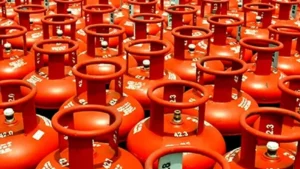
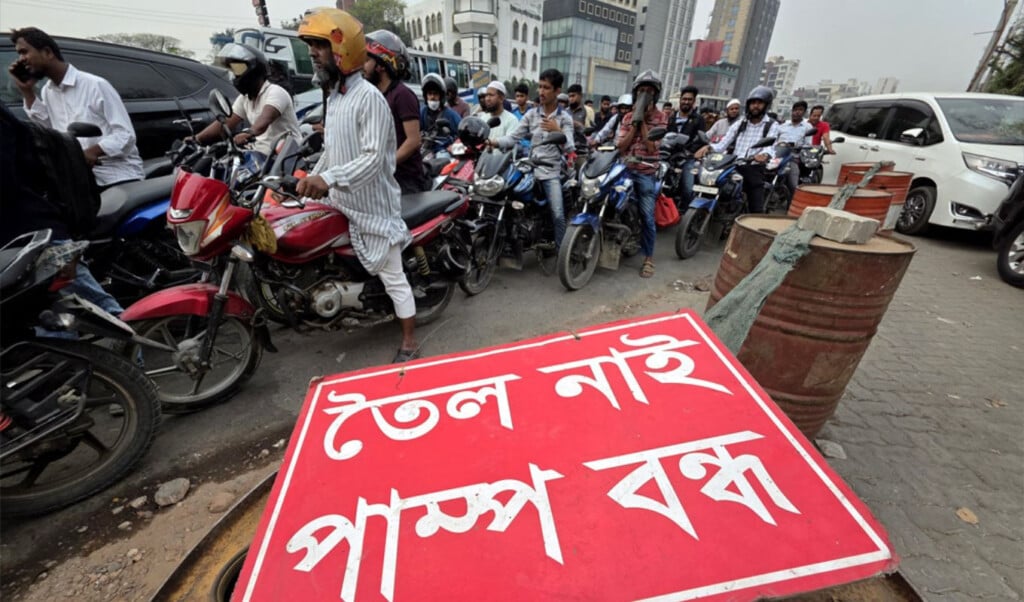
The country’s heavy reliance on LNG has put the electricity sector under strain. David Hasanat, president of the Bangladesh Independent Power Producers Association (BIPPA), reports that 23% of power plants are offline due to gas shortages. The industrial sector is similarly affected: four fertiliser factories have shut down, while the ready-made garment (RMG) industry—Bangladesh’s largest export sector—experiences daily load-shedding of up to five hours. Mahmud Hasan Khan, president of the Bangladesh Garment Manufacturers and Exporters Association (BGMEA), confirmed that diesel shortages are exacerbating the crisis.
Bangladesh’s renewable energy uptake remains minimal. According to the International Energy Agency (IEA), only 2% of the nation’s energy came from renewables between 2020 and 2023, with little improvement in 2024. In response, the government is investing nearly $50 billion in 41 new LNG-based power plants, projected to add 35 gigawatts—triple the current capacity—effectively locking the country further into LNG dependence.
The crisis underscores the urgent need for Bangladesh to diversify its energy portfolio, accelerate renewable adoption, and reduce reliance on volatile fossil fuel imports to protect its economy and industry from future shocks.