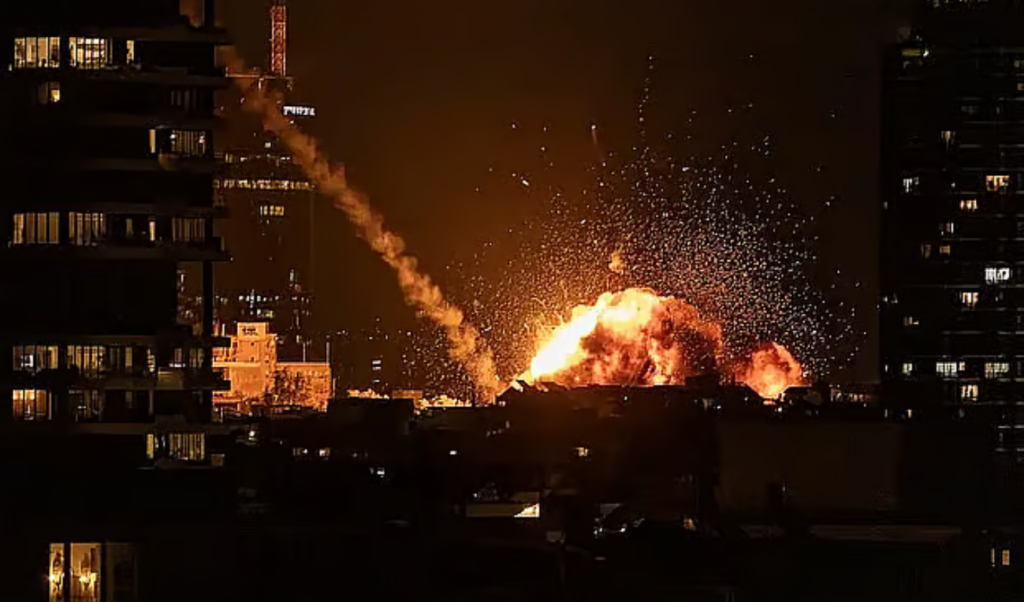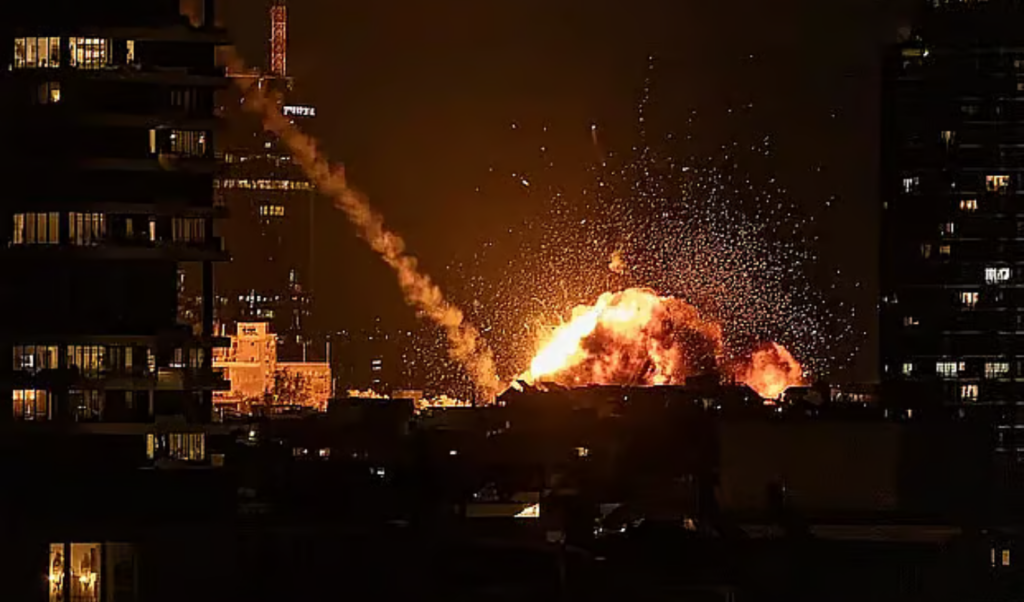
Military experts have highlighted why the United States has been unable to establish unchallenged air supremacy over Iran. During a virtual panel hosted by the Middle East Institute on Tuesday, they explained that Washington’s insufficient investment in countering low-altitude threats has allowed Tehran to exploit this gap effectively.
Senior fellow Kelly Grieco of the Stimson Center’s Reimagining US Grand Strategy programme stated, “Interestingly, the US and Israel are performing well where they expected to—at high altitudes against Iran’s integrated air and missile defence systems. Yet at lower altitudes, they are struggling due to lack of preparedness.”
Grieco emphasised that Iran relies on highly mobile, low-altitude operations, using drones and other manoeuvrable systems to deny US forces control in strategically vital areas. “Where the US needs dominance most, it has failed to invest sufficiently, and Iran has leveraged this advantage,” she noted.
Just hours after this panel, US President Donald Trump addressed reporters, asserting that Iran had lost much of its military capability since the conflict began on 28 February. “Can anyone name something that hasn’t been destroyed? Or tell us what they are doing now? We are now flying freely over Tehran,” he stated.
Destructive vs Disruptive Warfare
Grieco clarified that Iran is not attempting direct air superiority against US or Israeli forces. “Iran knows it cannot achieve complete control of the skies. The current scenario is different from the US air dominance in Iraq in 2003,” she said.
She described US and Israeli operations as “destructive warfare,” focused on eliminating missile launchers, drones, and stockpiles. In contrast, Iran is conducting a “disruptive war,” using low-altitude drones—particularly Shahed drones—to inflict widespread disruption and force excessive defence spending among Gulf states.
| Country | Primary Defence System | Low-Altitude Detection Capability | Estimated Cost to Counter (Million USD) |
|---|---|---|---|
| UAE | Patriot, THAAD | Yes | 120 |
| Kuwait | Patriot, Local Sensors | Yes | 85 |
| Jordan | Russian S-300 | Yes | 70 |
The cost disparity is striking: inexpensive Iranian drones require Gulf states to expend millions on interception. Grieco added that these countries rely heavily on fighter jets and surface-to-air missiles (SAMs) to counter Shahed drones, including US Patriot systems and Russian S-300s.
Brookings Institution defence expert Michael O’Hanlon stressed the necessity of replenishing US and allied missile stocks. He estimated around $7.5 billion would be needed to restore depleted Patriot, THAAD, and standard missile inventories.
He also noted that laser weapons could be effective against drones in Gulf climates, though humidity and cloud cover reduce efficiency. With ongoing conflicts such as the war in Ukraine depleting air-defence stocks faster than production, reliance on conventional interceptors is increasingly strained.
Grieco concluded that Iran’s strategy is designed for longevity: sustained daily harassment increases costs for opponents without relying on large-scale strikes. Meanwhile, US Defence Secretary Pete Hegseth offered a contrasting view, claiming that Iran’s once-modern military has been rapidly neutralised and that US-Israeli operations will be historically significant.
The situation illustrates how low-altitude, low-cost drones can effectively challenge superior air forces and shift regional defence dynamics.