Friday, 21st August 2026

Khabor Wala Desk
Published: 27th March 2026, 1:24 PM
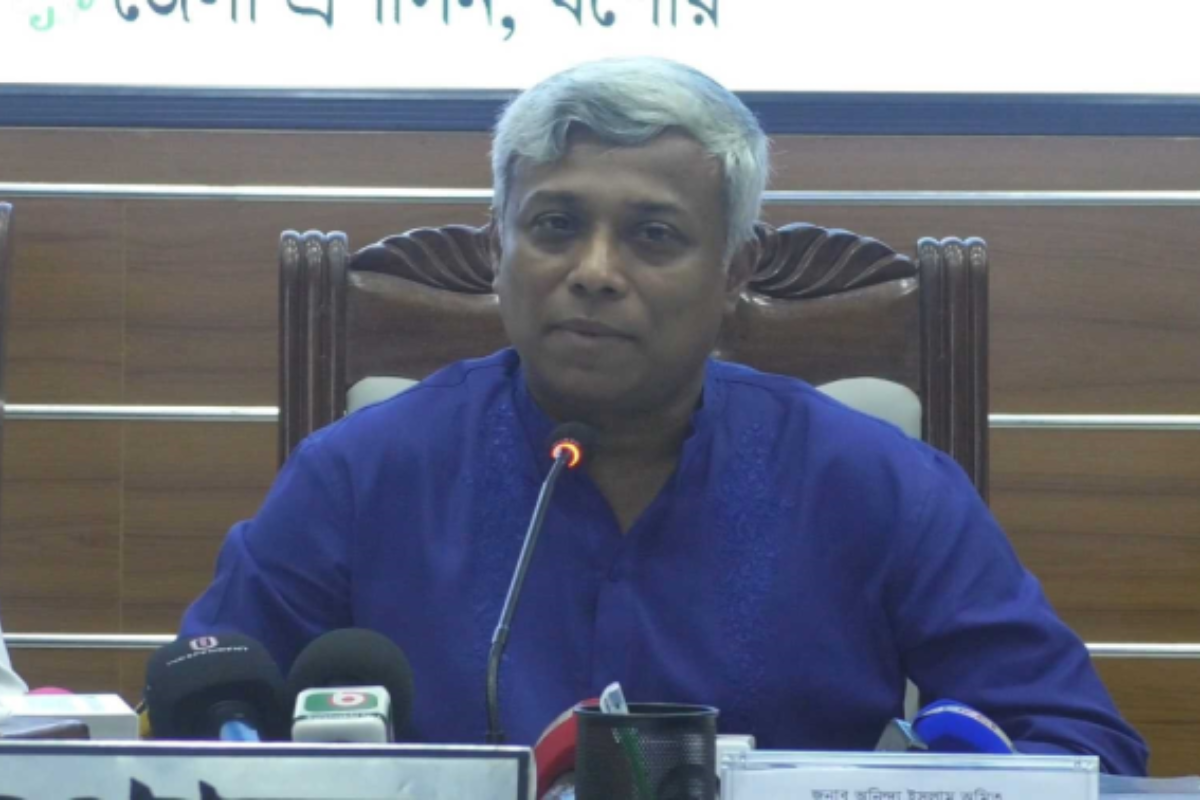
The Government of Bangladesh is currently subsidising fuel oil at an estimated rate of approximately 16.7 billion taka per day in a bid to ease public hardship and stabilise the prices of essential goods, according to the State Minister for Power, Energy and Mineral Resources, Anindya Islam Amit.
He made the disclosure while speaking as chief guest at a public event in Jessore on Friday at midday, where financial assistance cheques were distributed among underprivileged and vulnerable citizens. The programme formed part of wider government social welfare initiatives aimed at supporting economically disadvantaged groups across the country.
In his remarks, the State Minister underscored that the government remains committed to shielding citizens from the impact of global energy market volatility. He noted that despite significant fluctuations in international fuel prices and economic pressures affecting many countries, Bangladesh has so far refrained from increasing domestic fuel prices.
“The government is working to reduce the suffering of the people,” he stated. “Even amid global instability, we have not increased fuel prices. Any rise in fuel costs directly affects electricity generation, public transport fares, and food prices. Despite these challenges, there are no current plans to raise fuel prices.”
He further emphasised that maintaining price stability in the energy sector is crucial for safeguarding inflationary pressures within the broader economy, particularly in relation to transport costs and food security.
According to the minister, nearly 80 countries worldwide have already adjusted fuel prices upward in response to global supply constraints and market fluctuations. In contrast, Bangladesh has maintained stable domestic pricing while ensuring uninterrupted fuel availability.
He also drew attention to rising domestic demand, particularly during peak consumption periods such as the Eid season, when transportation and industrial activity increase significantly.
| Category | Typical Daily Demand | Recent Supply Levels | Remarks |
|---|---|---|---|
| Diesel | 12,000 metric tonnes | 24,000–25,000 metric tonnes (pre-Eid period) | Significant seasonal increase in demand |
| Petrol & Octane | 1,200–1,400 metric tonnes | Adjusted according to demand | Managed through flexible distribution |
| Fuel pricing policy | — | No price increase | Stability maintained despite global pressure |
The minister explained that during peak seasons, particularly ahead of religious festivals, fuel consumption can more than double. He added that the government has taken necessary steps to ensure uninterrupted supply chains so that transport services, power generation, and essential economic activities are not disrupted.
Shifting focus to social protection programmes, Mr Amit referred to the historical evolution of welfare schemes in Bangladesh. He noted that structured social safety net programmes were first introduced in 1991 under the leadership of the then Prime Minister Begum Khaleda Zia, with the objective of supporting marginalised and low-income communities.
He acknowledged that successive governments have expanded both the coverage and financial scope of these programmes over time. However, he also claimed that during the previous 15-year period under the Awami League administration, many genuinely deserving individuals were reportedly excluded from beneficiary lists, suggesting shortcomings in targeting and implementation.
The minister stated that the present government has begun implementing a series of electoral commitments designed to strengthen social protection and improve service delivery mechanisms across the country. These include the introduction of a “family card” initiative, financial honorariums for religious leaders, and plans to launch a “farmer card” scheme during the upcoming Pahela Baishakh period.
Mr Amit further stressed that addressing poverty and vulnerability requires not only state intervention but also stronger social cohesion at the community level. He argued that if individuals uphold responsibilities towards relatives and neighbours, the number of people falling into extreme hardship could be reduced over time.
“The responsibility of supporting disadvantaged people does not rest solely with the state,” he said. “Social solidarity, combined with government-led programmes, is essential for building an inclusive society.”
At the conclusion of the event, the State Minister formally distributed one-off financial assistance cheques to 153 destitute and disadvantaged individuals. The initiative, officials said, is part of ongoing efforts to provide immediate relief to those facing acute financial distress while broader welfare programmes continue to expand.
Authorities reaffirmed their commitment to strengthening social safety nets alongside maintaining stability in the energy sector, describing both as central pillars of the government’s economic and social policy agenda.



Comments