The destruction of a United States Air Force airborne warning and control system aircraft in Saudi Arabia has raised serious concerns over Washington’s surveillance and early-warning capabilities in the Middle East. According to analysts, the loss of an E-3 Sentry may temporarily weaken the United States’ ability to detect and respond to long-range threats originating from Iran and other regional actors.
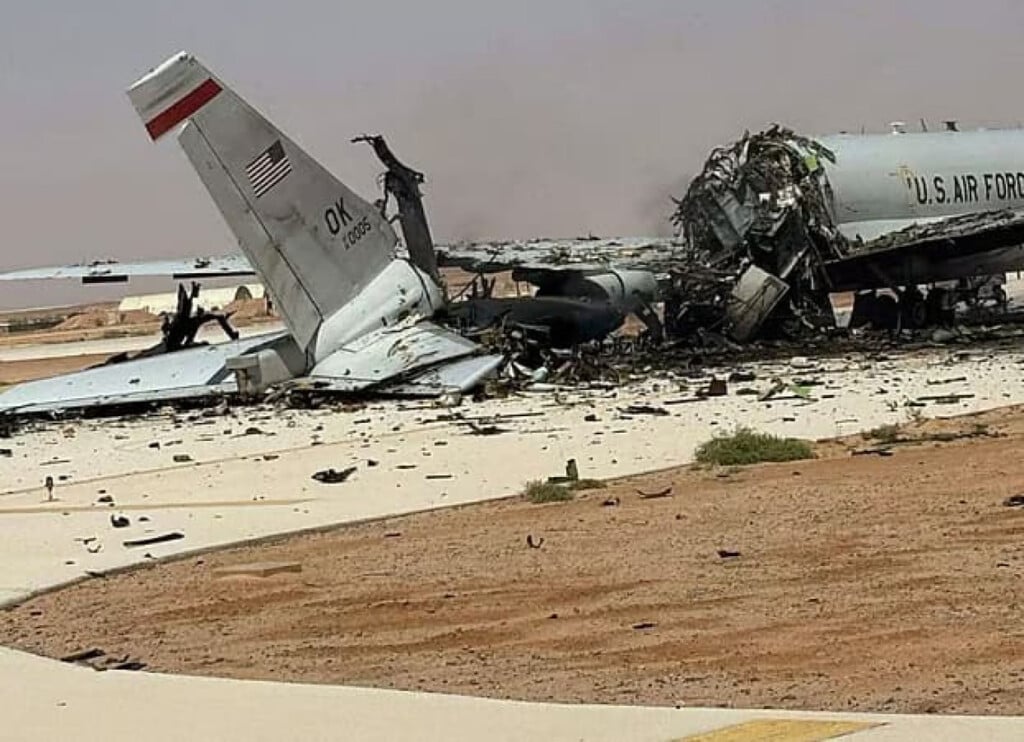
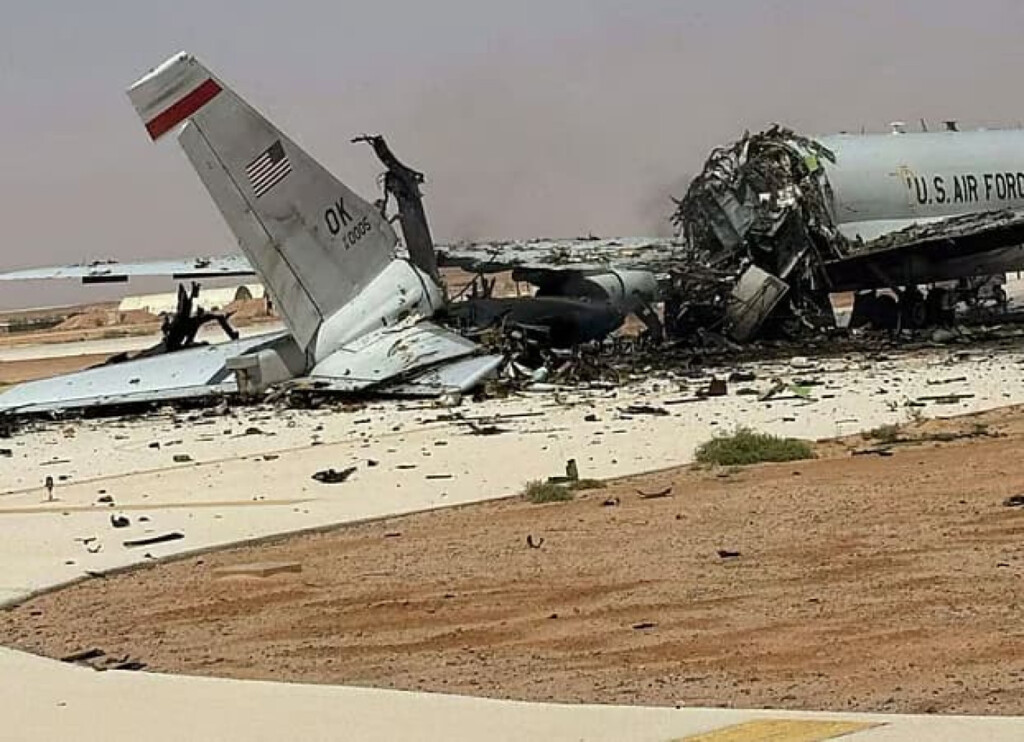
The incident occurred at Prince Sultan Air Base in Saudi Arabia, a key strategic facility used by US forces and allied personnel. Reports attributed the strike to Iranian missile fire, although independent verification of the exact circumstances remains limited. What has been confirmed, however, is that the aircraft sustained catastrophic damage.
Imagery analysed by CNN shows the aircraft’s tail section completely severed, while its distinctive rotating radar dome—an essential component of the Airborne Warning and Control System (AWACS)—lies detached on the ground. This radar system is designed to provide long-range aerial surveillance and command coordination, forming a central pillar of US and NATO air operations.
Military analysts argue that the loss is operationally significant. Cedric Leighton, a retired US Air Force colonel and CNN military analyst, described the destruction of the aircraft as a “serious blow” to American situational awareness in the region. He noted that AWACS platforms are crucial not only for detecting incoming aircraft and missiles, but also for coordinating friendly air assets in real time. Their absence, even temporarily, can complicate defensive and offensive air operations.
The E-3 Sentry fleet has served as a cornerstone of US aerial surveillance for decades. Each aircraft is capable of monitoring vast expanses of airspace—reportedly up to approximately 120,000 square miles—while simultaneously directing multiple combat aircraft during operations. The United States is believed to operate a limited fleet of 17 such aircraft, making each platform strategically valuable.
Following the incident, images of the destroyed aircraft circulated widely on social media platforms. Subsequent satellite imagery analysis reportedly corroborated that the strike took place within the perimeter of Prince Sultan Air Base. Earlier reports also indicated that at least ten US service members were injured in the attack, though no fatalities were recorded.
The broader implications of the incident extend beyond the immediate loss of equipment. Analysts suggest it could expose vulnerabilities in forward-deployed US surveillance infrastructure and prompt a reassessment of base defence systems in the Gulf region. It also underscores the increasing risks faced by high-value airborne assets operating within range of modern missile systems.
Incident Overview
| Category | Details |
|---|---|
| Location | Prince Sultan Air Base, Saudi Arabia |
| Aircraft involved | E-3 Sentry |
| Claimed attacker | Iran (as reported by multiple sources) |
| Type of strike | Missile attack |
| Damage | Aircraft destroyed; tail section detached; radar dome destroyed |
| Surveillance coverage of aircraft | Approximately 120,000 square miles |
| US fleet size | Around 17 aircraft |
| Reported casualties | At least 10 US personnel injured |
| Strategic impact | Reduced regional air surveillance and command capability |
As investigations continue, the incident is likely to intensify debate within US defence circles regarding the resilience of airborne surveillance systems and the security of forward operating bases in volatile regions.