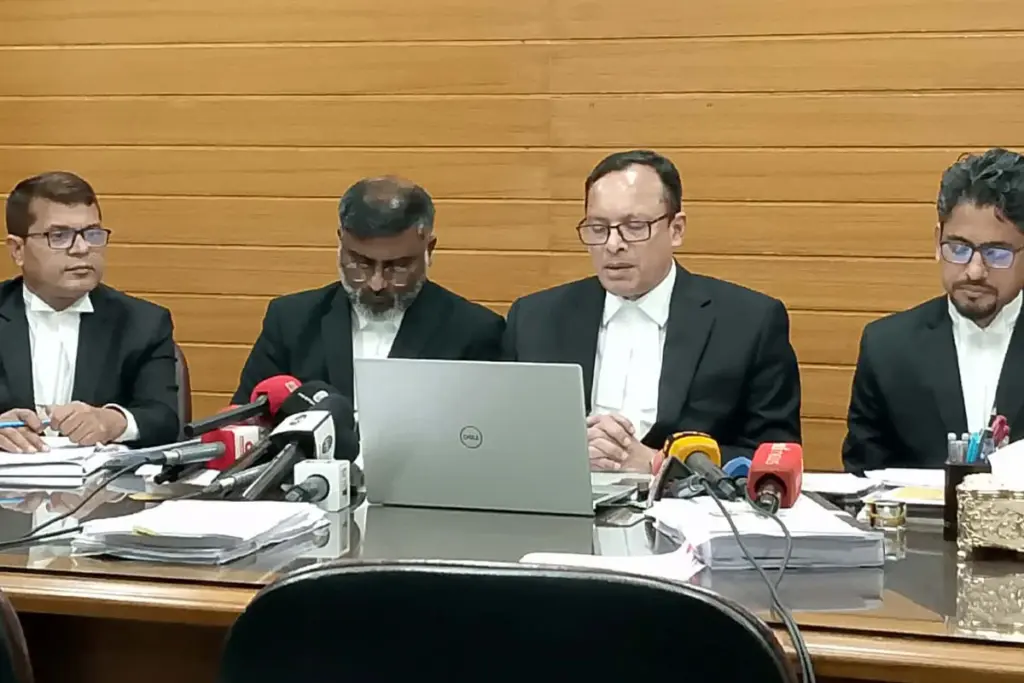
Attorney General Md. Ruhul Quddus Kazal has affirmed that the transition to virtual court proceedings will not impede the judicial process. Speaking to journalists at his office on Wednesday afternoon, the Attorney General characterised the initiative as a constructive decision by the Chief Justice of Bangladesh, aimed at modernising the judiciary while addressing national economic concerns.
Strategic Response to Resource Constraints
The implementation of virtual hearings is strategically aligned with the government’s efforts to mitigate the ongoing energy crisis. According to the Attorney General, this move is expected to yield positive outcomes by reducing the consumption of electricity and fuel associated with physical court operations. He further asserted that the digital format would facilitate the swift resolution of cases, thereby enhancing the overall dynamism and efficiency of the legal system.
Regulatory Framework and Schedule
The shift follows an official notification issued on 19 April, which stipulated that judicial proceedings in the High Court Division would be conducted virtually two days a week—specifically on Wednesdays and Thursdays. This directive was formulated in response to the current global economic climate, with a primary focus on ensuring energy and power savings.
The legal basis for this transition is grounded in the Legal Use of Information Technology by Court Act, 2020. The proceedings must strictly adhere to the practice directions issued by the High Court Division to maintain procedural integrity.
Key Components of the Virtual Court Initiative
| Feature | Details |
| Designated Days | Wednesday and Thursday of each week. |
| Legal Authority | Legal Use of Information Technology by Court Act, 2020. |
| Primary Objective | Energy conservation and mitigation of the fuel crisis. |
| Judicial Benefit | Accelerated case disposal and improved dynamism. |
| Scope | Both divisions as per established practice directions. |
Institutional Continuity and Digital Transformation
The Attorney General emphasised that the judicial infrastructure is well-equipped to handle the requirements of virtual litigation. By utilizing information technology, the judiciary aims to ensure that the delivery of justice remains uninterrupted despite external economic pressures.
The “Legal Use of Information Technology by Court Act, 2020” was originally enacted to provide a legislative framework for virtual courts during the COVID-19 pandemic. Its re-application in the current context highlights the judiciary’s adaptability. Under these rules, judges, lawyers, and litigants can participate in proceedings via secure video-conferencing platforms, significantly reducing the necessity for physical commutes and the operational costs of maintaining large courtroom environments.
This policy reflects a broader institutional commitment to integrating technology within the Bangladeshi legal framework. The Attorney General concluded that the initiative would not only address immediate energy concerns but also serve as a stepping stone towards a more streamlined and accessible judicial system for all citizens.
Impact Assessment
By conducting sessions virtually for 40% of the working week (two out of five working days), the High Court Division expects a measurable reduction in the logistical burden on the state. The Attorney General reiterated that the procedural rights of all parties involved would be upheld, ensuring that the transition from physical to digital presence does not compromise the quality of judicial scrutiny or the rule of law.