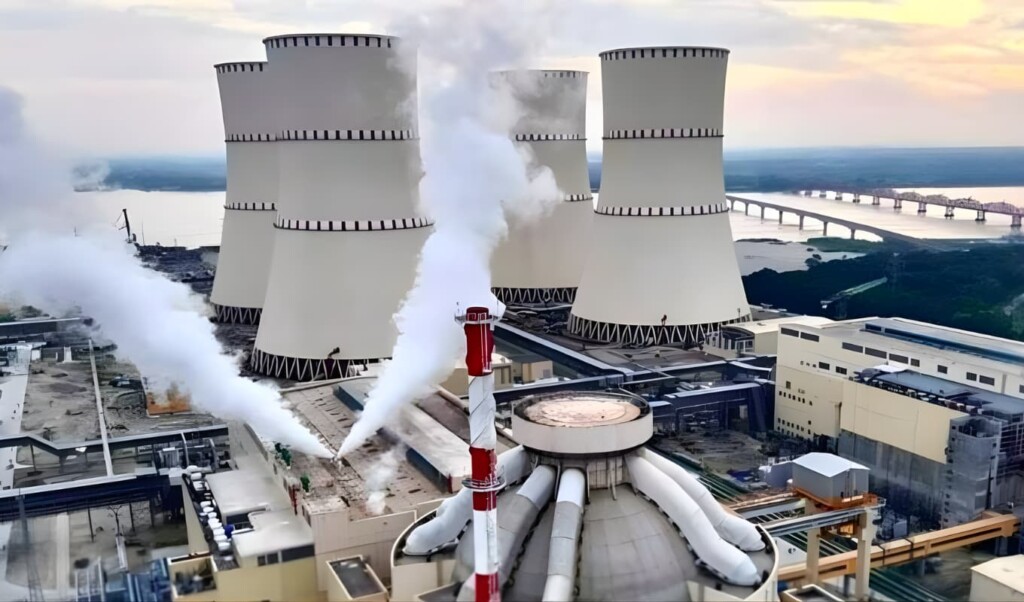
The Rooppur Nuclear Power Plant (RNPP), Bangladesh’s most expensive infrastructure project, has reached a critical milestone toward commencing operations. Despite several delays to its construction timeline, the Bangladesh Atomic Energy Regulatory Authority (BAERA) recently granted the commissioning licence for ‘fuel loading’ in the plant’s first unit. This development signals that the facility has entered the final stages of production.
The government has announced that electricity generated from this unit is expected to be integrated into the national grid by December 2026. Fakir Mahbub Anam, the Minister for Science and Technology, stated that Prime Minister Tarique Rahman is scheduled to inaugurate the fuel loading for the first unit by the end of this month. Russian President Vladimir Putin may also attend the ceremony virtually.
Understanding the Commissioning Process
According to the Science and Technology Minister, the initiation of fuel loading marks the commencement of the plant’s core operations. The government has set a target to supply 1,000 MW of electricity to the national grid by the end of the year. However, technical experts advise caution regarding the timeline. Professor Md. Shafiqul Islam of the Department of Nuclear Engineering at Dhaka University noted that after nuclear fuel is inserted, a series of rigorous tests must be conducted. These evaluations could take between 6 to 12 months before commercial production officially begins.
Professor Islam explained that “fuel loading” is a sensitive procedure involving the placement of nuclear fuel into the reactor core, typically lasting 40 to 45 days. Following this, a “pilot operation” commences to monitor synchronisation, turbine generator functionality, and emergency support systems. Once the pilot phase concludes and a final safety analysis report is approved, a Commercial Operational Date (COD) is established.
Project Technical and Infrastructure Overview
| Feature | Details |
| Location | Rooppur, Ishwardi, Pabna |
| Total Capacity | 2,400 MW (Two units of 1,200 MW each) |
| Technology | Russian VVER-1200 Reactor (Generation III+) |
| Estimated Cost | Over 1.13 Trillion BDT |
| Financial/Technical Partner | Russia (Rosatom) |
| First Unit Grid Target | December 2026 |
| Transmission Lines | 4 Circuits completed for Unit 1 |
Grid Readiness and Transmission
A significant factor in the project’s delay has been the construction of transmission lines. Abdur Rashid Khan, Managing Director of the Grid Company of Bangladesh (GCB), confirmed on Wednesday, 22 April, that despite delays caused by political shifts, the necessary infrastructure for the first unit is now complete.
Four essential transmission lines—two circuits for Rooppur-Baghabari, one for Rooppur-Bogra, and one for Rooppur-Gopalganj—are ready. These lines were completed as of 30 May last year. Furthermore, the grid capacity for the second unit is expected to be finalised by December 2026.
Safety and Operational Cycles
The RNPP operates on the principle of nuclear fission, where the splitting of uranium nuclei generates immense thermal energy. This heat converts water into high-pressure steam, which drives turbines to produce electricity through a controlled chain reaction.
Experts emphasise that safety cannot be compromised. Under the guidelines of the International Atomic Energy Agency (IAEA), the state must ensure robust fire safety, emergency support systems, and evacuation plans. Once full commercial operation begins, the reactor will run at 90% capacity for an 18-month cycle, after which it will undergo maintenance and fuel replacement before starting the next cycle.
The Bangladesh Atomic Energy Commission maintains that all technical evaluations and preparatory activities have followed international standards to ensure a secure transition to nuclear energy.