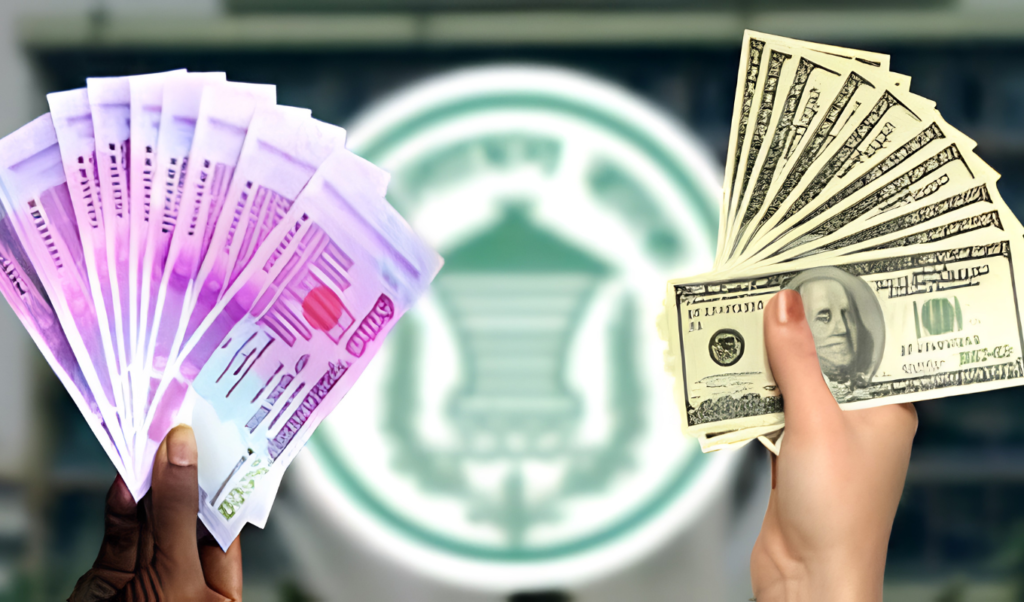
According to the latest data released on 17 May 2026, the foreign exchange market in Bangladesh has maintained a relatively stable position across major international currencies. Whilst daily exchange rates fluctuate under the influence of global economic conditions, import-export volumes, inward remittance flows, and commodity price volatility in international markets, relevant financial sources confirm that the domestic market has escaped significant volatility in recent times.
Data provided by Bangladesh Bank and related financial institutions indicates that the buying and selling rates for the US Dollar have been uniformly fixed at Tk 122.75. Meanwhile, the European single currency, the Euro, registered a buying rate of Tk 142.69 and a selling rate of Tk 142.72. Similar marginal spreads between buying and selling prices were observed for other prominent currencies, including the British Pound, reflecting standard fluctuations in the international financial markets.
Foreign Exchange Rates (17 May 2026)
The table below outlines the precise buying and selling rates against the Bangladeshi Taka (BDT) for various foreign currencies as of 17 May 2026:
| Currency Name | Buying Rate (BDT) | Selling Rate (BDT) |
| US Dollar (USD) | 122.75 | 122.75 |
| British Pound (GBP) | 163.51 | 163.61 |
| Euro (EUR) | 142.69 | 142.72 |
| Japanese Yen (JPY) | 0.77 | 0.77 |
| Australian Dollar (AUD) | 87.74 | 87.77 |
| Singapore Dollar (SGD) | 96.41 | 96.47 |
| Canadian Dollar (CAD) | 89.27 | 89.27 |
| Indian Rupee (INR) | 1.28 | 1.28 |
| Saudi Riyal (SAR) | 32.55 | 32.56 |
Economic Impact and Market Drivers
Economists note that remittances sent by expatriate Bangladeshis continue to strengthen the national foreign exchange supply chain. Inward remittances originating from the Middle East, Europe, and North America play a vital role in sustaining the stability of the local currency. Furthermore, a consistent flow of export earnings has significantly aided in preserving equilibrium within the foreign exchange market.
According to financial analysts, the relative stability of the US Dollar has provided much-needed relief by keeping import expenditures within manageable limits. However, experts caution that potential shifts in global oil prices, food supply chain disruptions, and alterations in international interest rates could trigger future fluctuations in exchange rates.
Sectoral Outlook and Future Requirements
Market observers indicate that this stability sends a highly positive signal to import-dependent sectors within the country. Industrialists and businesses engaged in importing fuel, industrial raw materials, consumer goods, and technology find relief in the predictability of pricing, which facilitates better commercial planning.
Concurrently, the steady influx of remittances via formal banking channels has boosted foreign currency liquidity within commercial banks. This development provides crucial support to national reserve management. Financial experts emphasise that to maintain this trajectory over the longer term, the government and relevant authorities must focus on expanding export sectors, attracting foreign direct investment (FDI), and introducing further incentives to encourage formal remittance channels.
Ultimately, the foreign exchange market on 17 May 2026 presents a balanced profile, which economic analysts agree is playing a supportive role in maintaining Bangladesh’s macroeconomic stability.