Wednesday, 6th May 2026

Khabor Wala Desk
Published: 6th May 2026, 1:18 PM
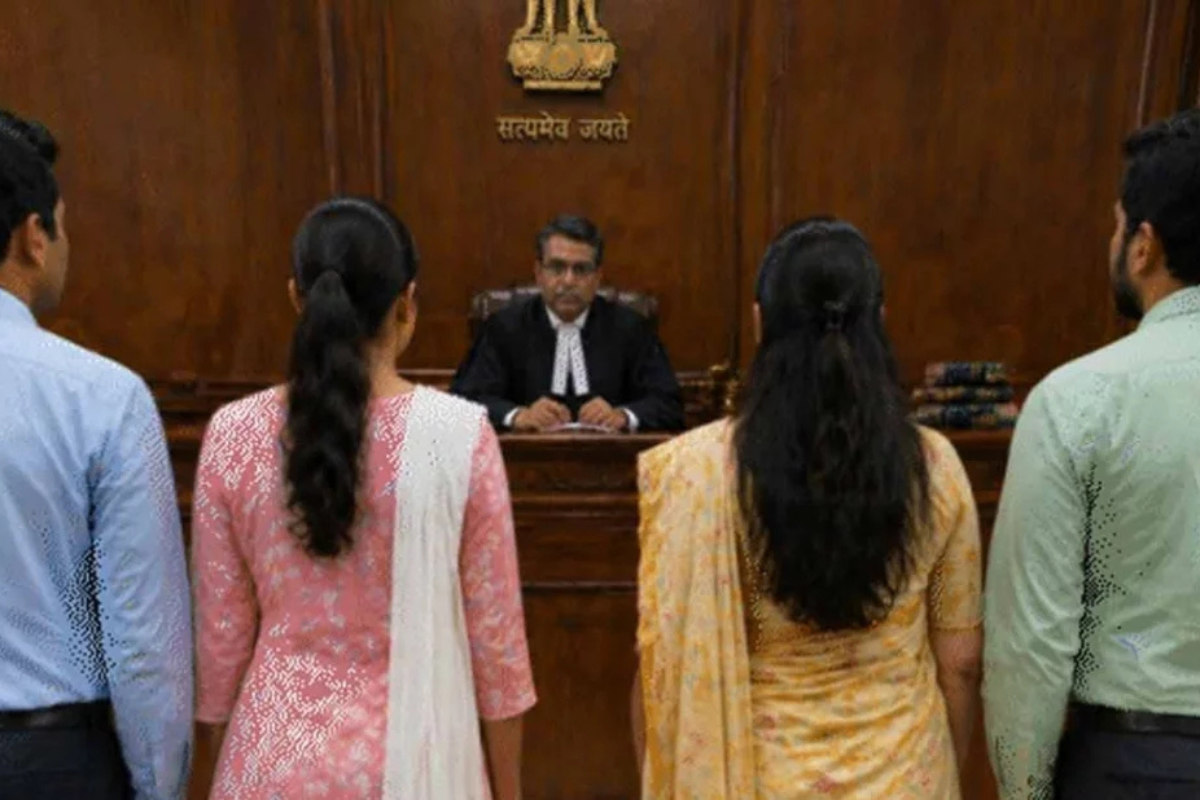
A remarkable legal proceeding has emerged before the Gwalior Bench of the Madhya Pradesh High Court, involving a petition by two biological sisters to legally exchange their respective husbands. This unconventional domestic dispute has transitioned from a criminal allegation to a complex civil matter, drawing significant legal and public attention in the region.
The case originated as a Habeas Corpus petition filed by a resident of the Datia district. The petitioner alleged that his wife and minor daughter had been abducted by his brother-in-law (his wife’s sister’s husband). Under the legal framework of a Habeas Corpus writ, which is designed to protect individuals against unlawful detention, the High Court directed the local police to locate the missing persons and produce them before the bench.
Pursuant to the court’s order, the authorities successfully located the individuals and presented them before the presiding justices. However, the testimony provided by the parties involved fundamentally contradicted the original allegations of kidnapping.
Upon appearing in court, the woman identified as the victim of the alleged abduction clarified that she had not been taken against her will. She testified that she had voluntarily left her matrimonial home to reside with her sister’s husband. She further elaborated that her relationship with her legal spouse had deteriorated significantly, noting that she had already initiated formal divorce proceedings in a lower court.
In an unexpected turn of events, the second sister—the wife of the man accused of abduction—offered corroborating testimony. She expressed a lack of desire to remain with her current husband and stated her preference to live with her sister’s husband (the original petitioner). Both sisters formally requested the court to grant them legal permission to facilitate a “spousal swap,” effectively seeking to reside with each other’s husbands by mutual consent.
The Bench, upon reviewing the statements, observed that all primary parties involved are legal adults capable of making independent decisions regarding their domestic arrangements. The court determined that the essence of the matter was not a criminal act of kidnapping, but rather a profound domestic and matrimonial disagreement.
The presiding justice remarked that since the women were acting of their own volition, the criteria for a criminal abduction charge were not met. Consequently, the High Court dismissed the Habeas Corpus petition, advising the parties to resolve their personal grievances and living arrangements through mutual mediation or appropriate civil litigation.
| Feature | Details |
| Jurisdiction | Madhya Pradesh High Court (Gwalior Bench) |
| Legal Instrument | Habeas Corpus Petition |
| Original Location | Datia District, Madhya Pradesh, India |
| Nature of Dispute | Matrimonial and Domestic Realignment |
| Primary Parties | Two biological sisters and their respective husbands |
| Judicial Finding | No evidence of criminal abduction; dispute is civil/familial |
| Final Verdict | Petition dismissed; parties advised to seek mutual settlement |
Under Indian law, while adult citizens possess the right to freedom of movement and association, the legal “exchange” of spouses is not a recognised statutory provision. Matrimonial matters are typically governed by personal laws or the Special Marriage Act, requiring formal dissolution of existing marriages through divorce before any new legal unions can be established. By dismissing the writ, the court reaffirmed that the state’s machinery for emergency recovery (Habeas Corpus) cannot be used to adjudicate the voluntary domestic choices of consenting adults, regardless of how unconventional those choices may appear to society.




Comments